

110
5 Brazil Between Bioeconomy Barons and Grassroots Agroecology
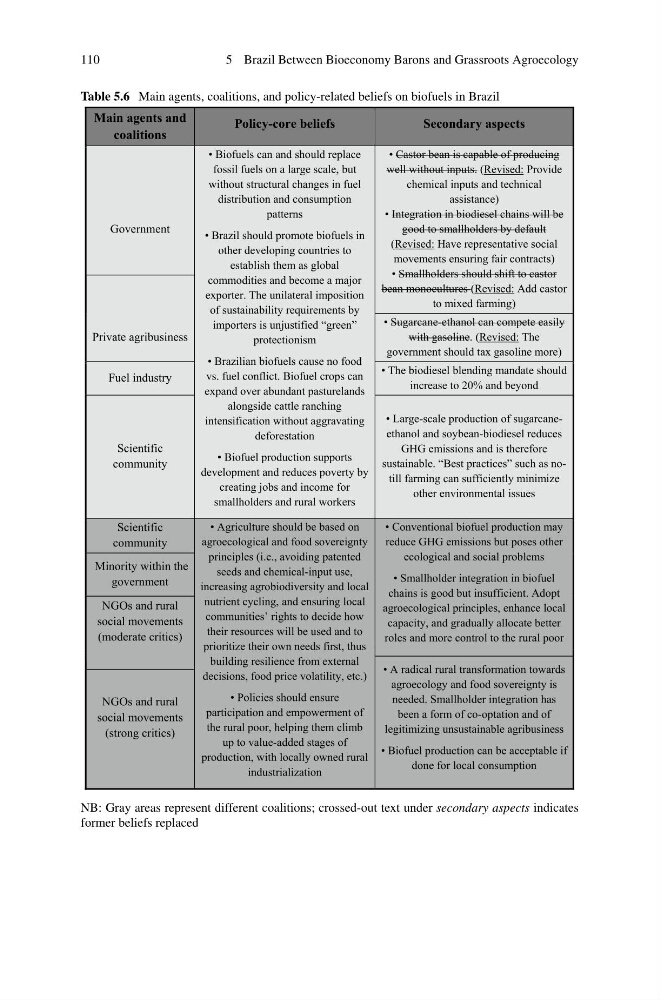
Table 5.6 Main agents, coalitions, and policy-related beliefs on biofuels in Brazil
Main agents and
coalitions
Policy-core beliefs
Secondary aspects
Government
• Biofuels can and should replace
fossil fuels on a large scale, but
without structural changes in fuel
distribution and consumption
patterns
• Brazil should promote biofuels in
other developing countries to
establish them as global
commodities and become a major
exporter. The unilateral imposition
of sustainability requirements by
importers is unjustified “green”
protectionism
• Brazilian biofuels cause no food
vs. fuel conflict. Biofuel crops can
expand over abundant pasturelands
alongside cattle ranching
intensification without aggravating
deforestation
• Biofuel production supports
development and reduces poverty by
creating jobs and income for
smallholders and rural workers
• Castor bean is capable of producing
well without inputs. (Revised: Provide
chemical inputs and technical
assistance)
• Integration in biodiesel chains will be
good to smallholders by default
(Revised: Have representative social
movements ensuring fair contracts)
• Smallholders should shift to castor
bean monocultures (Revised: Add castor
to mixed farming)
Private agribusiness
• Sugarcane-ethanol can compete easily
with gasoline. (Revised: The
government should tax gasoline more)
Fuel industry
• The biodiesel blending mandate should
increase to 20% and beyond
Scientific
community
• Large-scale production of sugarcaneethanol and soybean-biodiesel reduces
GHG emissions and is therefore
sustainable. “Best practices” such as notill farming can sufficiently minimize
other environmental issues
Scientific
community
• Agriculture should be based on
agroecological and food sovereignty
principles (i.e., avoiding patented
seeds and chemical-input use,
increasing agrobiodiversity and local
nutrient cycling, and ensuring local
communities’ rights to decide how
their resources will be used and to
prioritize their own needs first, thus
building resilience from external
decisions, food price volatility, etc.)
• Policies should ensure
participation and empowerment of
the rural poor, helping them climb
up to value-added stages of
production, with locally owned rural
industrialization
• Conventional biofuel production may
reduce GHG emissions but poses other
ecological and social problems
• Smallholder integration in biofuel
chains is good but insufficient. Adopt
agroecological principles, enhance local
capacity, and gradually allocate better
roles and more control to the rural poor
Minority within the
government
NGOs and rural
social movements
(moderate critics)
NGOs and rural
social movements
(strong critics)
• A radical rural transformation towards
agroecology and food sovereignty is
needed. Smallholder integration has
been a form of co-optation and of
legitimizing unsustainable agribusiness
• Biofuel production can be acceptable if
done for local consumption
NB: Gray areas represent different coalitions; crossed-out text under secondary aspects indicates
former beliefs replaced
5 Brazil Between Bioeconomy Barons and Grassroots Agroecology
Table 5.6 Main agents, coalitions, and policy-related beliefs on biofuels in Brazil
Main agents and
coalitions
Policy-core beliefs
Secondary aspects
Government
• Biofuels can and should replace
fossil fuels on a large scale, but
without structural changes in fuel
distribution and consumption
patterns
• Brazil should promote biofuels in
other developing countries to
establish them as global
commodities and become a major
exporter. The unilateral imposition
of sustainability requirements by
importers is unjustified “green”
protectionism
• Brazilian biofuels cause no food
vs. fuel conflict. Biofuel crops can
expand over abundant pasturelands
alongside cattle ranching
intensification without aggravating
deforestation
• Biofuel production supports
development and reduces poverty by
creating jobs and income for
smallholders and rural workers
• Castor bean is capable of producing
well without inputs. (Revised: Provide
chemical inputs and technical
assistance)
• Integration in biodiesel chains will be
good to smallholders by default
(Revised: Have representative social
movements ensuring fair contracts)
• Smallholders should shift to castor
bean monocultures (Revised: Add castor
to mixed farming)
Private agribusiness
• Sugarcane-ethanol can compete easily
with gasoline. (Revised: The
government should tax gasoline more)
Fuel industry
• The biodiesel blending mandate should
increase to 20% and beyond
Scientific
community
• Large-scale production of sugarcaneethanol and soybean-biodiesel reduces
GHG emissions and is therefore
sustainable. “Best practices” such as notill farming can sufficiently minimize
other environmental issues
Scientific
community
• Agriculture should be based on
agroecological and food sovereignty
principles (i.e., avoiding patented
seeds and chemical-input use,
increasing agrobiodiversity and local
nutrient cycling, and ensuring local
communities’ rights to decide how
their resources will be used and to
prioritize their own needs first, thus
building resilience from external
decisions, food price volatility, etc.)
• Policies should ensure
participation and empowerment of
the rural poor, helping them climb
up to value-added stages of
production, with locally owned rural
industrialization
• Conventional biofuel production may
reduce GHG emissions but poses other
ecological and social problems
• Smallholder integration in biofuel
chains is good but insufficient. Adopt
agroecological principles, enhance local
capacity, and gradually allocate better
roles and more control to the rural poor
Minority within the
government
NGOs and rural
social movements
(moderate critics)
NGOs and rural
social movements
(strong critics)
• A radical rural transformation towards
agroecology and food sovereignty is
needed. Smallholder integration has
been a form of co-optation and of
legitimizing unsustainable agribusiness
• Biofuel production can be acceptable if
done for local consumption
NB: Gray areas represent different coalitions; crossed-out text under secondary aspects indicates
former beliefs replaced