

2.3
Sources of Arsenic in Subsurface Environment
Arsenic from Earth’s crust and bedrocks, enriched with its ores, leaches moderately
into groundwater (Vahter 2008). The mineral iron arsenate (FeAsO 4 ) is considered
to be a common source of arsenic in the subsurface environment. The compounds
scorodite (FeAs 4 . 2H 2 O) and pittcite [Fe x
3+ (AsO 4 ) y (SO 4 ) z ]. nH 2 O are reported as
direct and instantaneous source of arsenic in subterranean conditions (Rimstidt et al.
1987; Langmuir et al. 1999; Singh 2006). Both of these are alteration products of
mineral arsenopyrite (FeAsS), which constitutes a widespread source of arsenic in
natural water (Chowdhury et al. 1999).
2.3.1 Causes of Its Release in Aquifer Systems
Arsenic mobilization in subsurface environment and aquifer systems are controlled
by two major factors, viz. (1) adsorption and desorption and (2) precipitation and
dissolution of solid phase. The possible mechanisms that cause its release into
groundwater are discussed below:
2.3.1.1 Reductive Dissolution
Under reducing environment, the release of arsenic attached to iron has been
considered as an important reason for the presence of elevated levels of arsenic in
the sedimentary aquifer systems (Kumar et al. 2018). The generation of reducing
conditions in subsurface environment primarily depends on microbial activities in
the sediments along with the abundance of organic matter. The major factors
responsible for its mobilization in surrounding environment are diffusion of gases,
sedimentation rate and microbial reactions. Nickson et al. (Nickson et al. 2000) have
described that the lowering of pH accelerates the dissolution of iron(oxy) hydroxides
and subsequent release of associated arsenic through laboratory scale studies. In
another study, the generation of highly reducing environment at near neutral pH has
been suggested due to elevated concentration of carbonates and is considered to be
the possible reason of its release into the aquifer media (Richards et al. 2017; Appelo
et al. 2002). Recently, oxidation of organics along with microbial triggered reductive
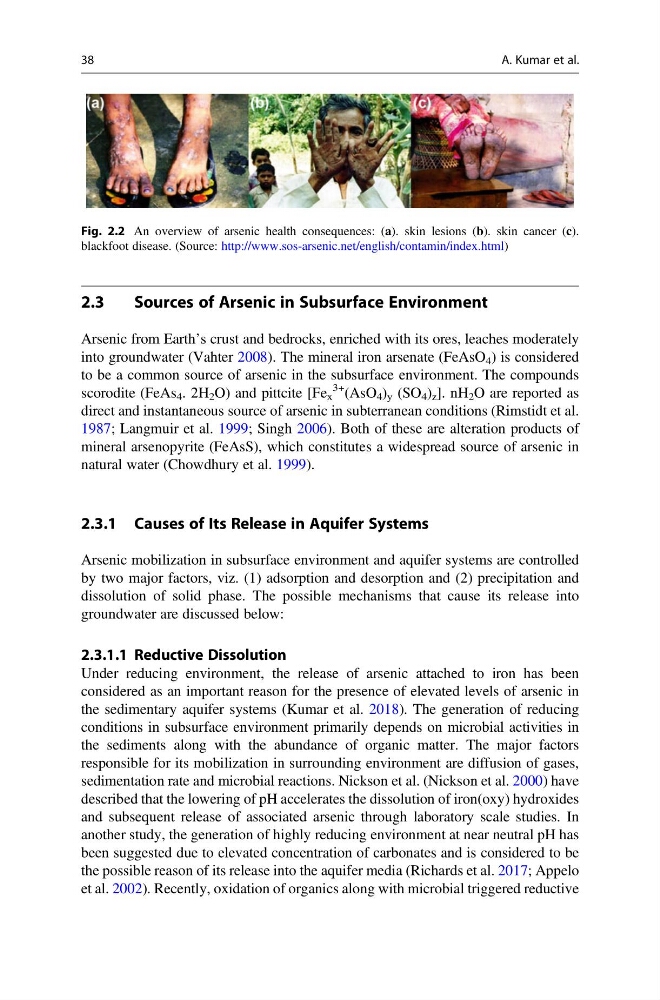
Fig. 2.2 An overview of arsenic health consequences: (a). skin lesions (b). skin cancer (c).
blackfoot disease. (Source: http://www.sos-arsenic.net/english/contamin/index.html)
38
A. Kumar et al.
Sources of Arsenic in Subsurface Environment
Arsenic from Earth’s crust and bedrocks, enriched with its ores, leaches moderately
into groundwater (Vahter 2008). The mineral iron arsenate (FeAsO 4 ) is considered
to be a common source of arsenic in the subsurface environment. The compounds
scorodite (FeAs 4 . 2H 2 O) and pittcite [Fe x
3+ (AsO 4 ) y (SO 4 ) z ]. nH 2 O are reported as
direct and instantaneous source of arsenic in subterranean conditions (Rimstidt et al.
1987; Langmuir et al. 1999; Singh 2006). Both of these are alteration products of
mineral arsenopyrite (FeAsS), which constitutes a widespread source of arsenic in
natural water (Chowdhury et al. 1999).
2.3.1 Causes of Its Release in Aquifer Systems
Arsenic mobilization in subsurface environment and aquifer systems are controlled
by two major factors, viz. (1) adsorption and desorption and (2) precipitation and
dissolution of solid phase. The possible mechanisms that cause its release into
groundwater are discussed below:
2.3.1.1 Reductive Dissolution
Under reducing environment, the release of arsenic attached to iron has been
considered as an important reason for the presence of elevated levels of arsenic in
the sedimentary aquifer systems (Kumar et al. 2018). The generation of reducing
conditions in subsurface environment primarily depends on microbial activities in
the sediments along with the abundance of organic matter. The major factors
responsible for its mobilization in surrounding environment are diffusion of gases,
sedimentation rate and microbial reactions. Nickson et al. (Nickson et al. 2000) have
described that the lowering of pH accelerates the dissolution of iron(oxy) hydroxides
and subsequent release of associated arsenic through laboratory scale studies. In
another study, the generation of highly reducing environment at near neutral pH has
been suggested due to elevated concentration of carbonates and is considered to be
the possible reason of its release into the aquifer media (Richards et al. 2017; Appelo
et al. 2002). Recently, oxidation of organics along with microbial triggered reductive
Fig. 2.2 An overview of arsenic health consequences: (a). skin lesions (b). skin cancer (c).
blackfoot disease. (Source: http://www.sos-arsenic.net/english/contamin/index.html)
38
A. Kumar et al.