

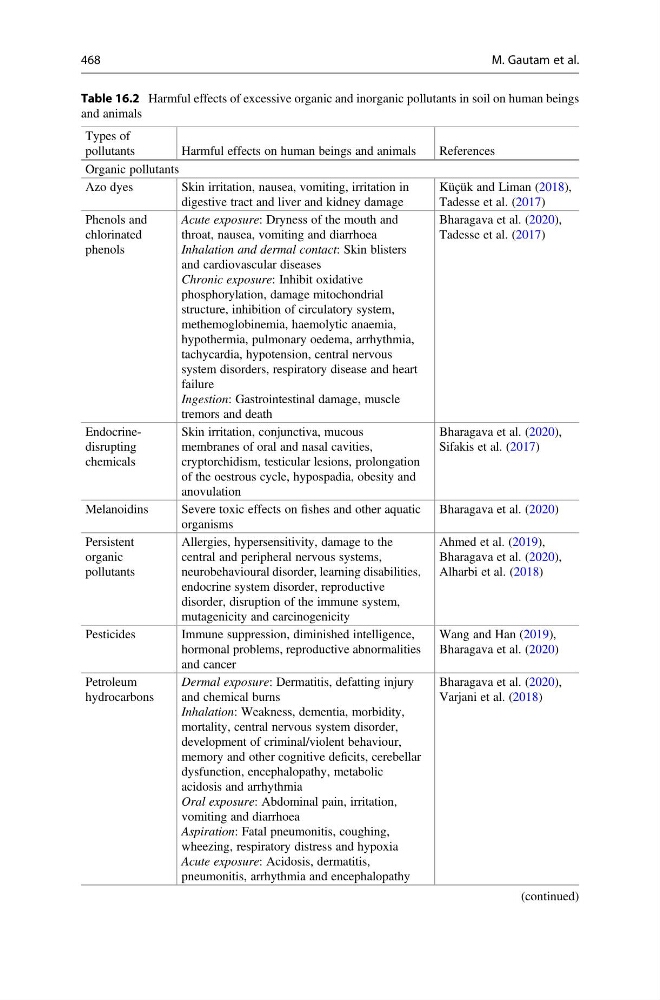
Table 16.2 Harmful effects of excessive organic and inorganic pollutants in soil on human beings
and animals
Types of
pollutants
Harmful effects on human beings and animals
References
Organic pollutants
Azo dyes
Skin irritation, nausea, vomiting, irritation in
digestive tract and liver and kidney damage
Küçük and Liman (2018),
Tadesse et al. (2017)
Phenols and
chlorinated
phenols
Acute exposure: Dryness of the mouth and
throat, nausea, vomiting and diarrhoea
Inhalation and dermal contact: Skin blisters
and cardiovascular diseases
Chronic exposure: Inhibit oxidative
phosphorylation, damage mitochondrial
structure, inhibition of circulatory system,
methemoglobinemia, haemolytic anaemia,
hypothermia, pulmonary oedema, arrhythmia,
tachycardia, hypotension, central nervous
system disorders, respiratory disease and heart
failure
Ingestion: Gastrointestinal damage, muscle
tremors and death
Bharagava et al. (2020),
Tadesse et al. (2017)
Endocrinedisrupting
chemicals
Skin irritation, conjunctiva, mucous
membranes of oral and nasal cavities,
cryptorchidism, testicular lesions, prolongation
of the oestrous cycle, hypospadia, obesity and
anovulation
Bharagava et al. (2020),
Sifakis et al. (2017)
Melanoidins
Severe toxic effects on fishes and other aquatic
organisms
Bharagava et al. (2020)
Persistent
organic
pollutants
Allergies, hypersensitivity, damage to the
central and peripheral nervous systems,
neurobehavioural disorder, learning disabilities,
endocrine system disorder, reproductive
disorder, disruption of the immune system,
mutagenicity and carcinogenicity
Ahmed et al. (2019),
Bharagava et al. (2020),
Alharbi et al. (2018)
Pesticides
Immune suppression, diminished intelligence,
hormonal problems, reproductive abnormalities
and cancer
Wang and Han (2019),
Bharagava et al. (2020)
Petroleum
hydrocarbons
Dermal exposure: Dermatitis, defatting injury
and chemical burns
Inhalation: Weakness, dementia, morbidity,
mortality, central nervous system disorder,
development of criminal/violent behaviour,
memory and other cognitive deficits, cerebellar
dysfunction, encephalopathy, metabolic
acidosis and arrhythmia
Oral exposure: Abdominal pain, irritation,
vomiting and diarrhoea
Aspiration: Fatal pneumonitis, coughing,
wheezing, respiratory distress and hypoxia
Acute exposure: Acidosis, dermatitis,
pneumonitis, arrhythmia and encephalopathy
Bharagava et al. (2020),
Varjani et al. (2018)
(continued)
468
M. Gautam et al.
and animals
Types of
pollutants
Harmful effects on human beings and animals
References
Organic pollutants
Azo dyes
Skin irritation, nausea, vomiting, irritation in
digestive tract and liver and kidney damage
Küçük and Liman (2018),
Tadesse et al. (2017)
Phenols and
chlorinated
phenols
Acute exposure: Dryness of the mouth and
throat, nausea, vomiting and diarrhoea
Inhalation and dermal contact: Skin blisters
and cardiovascular diseases
Chronic exposure: Inhibit oxidative
phosphorylation, damage mitochondrial
structure, inhibition of circulatory system,
methemoglobinemia, haemolytic anaemia,
hypothermia, pulmonary oedema, arrhythmia,
tachycardia, hypotension, central nervous
system disorders, respiratory disease and heart
failure
Ingestion: Gastrointestinal damage, muscle
tremors and death
Bharagava et al. (2020),
Tadesse et al. (2017)
Endocrinedisrupting
chemicals
Skin irritation, conjunctiva, mucous
membranes of oral and nasal cavities,
cryptorchidism, testicular lesions, prolongation
of the oestrous cycle, hypospadia, obesity and
anovulation
Bharagava et al. (2020),
Sifakis et al. (2017)
Melanoidins
Severe toxic effects on fishes and other aquatic
organisms
Bharagava et al. (2020)
Persistent
organic
pollutants
Allergies, hypersensitivity, damage to the
central and peripheral nervous systems,
neurobehavioural disorder, learning disabilities,
endocrine system disorder, reproductive
disorder, disruption of the immune system,
mutagenicity and carcinogenicity
Ahmed et al. (2019),
Bharagava et al. (2020),
Alharbi et al. (2018)
Pesticides
Immune suppression, diminished intelligence,
hormonal problems, reproductive abnormalities
and cancer
Wang and Han (2019),
Bharagava et al. (2020)
Petroleum
hydrocarbons
Dermal exposure: Dermatitis, defatting injury
and chemical burns
Inhalation: Weakness, dementia, morbidity,
mortality, central nervous system disorder,
development of criminal/violent behaviour,
memory and other cognitive deficits, cerebellar
dysfunction, encephalopathy, metabolic
acidosis and arrhythmia
Oral exposure: Abdominal pain, irritation,
vomiting and diarrhoea
Aspiration: Fatal pneumonitis, coughing,
wheezing, respiratory distress and hypoxia
Acute exposure: Acidosis, dermatitis,
pneumonitis, arrhythmia and encephalopathy
Bharagava et al. (2020),
Varjani et al. (2018)
(continued)
468
M. Gautam et al.