

et al. 2016). Cell biosynthesis, membrane stability and synthesis of RNA, lipids,
proteins and photosynthetic pigments, growth and yield are significantly affected in
plants grown on contaminated sites (Zhang et al. 2017).
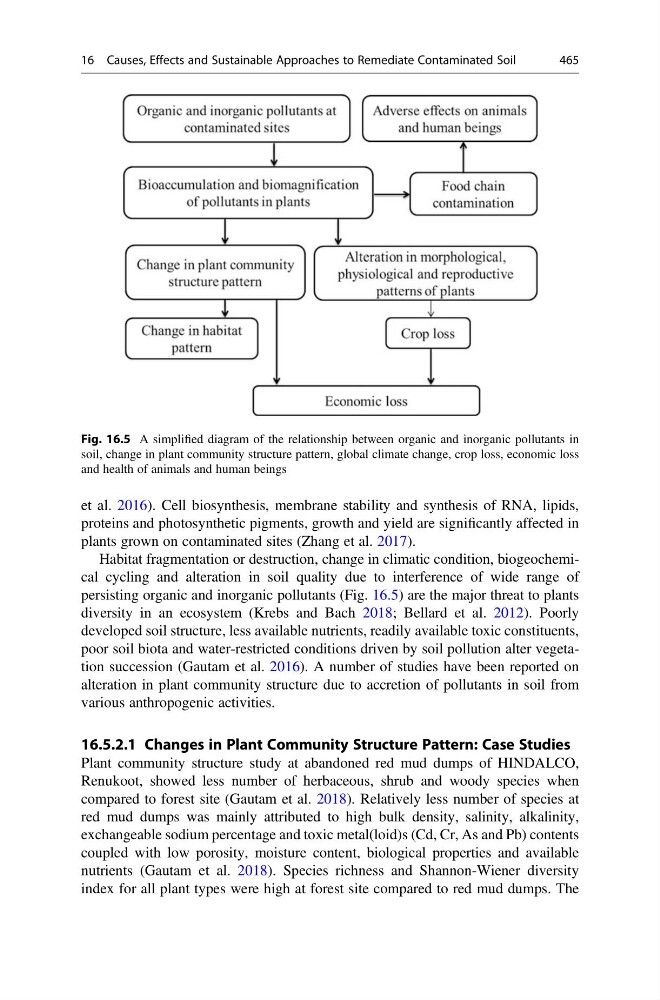
Habitat fragmentation or destruction, change in climatic condition, biogeochemical cycling and alteration in soil quality due to interference of wide range of
persisting organic and inorganic pollutants (Fig. 16.5) are the major threat to plants
diversity in an ecosystem (Krebs and Bach 2018; Bellard et al. 2012). Poorly
developed soil structure, less available nutrients, readily available toxic constituents,
poor soil biota and water-restricted conditions driven by soil pollution alter vegetation succession (Gautam et al. 2016). A number of studies have been reported on
alteration in plant community structure due to accretion of pollutants in soil from
various anthropogenic activities.
16.5.2.1 Changes in Plant Community Structure Pattern: Case Studies
Plant community structure study at abandoned red mud dumps of HINDALCO,
Renukoot, showed less number of herbaceous, shrub and woody species when
compared to forest site (Gautam et al. 2018). Relatively less number of species at
red mud dumps was mainly attributed to high bulk density, salinity, alkalinity,
exchangeable sodium percentage and toxic metal(loid)s (Cd, Cr, As and Pb) contents
coupled with low porosity, moisture content, biological properties and available
nutrients (Gautam et al. 2018). Species richness and Shannon-Wiener diversity
index for all plant types were high at forest site compared to red mud dumps. The
Fig. 16.5 A simplified diagram of the relationship between organic and inorganic pollutants in
soil, change in plant community structure pattern, global climate change, crop loss, economic loss
and health of animals and human beings
16 Causes, Effects and Sustainable Approaches to Remediate Contaminated Soil
465
proteins and photosynthetic pigments, growth and yield are significantly affected in
plants grown on contaminated sites (Zhang et al. 2017).
Habitat fragmentation or destruction, change in climatic condition, biogeochemical cycling and alteration in soil quality due to interference of wide range of
persisting organic and inorganic pollutants (Fig. 16.5) are the major threat to plants
diversity in an ecosystem (Krebs and Bach 2018; Bellard et al. 2012). Poorly
developed soil structure, less available nutrients, readily available toxic constituents,
poor soil biota and water-restricted conditions driven by soil pollution alter vegetation succession (Gautam et al. 2016). A number of studies have been reported on
alteration in plant community structure due to accretion of pollutants in soil from
various anthropogenic activities.
16.5.2.1 Changes in Plant Community Structure Pattern: Case Studies
Plant community structure study at abandoned red mud dumps of HINDALCO,
Renukoot, showed less number of herbaceous, shrub and woody species when
compared to forest site (Gautam et al. 2018). Relatively less number of species at
red mud dumps was mainly attributed to high bulk density, salinity, alkalinity,
exchangeable sodium percentage and toxic metal(loid)s (Cd, Cr, As and Pb) contents
coupled with low porosity, moisture content, biological properties and available
nutrients (Gautam et al. 2018). Species richness and Shannon-Wiener diversity
index for all plant types were high at forest site compared to red mud dumps. The
Fig. 16.5 A simplified diagram of the relationship between organic and inorganic pollutants in
soil, change in plant community structure pattern, global climate change, crop loss, economic loss
and health of animals and human beings
16 Causes, Effects and Sustainable Approaches to Remediate Contaminated Soil
465