

and radioactive gases in soil are mainly attributed to ultramafic rock specifically
serpentine and amphibole (Bloise et al. 2016; Swartjes and Tromp 2008).
16.2.2 Anthropogenic Sources
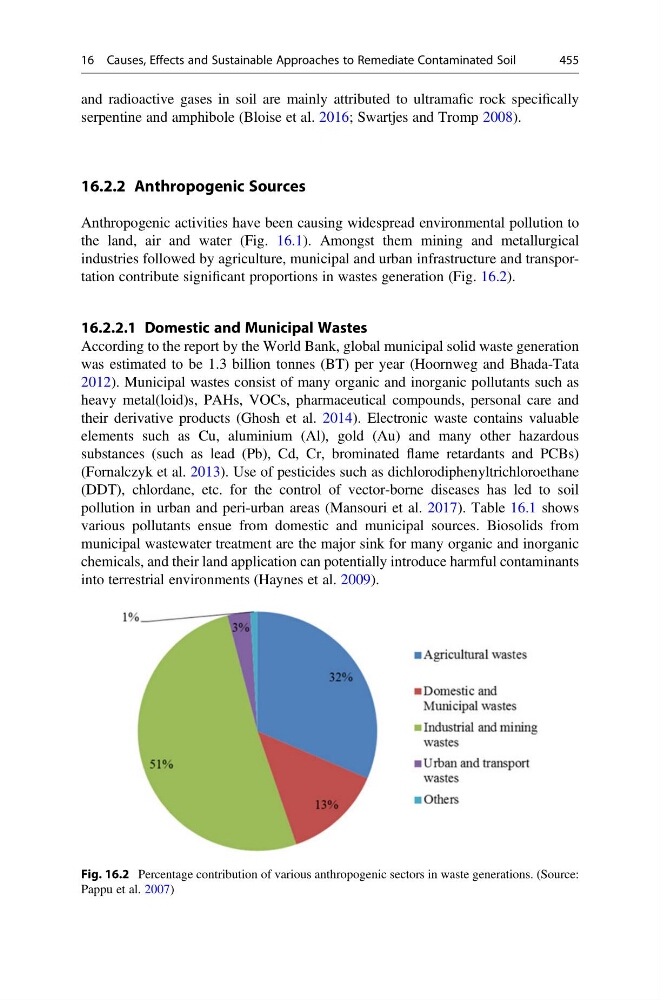
Anthropogenic activities have been causing widespread environmental pollution to
the land, air and water (Fig. 16.1). Amongst them mining and metallurgical
industries followed by agriculture, municipal and urban infrastructure and transportation contribute significant proportions in wastes generation (Fig. 16.2).
16.2.2.1 Domestic and Municipal Wastes
According to the report by the World Bank, global municipal solid waste generation
was estimated to be 1.3 billion tonnes (BT) per year (Hoornweg and Bhada-Tata
2012). Municipal wastes consist of many organic and inorganic pollutants such as
heavy metal(loid)s, PAHs, VOCs, pharmaceutical compounds, personal care and
their derivative products (Ghosh et al. 2014). Electronic waste contains valuable
elements such as Cu, aluminium (Al), gold (Au) and many other hazardous
substances (such as lead (Pb), Cd, Cr, brominated flame retardants and PCBs)
(Fornalczyk et al. 2013). Use of pesticides such as dichlorodiphenyltrichloroethane
(DDT), chlordane, etc. for the control of vector-borne diseases has led to soil
pollution in urban and peri-urban areas (Mansouri et al. 2017). Table 16.1 shows
various pollutants ensue from domestic and municipal sources. Biosolids from
municipal wastewater treatment are the major sink for many organic and inorganic
chemicals, and their land application can potentially introduce harmful contaminants
into terrestrial environments (Haynes et al. 2009).
Fig. 16.2 Percentage contribution of various anthropogenic sectors in waste generations. (Source:
Pappu et al. 2007)
16 Causes, Effects and Sustainable Approaches to Remediate Contaminated Soil
455
serpentine and amphibole (Bloise et al. 2016; Swartjes and Tromp 2008).
16.2.2 Anthropogenic Sources
Anthropogenic activities have been causing widespread environmental pollution to
the land, air and water (Fig. 16.1). Amongst them mining and metallurgical
industries followed by agriculture, municipal and urban infrastructure and transportation contribute significant proportions in wastes generation (Fig. 16.2).
16.2.2.1 Domestic and Municipal Wastes
According to the report by the World Bank, global municipal solid waste generation
was estimated to be 1.3 billion tonnes (BT) per year (Hoornweg and Bhada-Tata
2012). Municipal wastes consist of many organic and inorganic pollutants such as
heavy metal(loid)s, PAHs, VOCs, pharmaceutical compounds, personal care and
their derivative products (Ghosh et al. 2014). Electronic waste contains valuable
elements such as Cu, aluminium (Al), gold (Au) and many other hazardous
substances (such as lead (Pb), Cd, Cr, brominated flame retardants and PCBs)
(Fornalczyk et al. 2013). Use of pesticides such as dichlorodiphenyltrichloroethane
(DDT), chlordane, etc. for the control of vector-borne diseases has led to soil
pollution in urban and peri-urban areas (Mansouri et al. 2017). Table 16.1 shows
various pollutants ensue from domestic and municipal sources. Biosolids from
municipal wastewater treatment are the major sink for many organic and inorganic
chemicals, and their land application can potentially introduce harmful contaminants
into terrestrial environments (Haynes et al. 2009).
Fig. 16.2 Percentage contribution of various anthropogenic sectors in waste generations. (Source:
Pappu et al. 2007)
16 Causes, Effects and Sustainable Approaches to Remediate Contaminated Soil
455