

Other available pathogen-detecting sensors that require very less sample volume
is the polymerase chain reaction microchip. Here, the amplified DNA is taken into
the optical fiber surface plasmon resonance biosensor (Nguyen et al. 2017). This
(i)
(ii)
(iii)
Sample with
pathogens
Enriched Pathogen Sample
Magnetic
separation
(iv)
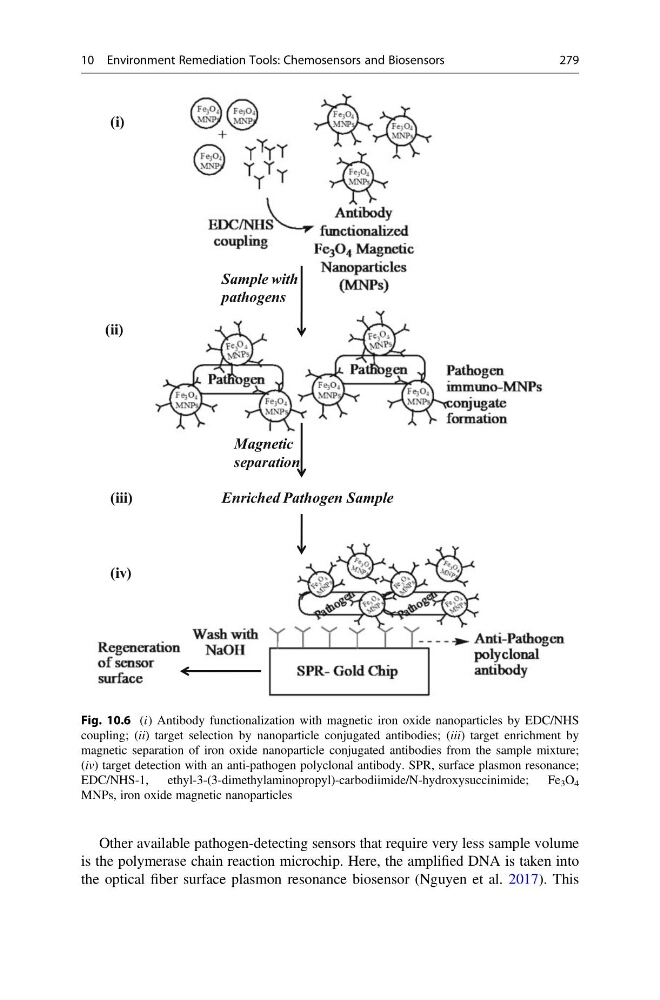
Fig. 10.6 (i) Antibody functionalization with magnetic iron oxide nanoparticles by EDC/NHS
coupling; (ii) target selection by nanoparticle conjugated antibodies; (iii) target enrichment by
magnetic separation of iron oxide nanoparticle conjugated antibodies from the sample mixture;
(iv) target detection with an anti-pathogen polyclonal antibody. SPR, surface plasmon resonance;
EDC/NHS-1, ethyl-3-(3-dimethylaminopropyl)-carbodiimide/N-hydroxysuccinimide; Fe 3 O 4
MNPs, iron oxide magnetic nanoparticles
10 Environment Remediation Tools: Chemosensors and Biosensors
279
is the polymerase chain reaction microchip. Here, the amplified DNA is taken into
the optical fiber surface plasmon resonance biosensor (Nguyen et al. 2017). This
(i)
(ii)
(iii)
Sample with
pathogens
Enriched Pathogen Sample
Magnetic
separation
(iv)
Fig. 10.6 (i) Antibody functionalization with magnetic iron oxide nanoparticles by EDC/NHS
coupling; (ii) target selection by nanoparticle conjugated antibodies; (iii) target enrichment by
magnetic separation of iron oxide nanoparticle conjugated antibodies from the sample mixture;
(iv) target detection with an anti-pathogen polyclonal antibody. SPR, surface plasmon resonance;
EDC/NHS-1, ethyl-3-(3-dimethylaminopropyl)-carbodiimide/N-hydroxysuccinimide; Fe 3 O 4
MNPs, iron oxide magnetic nanoparticles
10 Environment Remediation Tools: Chemosensors and Biosensors
279