

products and modern clothing (Woodall et al. 2015; Henry et al. 2019). Separated
MFs are arbitrarily dispersed, before settling in the atmosphere (Dris et al. 2016). Till
date, these microparticles have been reported in water and mud samples from
seashore areas throughout the world (Browne et al. 2011).
Leading synthetic fibers present abundantly in the environment were polyester,
acrylic, polypropylene, polyethylene, and polyamide. Only a small portion, i.e.,
approximately 6%, of visible pieces of fabric corresponds to the total mass of fiber
particles inflowing the oceans. Around 34.8% of secondary microplastics are releasing into the ocean through garment washing, and roughly 28.3% MF particles are
releasing into the environment from the abrasion of tires (Boucher and Friot 2017).
In 2016, approximately 65 million tons of plastics were produced for manufacturing
synthetic garments (The Fiber Year, 2017). According to IUCN report 2017,
approximately 700,000 microparticles are emitted per piece of clothing through
domestic laundering, and each time synthetic jackets are washed, about 2 grams of
microfleeces are released. Around 0.2 million tons of MFs are released per
annum during manufacruring processes and household laundering. Subsequently
these pollutants find their way to the ocean which generates high alert for the aquatic
organisms. In a scientific investigation, it was concluded that nature and amount of
MF discharge are largely dependent on the characteristics of the garments and
approximately 300 mg of particles will be discharged per one kg of washing
garment, that is, 1,500,000 numbers of particles. In the United States, approximately
8 billion microbead pieces are released from the municipal wastewater treatment
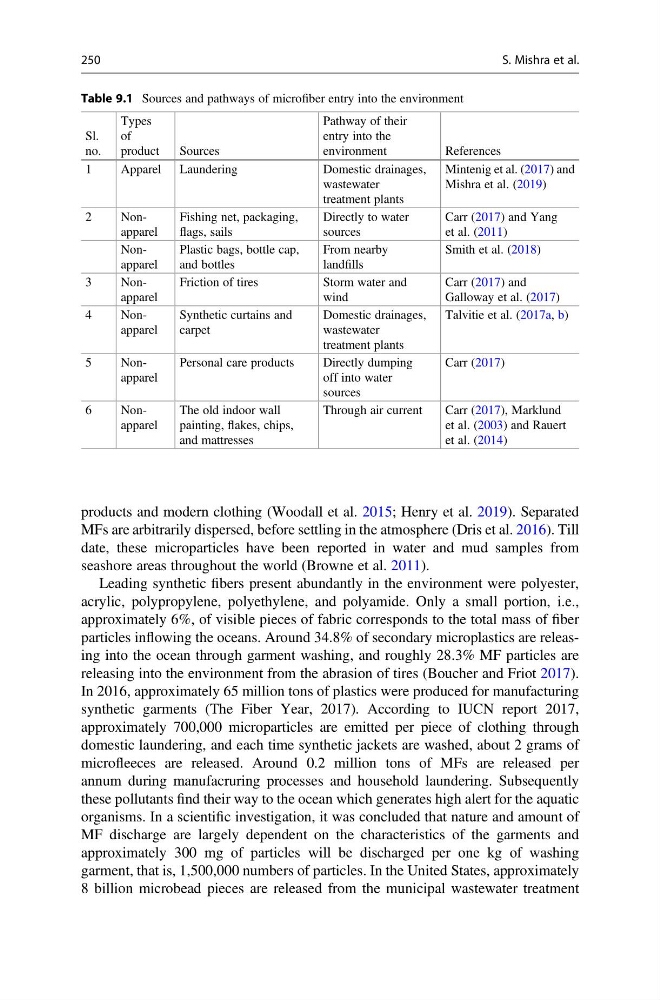
Table 9.1 Sources and pathways of microfiber entry into the environment
Sl.
no.
Types
of
product
Sources
Pathway of their
entry into the
environment
References
1
Apparel Laundering
Domestic drainages,
wastewater
treatment plants
Mintenig et al. (2017) and
Mishra et al. (2019)
2
Nonapparel
Fishing net, packaging,
flags, sails
Directly to water
sources
Carr (2017) and Yang
et al. (2011)
Nonapparel
Plastic bags, bottle cap,
and bottles
From nearby
landfills
Smith et al. (2018)
3
Nonapparel
Friction of tires
Storm water and
wind
Carr (2017) and
Galloway et al. (2017)
4
Nonapparel
Synthetic curtains and
carpet
Domestic drainages,
wastewater
treatment plants
Talvitie et al. (2017a, b)
5
Nonapparel
Personal care products
Directly dumping
off into water
sources
Carr (2017)
6
Nonapparel
The old indoor wall
painting, flakes, chips,
and mattresses
Through air current
Carr (2017), Marklund
et al. (2003) and Rauert
et al. (2014)
250
S. Mishra et al.
MFs are arbitrarily dispersed, before settling in the atmosphere (Dris et al. 2016). Till
date, these microparticles have been reported in water and mud samples from
seashore areas throughout the world (Browne et al. 2011).
Leading synthetic fibers present abundantly in the environment were polyester,
acrylic, polypropylene, polyethylene, and polyamide. Only a small portion, i.e.,
approximately 6%, of visible pieces of fabric corresponds to the total mass of fiber
particles inflowing the oceans. Around 34.8% of secondary microplastics are releasing into the ocean through garment washing, and roughly 28.3% MF particles are
releasing into the environment from the abrasion of tires (Boucher and Friot 2017).
In 2016, approximately 65 million tons of plastics were produced for manufacturing
synthetic garments (The Fiber Year, 2017). According to IUCN report 2017,
approximately 700,000 microparticles are emitted per piece of clothing through
domestic laundering, and each time synthetic jackets are washed, about 2 grams of
microfleeces are released. Around 0.2 million tons of MFs are released per
annum during manufacruring processes and household laundering. Subsequently
these pollutants find their way to the ocean which generates high alert for the aquatic
organisms. In a scientific investigation, it was concluded that nature and amount of
MF discharge are largely dependent on the characteristics of the garments and
approximately 300 mg of particles will be discharged per one kg of washing
garment, that is, 1,500,000 numbers of particles. In the United States, approximately
8 billion microbead pieces are released from the municipal wastewater treatment
Table 9.1 Sources and pathways of microfiber entry into the environment
Sl.
no.
Types
of
product
Sources
Pathway of their
entry into the
environment
References
1
Apparel Laundering
Domestic drainages,
wastewater
treatment plants
Mintenig et al. (2017) and
Mishra et al. (2019)
2
Nonapparel
Fishing net, packaging,
flags, sails
Directly to water
sources
Carr (2017) and Yang
et al. (2011)
Nonapparel
Plastic bags, bottle cap,
and bottles
From nearby
landfills
Smith et al. (2018)
3
Nonapparel
Friction of tires
Storm water and
wind
Carr (2017) and
Galloway et al. (2017)
4
Nonapparel
Synthetic curtains and
carpet
Domestic drainages,
wastewater
treatment plants
Talvitie et al. (2017a, b)
5
Nonapparel
Personal care products
Directly dumping
off into water
sources
Carr (2017)
6
Nonapparel
The old indoor wall
painting, flakes, chips,
and mattresses
Through air current
Carr (2017), Marklund
et al. (2003) and Rauert
et al. (2014)
250
S. Mishra et al.