

advancement of several unique solutions. Products like Guppyfriend Bag and Cora
Balls have already been developed and urbanized (Gear of the future 2016; Rozalia
Project 2017) for filtering the MF particles. The pollution requires solution at
manifold levels with apparel product industries, customers themselves, and sewage
water treatment plants.
9.2
Sources of Microfiber Pollution
The quality of the river and ocean water is deteriorating due to the direct release of
urban, industrial, and other pollutants which can’t be captured by wastewater
treatment plants (WWTP). Some of the key and emerging sources of aquatic
pollution are domestic laundering, textile and tire industries, personal care products,
and household drainages (Almroth et al. 2017). Man-made textile fibers in contrast
to natural fibers are nonbiodegradable, so these particles are persistent in nature
(Mishra et al. 2019; Reed et al. 2018). Coastal tourism and commercial fishing all are
sources of these plastic particles that can directly invade into various water streams
(Cole et al. 2011). Various sources and the pathways of their entry into the environment are represented in Table 9.1.
Synthetic apparel products have developed an economical, long-lasting, and
multipurpose nature over natural fabric (Henry et al. 2019). Additionally, the natural
fabrics like cotton and wool are easily accessible, have lower prices, and contribute
smaller amount of pollution to various water sources. The growing synthetic fabric
waste in landfill and as garbage that are noticeable on shorelines and coastal
waterways has come forward as a key global concern, predominantly in various
water streams (Jambeck et al. 2015). The key sources of viscose are personal hygiene
0
100
200
300
400
500
600
700
800
900
1000
1980
1985
1990
2010
2025
2040
2050
Years
Amount of microfiber generation in million tons
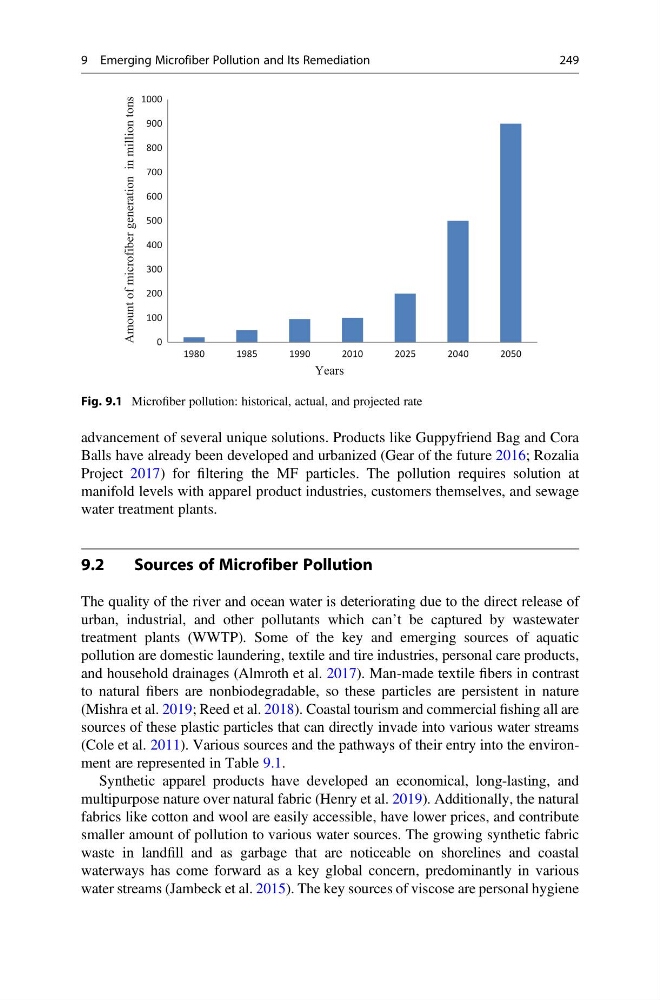
Fig. 9.1 Microfiber pollution: historical, actual, and projected rate
9 Emerging Microfiber Pollution and Its Remediation
249
Balls have already been developed and urbanized (Gear of the future 2016; Rozalia
Project 2017) for filtering the MF particles. The pollution requires solution at
manifold levels with apparel product industries, customers themselves, and sewage
water treatment plants.
9.2
Sources of Microfiber Pollution
The quality of the river and ocean water is deteriorating due to the direct release of
urban, industrial, and other pollutants which can’t be captured by wastewater
treatment plants (WWTP). Some of the key and emerging sources of aquatic
pollution are domestic laundering, textile and tire industries, personal care products,
and household drainages (Almroth et al. 2017). Man-made textile fibers in contrast
to natural fibers are nonbiodegradable, so these particles are persistent in nature
(Mishra et al. 2019; Reed et al. 2018). Coastal tourism and commercial fishing all are
sources of these plastic particles that can directly invade into various water streams
(Cole et al. 2011). Various sources and the pathways of their entry into the environment are represented in Table 9.1.
Synthetic apparel products have developed an economical, long-lasting, and
multipurpose nature over natural fabric (Henry et al. 2019). Additionally, the natural
fabrics like cotton and wool are easily accessible, have lower prices, and contribute
smaller amount of pollution to various water sources. The growing synthetic fabric
waste in landfill and as garbage that are noticeable on shorelines and coastal
waterways has come forward as a key global concern, predominantly in various
water streams (Jambeck et al. 2015). The key sources of viscose are personal hygiene
0
100
200
300
400
500
600
700
800
900
1000
1980
1985
1990
2010
2025
2040
2050
Years
Amount of microfiber generation in million tons
Fig. 9.1 Microfiber pollution: historical, actual, and projected rate
9 Emerging Microfiber Pollution and Its Remediation
249