

reported by other authors who conducted their research in the area, the results
indicate a long-term Cu, Ni, Zn and to some extent also Pb contamination in Hornád
and Hnilec river sediments which should be of concern from the standpoint of health
of aquatic ecosystem. Regarding future directions for research, particular attention
should be given to the issue of resuspension and remobilisation of hazardous
elements from sediments during dry seasons when low flows are experienced
because the adverse effects may become significant (Ilie et al. 2014).
The removal of heavy metals cations, such as Cu
2+ , Ni
2+ , Cd
2+ and Pb
2+ , has been
receiving extensive attention; in some cases, removal yields close to 100% have been
reported. During the last decade, the non-ionic surfactants and Aspergillus niger
strain’s metabolites have been successfully applied in the extraction of Zn, As, Cd,
Pb, Cu, Al, Fe, Sn, Co, Au, Mn, Se, Sb and Si from various solid substrates in a
series of experiments undertaken by our research team (Kolenčík et al. 2011,
2013a, b; Urík et al. 2014, 2015, 2018, 2019; Boriová et al. 2016; Milová-Žiaková
et al. 2016; Polák et al. 2018, 2019). In this study, the agents mentioned above
showed only a weak capability to remove accumulated metals from collected
samples (removal efficacy <6%; see Table 5.4). In contrast, a natural plant-based
biosurfactant saponin with the removal percentage range of 14–46% proved itself as
a promising biodegradable agent for Cu, Ni and Zn remediation from contaminated
soils and sediments (Fig. 5.5). Maximal removal yields were achieved at saponin
concentration of 2% (m/v) and removal incubation time of 24 h. Higher
concentrations and longer incubation time have brought no improvement in removal
efficacy. A higher removal efficacy can though be achieved by multiple washing.
This parameter is always affected by environmental variables such as soil and
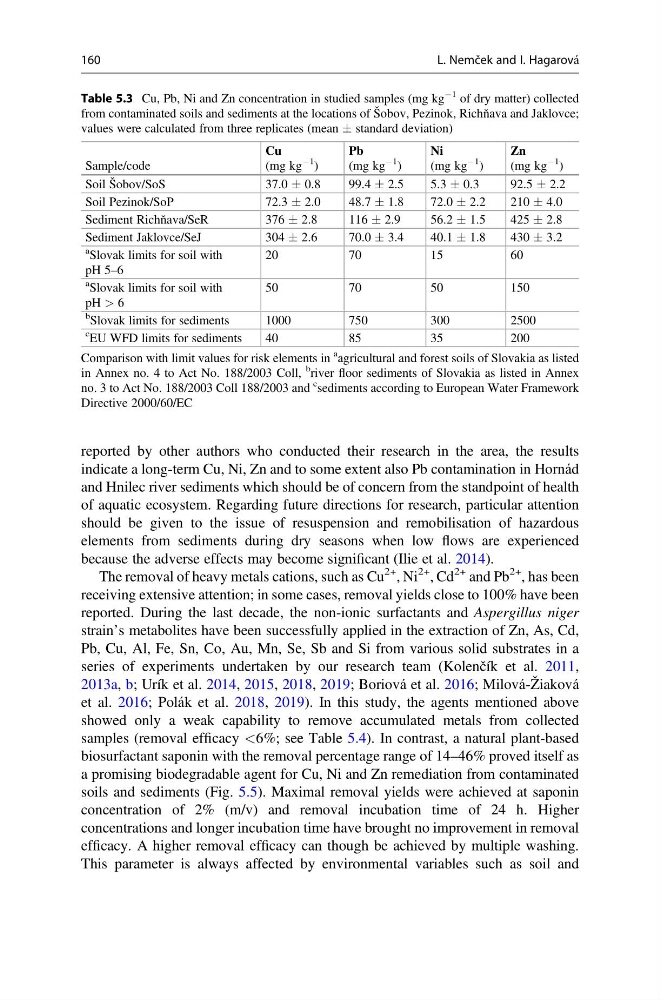
Table 5.3 Cu, Pb, Ni and Zn concentration in studied samples (mg kg
À1 of dry matter) collected
from contaminated soils and sediments at the locations of Šobov, Pezinok, Richňava and Jaklovce;
values were calculated from three replicates (mean Æ standard deviation)
Sample/code
Cu
(mg kg
À1
)
Pb
(mg kg
À1
)
Ni
(mg kg
À1
)
Zn
(mg kg
À1
)
Soil Šobov/SoS
37.0 Æ 0.8
99.4 Æ 2.5
5.3 Æ 0.3
92.5 Æ 2.2
Soil Pezinok/SoP
72.3 Æ 2.0
48.7 Æ 1.8
72.0 Æ 2.2
210 Æ 4.0
Sediment Richňava/SeR
376 Æ 2.8
116 Æ 2.9
56.2 Æ 1.5
425 Æ 2.8
Sediment Jaklovce/SeJ
304 Æ 2.6
70.0 Æ 3.4
40.1 Æ 1.8
430 Æ 3.2
a Slovak limits for soil with
pH 5–6
20
70
15
60
a Slovak limits for soil with
pH > 6
50
70
50
150
b
Slovak limits for sediments
1000
750
300
2500
c EU WFD limits for sediments
40
85
35
200
Comparison with limit values for risk elements in
a agricultural and forest soils of Slovakia as listed
in Annex no. 4 to Act No. 188/2003 Coll,
b
river floor sediments of Slovakia as listed in Annex
no. 3 to Act No. 188/2003 Coll 188/2003 and
c sediments according to European Water Framework
Directive 2000/60/EC
160
L. Nemček and I. Hagarová
indicate a long-term Cu, Ni, Zn and to some extent also Pb contamination in Hornád
and Hnilec river sediments which should be of concern from the standpoint of health
of aquatic ecosystem. Regarding future directions for research, particular attention
should be given to the issue of resuspension and remobilisation of hazardous
elements from sediments during dry seasons when low flows are experienced
because the adverse effects may become significant (Ilie et al. 2014).
The removal of heavy metals cations, such as Cu
2+ , Ni
2+ , Cd
2+ and Pb
2+ , has been
receiving extensive attention; in some cases, removal yields close to 100% have been
reported. During the last decade, the non-ionic surfactants and Aspergillus niger
strain’s metabolites have been successfully applied in the extraction of Zn, As, Cd,
Pb, Cu, Al, Fe, Sn, Co, Au, Mn, Se, Sb and Si from various solid substrates in a
series of experiments undertaken by our research team (Kolenčík et al. 2011,
2013a, b; Urík et al. 2014, 2015, 2018, 2019; Boriová et al. 2016; Milová-Žiaková
et al. 2016; Polák et al. 2018, 2019). In this study, the agents mentioned above
showed only a weak capability to remove accumulated metals from collected
samples (removal efficacy <6%; see Table 5.4). In contrast, a natural plant-based
biosurfactant saponin with the removal percentage range of 14–46% proved itself as
a promising biodegradable agent for Cu, Ni and Zn remediation from contaminated
soils and sediments (Fig. 5.5). Maximal removal yields were achieved at saponin
concentration of 2% (m/v) and removal incubation time of 24 h. Higher
concentrations and longer incubation time have brought no improvement in removal
efficacy. A higher removal efficacy can though be achieved by multiple washing.
This parameter is always affected by environmental variables such as soil and
Table 5.3 Cu, Pb, Ni and Zn concentration in studied samples (mg kg
À1 of dry matter) collected
from contaminated soils and sediments at the locations of Šobov, Pezinok, Richňava and Jaklovce;
values were calculated from three replicates (mean Æ standard deviation)
Sample/code
Cu
(mg kg
À1
)
Pb
(mg kg
À1
)
Ni
(mg kg
À1
)
Zn
(mg kg
À1
)
Soil Šobov/SoS
37.0 Æ 0.8
99.4 Æ 2.5
5.3 Æ 0.3
92.5 Æ 2.2
Soil Pezinok/SoP
72.3 Æ 2.0
48.7 Æ 1.8
72.0 Æ 2.2
210 Æ 4.0
Sediment Richňava/SeR
376 Æ 2.8
116 Æ 2.9
56.2 Æ 1.5
425 Æ 2.8
Sediment Jaklovce/SeJ
304 Æ 2.6
70.0 Æ 3.4
40.1 Æ 1.8
430 Æ 3.2
a Slovak limits for soil with
pH 5–6
20
70
15
60
a Slovak limits for soil with
pH > 6
50
70
50
150
b
Slovak limits for sediments
1000
750
300
2500
c EU WFD limits for sediments
40
85
35
200
Comparison with limit values for risk elements in
a agricultural and forest soils of Slovakia as listed
in Annex no. 4 to Act No. 188/2003 Coll,
b
river floor sediments of Slovakia as listed in Annex
no. 3 to Act No. 188/2003 Coll 188/2003 and
c sediments according to European Water Framework
Directive 2000/60/EC
160
L. Nemček and I. Hagarová