

percentages from different sources but are difficult to differentiate as appeared in
the Raman spectroscopy (Fig. 2.11) (Schymanski et al. 2018).
Infrared technique can also be utilized for the determination of plastic particles by
visualizing their distinctive infrared spectra. Fourier transform infrared spectroscopy
and Raman spectroscopy are also used to provide complementary details of microparticles. Infrared radiations strike with the molecule of the sample and cause
vibrational excitations, and these excitations depend upon the molecular structure
and composition of the molecules at the specific wavelength. Infrared radiation
energy depends upon the wavelength absorbed, which can be used for the determination of characteristic spectra. For the identification of microplastics, plastic polymers possess specific spectra and bands. Fourier transform infrared spectroscopy can
be used for the identification of intensity of oxidation that provides information of
physiochemical weathering of the sample molecules. Large particles can be
Water Sample
>0.3 mm fraction
Wet Sieve
>5 mm fraction
Mass of total solids
Wet peroxide oxidation
Density separation
Microscopic
examination
Gravimetric analysis
Discarded
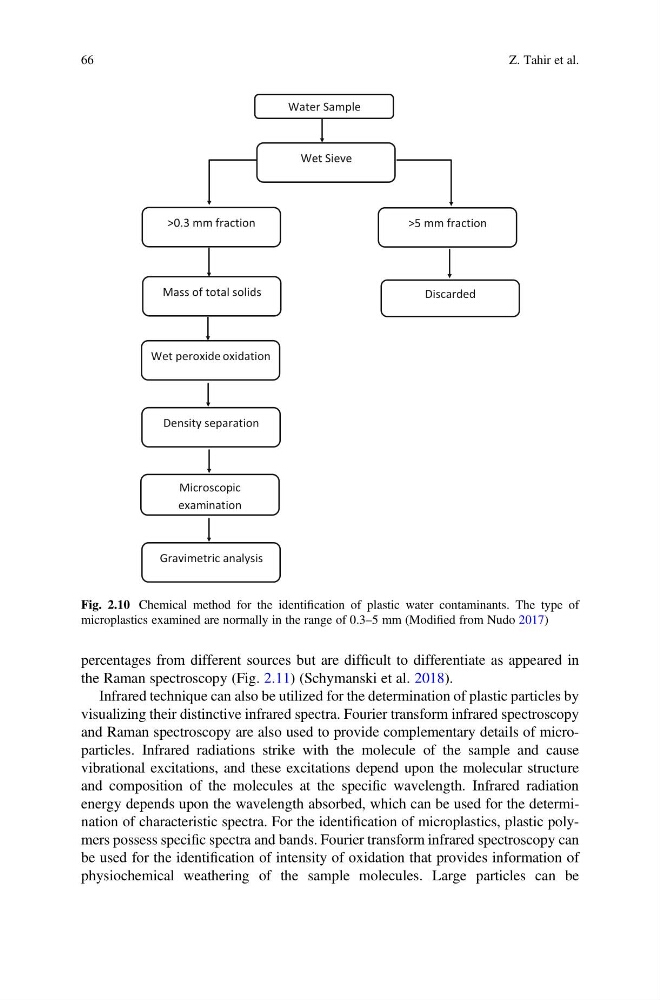
Fig. 2.10 Chemical method for the identification of plastic water contaminants. The type of
microplastics examined are normally in the range of 0.3–5 mm (Modified from Nudo 2017)
66
Z. Tahir et al.
the Raman spectroscopy (Fig. 2.11) (Schymanski et al. 2018).
Infrared technique can also be utilized for the determination of plastic particles by
visualizing their distinctive infrared spectra. Fourier transform infrared spectroscopy
and Raman spectroscopy are also used to provide complementary details of microparticles. Infrared radiations strike with the molecule of the sample and cause
vibrational excitations, and these excitations depend upon the molecular structure
and composition of the molecules at the specific wavelength. Infrared radiation
energy depends upon the wavelength absorbed, which can be used for the determination of characteristic spectra. For the identification of microplastics, plastic polymers possess specific spectra and bands. Fourier transform infrared spectroscopy can
be used for the identification of intensity of oxidation that provides information of
physiochemical weathering of the sample molecules. Large particles can be
Water Sample
>0.3 mm fraction
Wet Sieve
>5 mm fraction
Mass of total solids
Wet peroxide oxidation
Density separation
Microscopic
examination
Gravimetric analysis
Discarded
Fig. 2.10 Chemical method for the identification of plastic water contaminants. The type of
microplastics examined are normally in the range of 0.3–5 mm (Modified from Nudo 2017)
66
Z. Tahir et al.