

decolorization. Different strains may lead to a multisite attack on dye molecules or
may assist each other by providing decomposition products (Saratale et al. 2011;
Esther et al. 2004). A microbial consortium consisting Pseudomonas bacterial
sp. decolorized textile dyestuff and Reactive Orange 16 dye (100 mg L
À1 ) by the
metabolic activity in 2 days, much faster and safer than the individual bacteria, under
pH 7 and 30
C temperature. The role of laccase and reductase enzyme in biodegradation was confirmed. Bio-treated samples were found nontoxic in cytotoxicity
analysis (Jadhav et al. 2010).
Green HE4BD dye and alike reactive dyes were decolorized and degraded to
nontoxic products by oxidoreductive enzymes produced from bacterial consortium
of Proteus vulgaris NCIM-2027 and Micrococcus glutamicus NCIM-2168. In
addition to much faster and higher decolorization efficiency than individual bacteria,
the consortium offered use of low-cost co-substrates, i.e., rice straw and rice husk
(Saratale et al. 2010). Such reports inspired the researchers to develop novel bacterial
consortia. One such example is an acclimated novel microbial consortium “Bx,”
introduced to decolorize Blue Bezaktiv S-GLD 150. Under optimized conditions, the
consortium showed 88–97% decolorization rates and 95–98% chemical oxygen
demand removal. The process holds many advantages over traditional wastewater
treatments concerning investment, process control, operative convenience, and
environmental safety (Khouni et al. 2012).
A consortium consisting bacterial strains A. radiobacter, Bacillus spp.,
S. paucimobilis, and A. hydrophila was obtained from activated sludge of a dyeing
industry plant. The potential of individual bacteria was tested for the degradation and
color removal of triphenylmethane dyes and then compared to the combined treatment as a consortium. Individual bacterial decolorized 7 and 2, 50 mg L
À1 each, in
1 day, whereas consortium showed a high decolorization for 7 (91%) and 2 (99%) in
just 2 h (Cheriaa et al. 2012). Direct Red 31 and Direct Blue 151 dyes were
decolorized by an alkaliphilic bacterial consortium consisting of Bacillus flexus
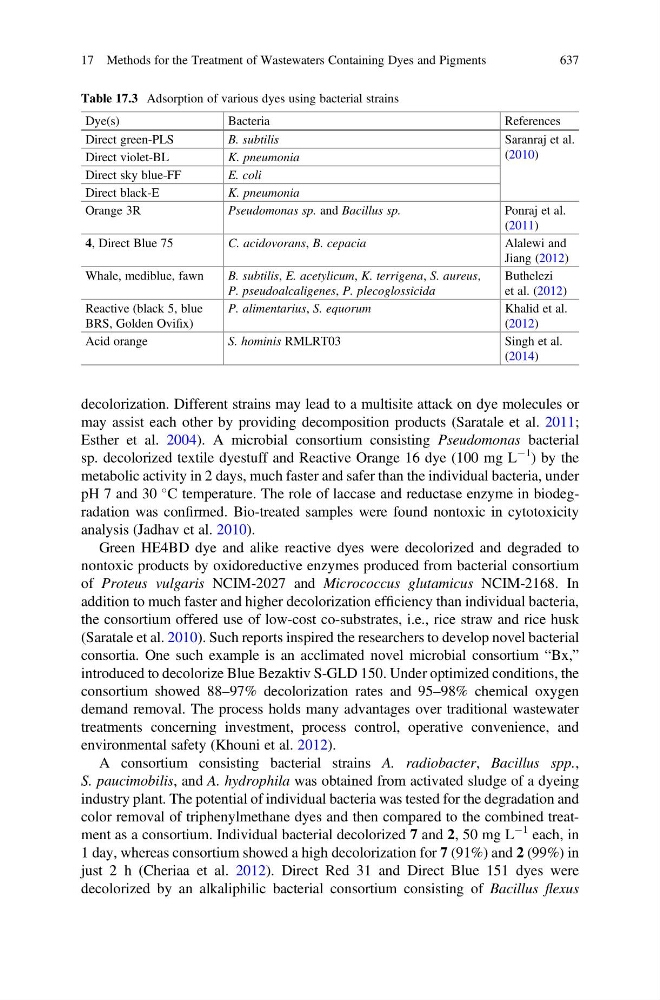
Table 17.3 Adsorption of various dyes using bacterial strains
Dye(s)
Bacteria
References
Direct green-PLS
B. subtilis
Saranraj et al.
(2010)
Direct violet-BL
K. pneumonia
Direct sky blue-FF
E. coli
Direct black-E
K. pneumonia
Orange 3R
Pseudomonas sp. and Bacillus sp.
Ponraj et al.
(2011)
4, Direct Blue 75
C. acidovorans, B. cepacia
Alalewi and
Jiang (2012)
Whale, mediblue, fawn
B. subtilis, E. acetylicum, K. terrigena, S. aureus,
P. pseudoalcaligenes, P. plecoglossicida
Buthelezi
et al. (2012)
Reactive (black 5, blue
BRS, Golden Ovifix)
P. alimentarius, S. equorum
Khalid et al.
(2012)
Acid orange
S. hominis RMLRT03
Singh et al.
(2014)
17 Methods for the Treatment of Wastewaters Containing Dyes and Pigments
637
may assist each other by providing decomposition products (Saratale et al. 2011;
Esther et al. 2004). A microbial consortium consisting Pseudomonas bacterial
sp. decolorized textile dyestuff and Reactive Orange 16 dye (100 mg L
À1 ) by the
metabolic activity in 2 days, much faster and safer than the individual bacteria, under
pH 7 and 30
C temperature. The role of laccase and reductase enzyme in biodegradation was confirmed. Bio-treated samples were found nontoxic in cytotoxicity
analysis (Jadhav et al. 2010).
Green HE4BD dye and alike reactive dyes were decolorized and degraded to
nontoxic products by oxidoreductive enzymes produced from bacterial consortium
of Proteus vulgaris NCIM-2027 and Micrococcus glutamicus NCIM-2168. In
addition to much faster and higher decolorization efficiency than individual bacteria,
the consortium offered use of low-cost co-substrates, i.e., rice straw and rice husk
(Saratale et al. 2010). Such reports inspired the researchers to develop novel bacterial
consortia. One such example is an acclimated novel microbial consortium “Bx,”
introduced to decolorize Blue Bezaktiv S-GLD 150. Under optimized conditions, the
consortium showed 88–97% decolorization rates and 95–98% chemical oxygen
demand removal. The process holds many advantages over traditional wastewater
treatments concerning investment, process control, operative convenience, and
environmental safety (Khouni et al. 2012).
A consortium consisting bacterial strains A. radiobacter, Bacillus spp.,
S. paucimobilis, and A. hydrophila was obtained from activated sludge of a dyeing
industry plant. The potential of individual bacteria was tested for the degradation and
color removal of triphenylmethane dyes and then compared to the combined treatment as a consortium. Individual bacterial decolorized 7 and 2, 50 mg L
À1 each, in
1 day, whereas consortium showed a high decolorization for 7 (91%) and 2 (99%) in
just 2 h (Cheriaa et al. 2012). Direct Red 31 and Direct Blue 151 dyes were
decolorized by an alkaliphilic bacterial consortium consisting of Bacillus flexus
Table 17.3 Adsorption of various dyes using bacterial strains
Dye(s)
Bacteria
References
Direct green-PLS
B. subtilis
Saranraj et al.
(2010)
Direct violet-BL
K. pneumonia
Direct sky blue-FF
E. coli
Direct black-E
K. pneumonia
Orange 3R
Pseudomonas sp. and Bacillus sp.
Ponraj et al.
(2011)
4, Direct Blue 75
C. acidovorans, B. cepacia
Alalewi and
Jiang (2012)
Whale, mediblue, fawn
B. subtilis, E. acetylicum, K. terrigena, S. aureus,
P. pseudoalcaligenes, P. plecoglossicida
Buthelezi
et al. (2012)
Reactive (black 5, blue
BRS, Golden Ovifix)
P. alimentarius, S. equorum
Khalid et al.
(2012)
Acid orange
S. hominis RMLRT03
Singh et al.
(2014)
17 Methods for the Treatment of Wastewaters Containing Dyes and Pigments
637