

17.2 Physical Methods
Alongside other methods being adapted for degradation or decolorization of dyes
from wastewater, significant contributions come from physical methods (Yagub
et al. 2014). Based on the reported literature, various physical methods, i.e., adsorption (Gök et al. 2010), coagulation-flocculation (Szyguła et al. 2009), ion exchange
(Bayramoglu et al. 2009), and nanofiltration (Gönder et al. 2011), are discussed.
Physical methods find most of the worth in the industry and are widely used because
of higher effectiveness in dye removal and low operating cost. The most viable
physical methods being used are adsorption, ion exchange, and nanofiltration to treat
different dye-contaminated industrial effluents (Monika 2012). Among the methods
mentioned above, literature reports disclosed that adsorption stands tall due to
feasible operational measures, simplicity of design, flexibility, low cost, insensitivity
to toxic pollutants, and no harmful products (Gupta 2009). Adsorption carries dual
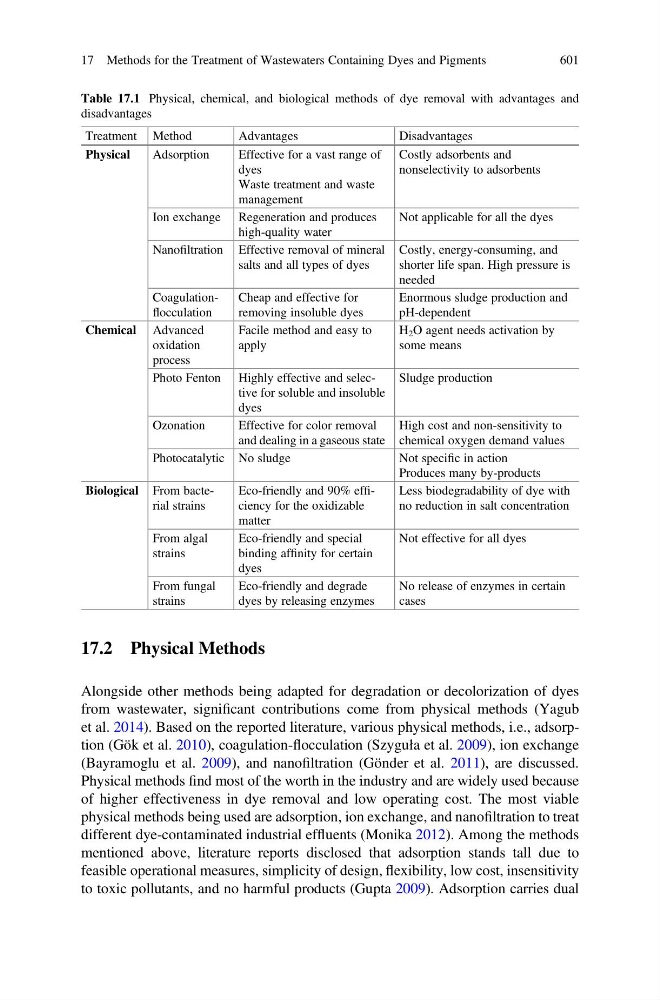
Table 17.1 Physical, chemical, and biological methods of dye removal with advantages and
disadvantages
Treatment Method
Advantages
Disadvantages
Physical
Adsorption
Effective for a vast range of
dyes
Waste treatment and waste
management
Costly adsorbents and
nonselectivity to adsorbents
Ion exchange Regeneration and produces
high-quality water
Not applicable for all the dyes
Nanofiltration Effective removal of mineral
salts and all types of dyes
Costly, energy-consuming, and
shorter life span. High pressure is
needed
Coagulationflocculation
Cheap and effective for
removing insoluble dyes
Enormous sludge production and
pH-dependent
Chemical Advanced
oxidation
process
Facile method and easy to
apply
H 2 O agent needs activation by
some means
Photo Fenton Highly effective and selective for soluble and insoluble
dyes
Sludge production
Ozonation
Effective for color removal
and dealing in a gaseous state
High cost and non-sensitivity to
chemical oxygen demand values
Photocatalytic No sludge
Not specific in action
Produces many by-products
Biological From bacterial strains
Eco-friendly and 90% efficiency for the oxidizable
matter
Less biodegradability of dye with
no reduction in salt concentration
From algal
strains
Eco-friendly and special
binding affinity for certain
dyes
Not effective for all dyes
From fungal
strains
Eco-friendly and degrade
dyes by releasing enzymes
No release of enzymes in certain
cases
17 Methods for the Treatment of Wastewaters Containing Dyes and Pigments
601
Alongside other methods being adapted for degradation or decolorization of dyes
from wastewater, significant contributions come from physical methods (Yagub
et al. 2014). Based on the reported literature, various physical methods, i.e., adsorption (Gök et al. 2010), coagulation-flocculation (Szyguła et al. 2009), ion exchange
(Bayramoglu et al. 2009), and nanofiltration (Gönder et al. 2011), are discussed.
Physical methods find most of the worth in the industry and are widely used because
of higher effectiveness in dye removal and low operating cost. The most viable
physical methods being used are adsorption, ion exchange, and nanofiltration to treat
different dye-contaminated industrial effluents (Monika 2012). Among the methods
mentioned above, literature reports disclosed that adsorption stands tall due to
feasible operational measures, simplicity of design, flexibility, low cost, insensitivity
to toxic pollutants, and no harmful products (Gupta 2009). Adsorption carries dual
Table 17.1 Physical, chemical, and biological methods of dye removal with advantages and
disadvantages
Treatment Method
Advantages
Disadvantages
Physical
Adsorption
Effective for a vast range of
dyes
Waste treatment and waste
management
Costly adsorbents and
nonselectivity to adsorbents
Ion exchange Regeneration and produces
high-quality water
Not applicable for all the dyes
Nanofiltration Effective removal of mineral
salts and all types of dyes
Costly, energy-consuming, and
shorter life span. High pressure is
needed
Coagulationflocculation
Cheap and effective for
removing insoluble dyes
Enormous sludge production and
pH-dependent
Chemical Advanced
oxidation
process
Facile method and easy to
apply
H 2 O agent needs activation by
some means
Photo Fenton Highly effective and selective for soluble and insoluble
dyes
Sludge production
Ozonation
Effective for color removal
and dealing in a gaseous state
High cost and non-sensitivity to
chemical oxygen demand values
Photocatalytic No sludge
Not specific in action
Produces many by-products
Biological From bacterial strains
Eco-friendly and 90% efficiency for the oxidizable
matter
Less biodegradability of dye with
no reduction in salt concentration
From algal
strains
Eco-friendly and special
binding affinity for certain
dyes
Not effective for all dyes
From fungal
strains
Eco-friendly and degrade
dyes by releasing enzymes
No release of enzymes in certain
cases
17 Methods for the Treatment of Wastewaters Containing Dyes and Pigments
601