

putrescible hides or skin is converted into leather; tanning agents provide permanent
stabilization of skin against biodegradation.
16.3 Characteristics of Waste Generated
The waste generated from tannery industries consists of a mixture of organic and
inorganic pollutants and is characterized by strong color, high biological oxygen
demand (BOD), high dissolved salts, and high pH. Tanning agents are responsible
for processing of hides into leather; during this process, effluent having turbidity,
color, and foul smell generates (Dargo and Ayalew 2014), (Buljan and Kral 2011).
Studies associated with tannery industries found that chlorinated phenols and chromium were found as a part of tannery effluents (Reemtsma and Jekel 1997).
Chromium is an inorganic pollutant and found in oxidation state, having trivalent
and hexavalent as most common form (Kotaś and Stasicka 2000). On the other hand,
chlorinated phenols are organic pollutants associated with this industry and are
proved to be toxic for cellular compounds of animals which may come under
influence of this compound (Pasco et al. 2001).
Other notable concerned pollutants include cadmium compounds, azo dyes,
copper, cobalt, antimony, lead, pesticide residues, barium, selenium, zinc, arsenic,
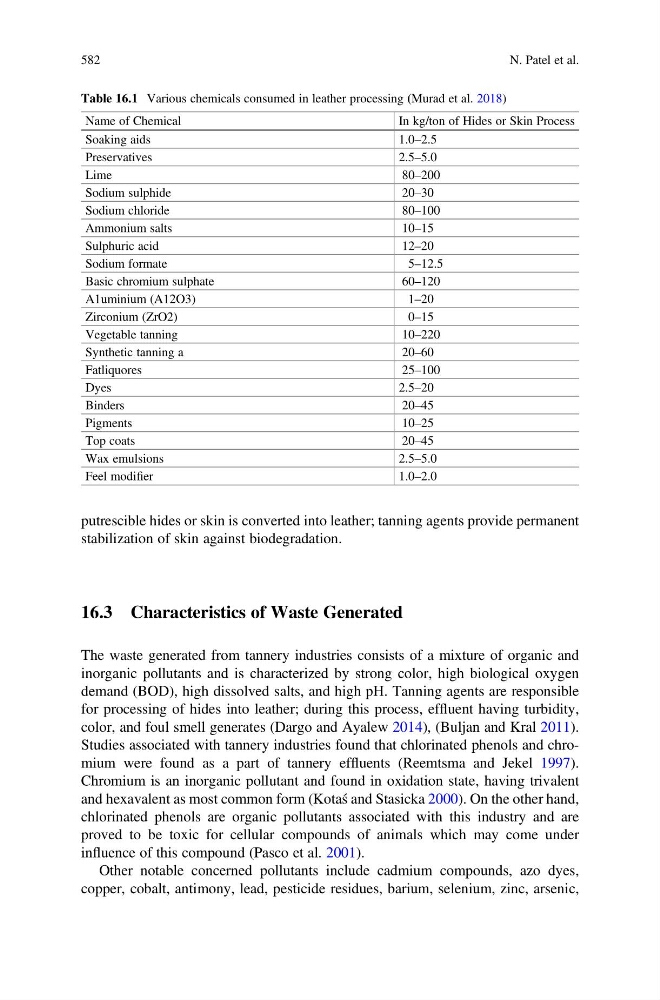
Table 16.1 Various chemicals consumed in leather processing (Murad et al. 2018)
Name of Chemical
In kg/ton of Hides or Skin Process
Soaking aids
1.0–2.5
Preservatives
2.5–5.0
Lime
80–200
Sodium sulphide
20–30
Sodium chloride
80–100
Ammonium salts
10–15
Sulphuric acid
12–20
Sodium formate
5–12.5
Basic chromium sulphate
60–120
A1uminium (A12O3)
1–20
Zirconium (ZrO2)
0–15
Vegetable tanning
10–220
Synthetic tanning a
20–60
Fatliquores
25–100
Dyes
2.5–20
Binders
20–45
Pigments
10–25
Top coats
20–45
Wax emulsions
2.5–5.0
Feel modifier
1.0–2.0
582
N. Patel et al.
stabilization of skin against biodegradation.
16.3 Characteristics of Waste Generated
The waste generated from tannery industries consists of a mixture of organic and
inorganic pollutants and is characterized by strong color, high biological oxygen
demand (BOD), high dissolved salts, and high pH. Tanning agents are responsible
for processing of hides into leather; during this process, effluent having turbidity,
color, and foul smell generates (Dargo and Ayalew 2014), (Buljan and Kral 2011).
Studies associated with tannery industries found that chlorinated phenols and chromium were found as a part of tannery effluents (Reemtsma and Jekel 1997).
Chromium is an inorganic pollutant and found in oxidation state, having trivalent
and hexavalent as most common form (Kotaś and Stasicka 2000). On the other hand,
chlorinated phenols are organic pollutants associated with this industry and are
proved to be toxic for cellular compounds of animals which may come under
influence of this compound (Pasco et al. 2001).
Other notable concerned pollutants include cadmium compounds, azo dyes,
copper, cobalt, antimony, lead, pesticide residues, barium, selenium, zinc, arsenic,
Table 16.1 Various chemicals consumed in leather processing (Murad et al. 2018)
Name of Chemical
In kg/ton of Hides or Skin Process
Soaking aids
1.0–2.5
Preservatives
2.5–5.0
Lime
80–200
Sodium sulphide
20–30
Sodium chloride
80–100
Ammonium salts
10–15
Sulphuric acid
12–20
Sodium formate
5–12.5
Basic chromium sulphate
60–120
A1uminium (A12O3)
1–20
Zirconium (ZrO2)
0–15
Vegetable tanning
10–220
Synthetic tanning a
20–60
Fatliquores
25–100
Dyes
2.5–20
Binders
20–45
Pigments
10–25
Top coats
20–45
Wax emulsions
2.5–5.0
Feel modifier
1.0–2.0
582
N. Patel et al.