

microorganisms are also studied for the degradation of organic pollutant using the
natural pathway.
13.4.1 Adsorption
Adsorption is a process in which the adsorbate gets adsorbed on the surface of the
adsorbent. Generally, the interaction between adsorbate and adsorption can be due to
an electrostatic interaction which is called as physisorption. In some cases, adsorption can also occur via formation of chemical bonds, which are termed as chemisorption. Numerous adsorbents are being synthesized and tested for the removal of
organic pollutants from water. Among these adsorbents, the highly investigated
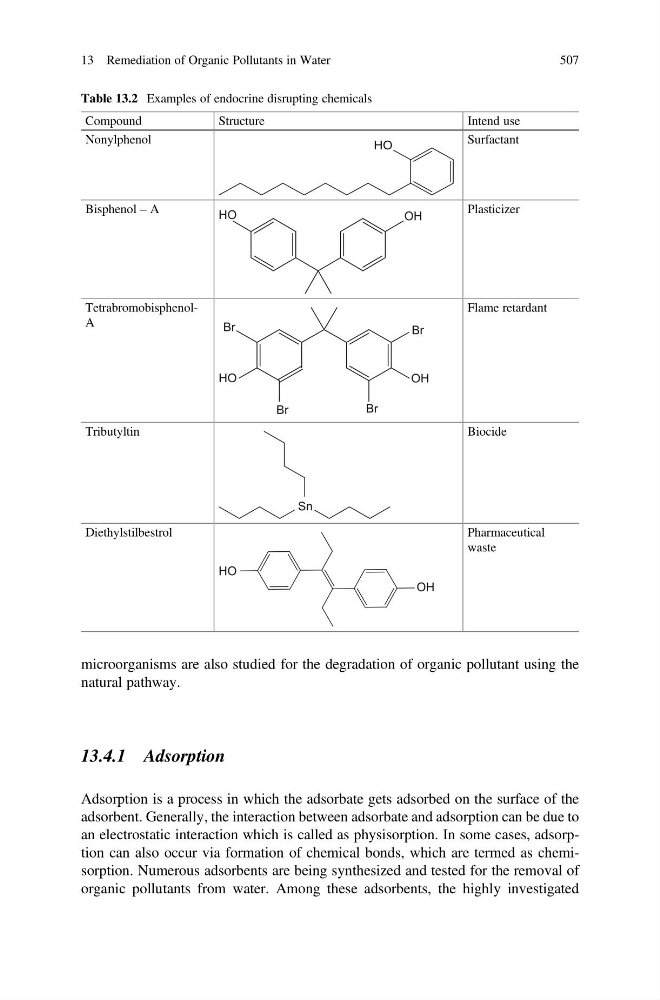
Table 13.2 Examples of endocrine disrupting chemicals
Compound
Structure
Intend use
Nonylphenol
HO
Surfactant
Bisphenol – A
HO
OH
Plasticizer
TetrabromobisphenolA
HO
OH
Br
Br
Br
Br
Flame retardant
Tributyltin
Sn
Biocide
Diethylstilbestrol
OH
HO
Pharmaceutical
waste
13 Remediation of Organic Pollutants in Water
507
natural pathway.
13.4.1 Adsorption
Adsorption is a process in which the adsorbate gets adsorbed on the surface of the
adsorbent. Generally, the interaction between adsorbate and adsorption can be due to
an electrostatic interaction which is called as physisorption. In some cases, adsorption can also occur via formation of chemical bonds, which are termed as chemisorption. Numerous adsorbents are being synthesized and tested for the removal of
organic pollutants from water. Among these adsorbents, the highly investigated
Table 13.2 Examples of endocrine disrupting chemicals
Compound
Structure
Intend use
Nonylphenol
HO
Surfactant
Bisphenol – A
HO
OH
Plasticizer
TetrabromobisphenolA
HO
OH
Br
Br
Br
Br
Flame retardant
Tributyltin
Sn
Biocide
Diethylstilbestrol
OH
HO
Pharmaceutical
waste
13 Remediation of Organic Pollutants in Water
507