

superoleophilic properties. The modified nanoparticles had varying size range from
30 to 200 nm. The results demonstrated that the water contact angle on the bed of
modified Fe 3 O 4 nanoparticles with a carbon layer (162.9
) is greater than that of the
bed of pristine Fe 3 O 4 nanoparticles with a carbon layer, while the lubricating oil
droplet quickly spreads.
The presented results emphasize the superhydrophobic and -oleophilic properties
of polysiloxane-coated Fe 3 O 4 nanoparticles with a carbon layer. The behavior of
modified Fe 3 O 4 nanoparticles with a carbon layer in corrosive media for long time
showed its stability and kept the superhydrophobicity and water contact angle.
Another interesting property of modified Fe 3 O 4 nanoparticles with a carbon layer
was their unsinkable property, which was considerable in both surface (water and
oil) and in the mixture under vigorous agitation conditions.
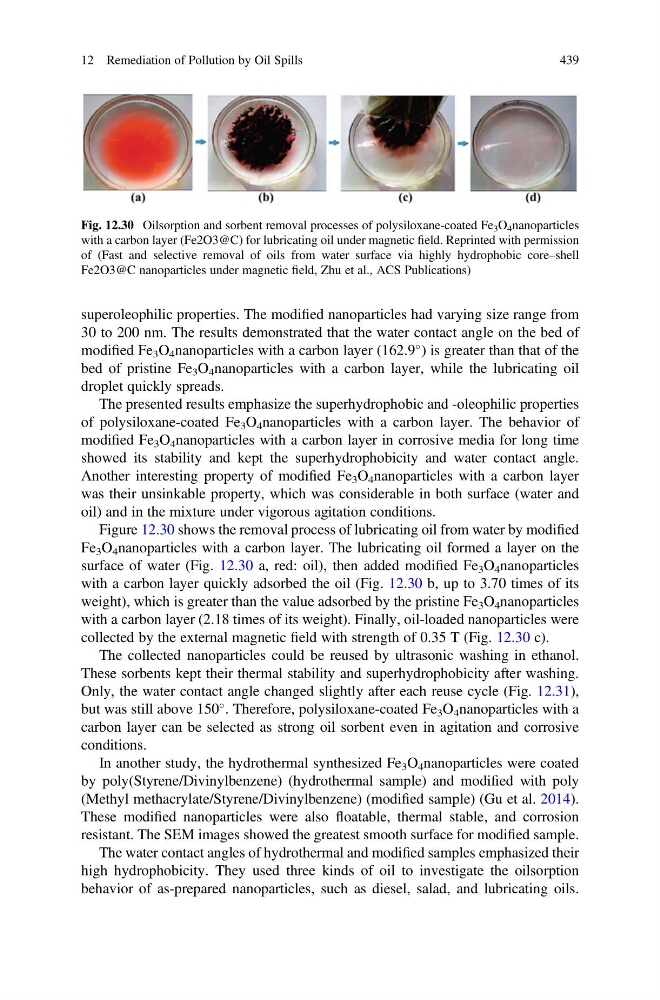
Figure 12.30 shows the removal process of lubricating oil from water by modified
Fe 3 O 4 nanoparticles with a carbon layer. The lubricating oil formed a layer on the
surface of water (Fig. 12.30 a, red: oil), then added modified Fe 3 O 4 nanoparticles
with a carbon layer quickly adsorbed the oil (Fig. 12.30 b, up to 3.70 times of its
weight), which is greater than the value adsorbed by the pristine Fe 3 O 4 nanoparticles
with a carbon layer (2.18 times of its weight). Finally, oil-loaded nanoparticles were
collected by the external magnetic field with strength of 0.35 T (Fig. 12.30 c).
The collected nanoparticles could be reused by ultrasonic washing in ethanol.
These sorbents kept their thermal stability and superhydrophobicity after washing.
Only, the water contact angle changed slightly after each reuse cycle (Fig. 12.31),
but was still above 150
. Therefore, polysiloxane-coated Fe 3 O 4 nanoparticles with a
carbon layer can be selected as strong oil sorbent even in agitation and corrosive
conditions.
In another study, the hydrothermal synthesized Fe 3 O 4 nanoparticles were coated
by poly(Styrene/Divinylbenzene) (hydrothermal sample) and modified with poly
(Methyl methacrylate/Styrene/Divinylbenzene) (modified sample) (Gu et al. 2014).
These modified nanoparticles were also floatable, thermal stable, and corrosion
resistant. The SEM images showed the greatest smooth surface for modified sample.
The water contact angles of hydrothermal and modified samples emphasized their
high hydrophobicity. They used three kinds of oil to investigate the oilsorption
behavior of as-prepared nanoparticles, such as diesel, salad, and lubricating oils.
Fig. 12.30 Oilsorption and sorbent removal processes of polysiloxane-coated Fe 3 O 4 nanoparticles
with a carbon layer (Fe2O3@C) for lubricating oil under magnetic field. Reprinted with permission
of (Fast and selective removal of oils from water surface via highly hydrophobic core–shell
Fe2O3@C nanoparticles under magnetic field, Zhu et al., ACS Publications)
12 Remediation of Pollution by Oil Spills
439
30 to 200 nm. The results demonstrated that the water contact angle on the bed of
modified Fe 3 O 4 nanoparticles with a carbon layer (162.9
) is greater than that of the
bed of pristine Fe 3 O 4 nanoparticles with a carbon layer, while the lubricating oil
droplet quickly spreads.
The presented results emphasize the superhydrophobic and -oleophilic properties
of polysiloxane-coated Fe 3 O 4 nanoparticles with a carbon layer. The behavior of
modified Fe 3 O 4 nanoparticles with a carbon layer in corrosive media for long time
showed its stability and kept the superhydrophobicity and water contact angle.
Another interesting property of modified Fe 3 O 4 nanoparticles with a carbon layer
was their unsinkable property, which was considerable in both surface (water and
oil) and in the mixture under vigorous agitation conditions.
Figure 12.30 shows the removal process of lubricating oil from water by modified
Fe 3 O 4 nanoparticles with a carbon layer. The lubricating oil formed a layer on the
surface of water (Fig. 12.30 a, red: oil), then added modified Fe 3 O 4 nanoparticles
with a carbon layer quickly adsorbed the oil (Fig. 12.30 b, up to 3.70 times of its
weight), which is greater than the value adsorbed by the pristine Fe 3 O 4 nanoparticles
with a carbon layer (2.18 times of its weight). Finally, oil-loaded nanoparticles were
collected by the external magnetic field with strength of 0.35 T (Fig. 12.30 c).
The collected nanoparticles could be reused by ultrasonic washing in ethanol.
These sorbents kept their thermal stability and superhydrophobicity after washing.
Only, the water contact angle changed slightly after each reuse cycle (Fig. 12.31),
but was still above 150
. Therefore, polysiloxane-coated Fe 3 O 4 nanoparticles with a
carbon layer can be selected as strong oil sorbent even in agitation and corrosive
conditions.
In another study, the hydrothermal synthesized Fe 3 O 4 nanoparticles were coated
by poly(Styrene/Divinylbenzene) (hydrothermal sample) and modified with poly
(Methyl methacrylate/Styrene/Divinylbenzene) (modified sample) (Gu et al. 2014).
These modified nanoparticles were also floatable, thermal stable, and corrosion
resistant. The SEM images showed the greatest smooth surface for modified sample.
The water contact angles of hydrothermal and modified samples emphasized their
high hydrophobicity. They used three kinds of oil to investigate the oilsorption
behavior of as-prepared nanoparticles, such as diesel, salad, and lubricating oils.
Fig. 12.30 Oilsorption and sorbent removal processes of polysiloxane-coated Fe 3 O 4 nanoparticles
with a carbon layer (Fe2O3@C) for lubricating oil under magnetic field. Reprinted with permission
of (Fast and selective removal of oils from water surface via highly hydrophobic core–shell
Fe2O3@C nanoparticles under magnetic field, Zhu et al., ACS Publications)
12 Remediation of Pollution by Oil Spills
439