

floating in water do not experience the same temperature increase for the same sun
exposure due to the thermoregulatory effect of water. Therefore, size differences
between studies can be found (Cooper and Corcoran 2010).
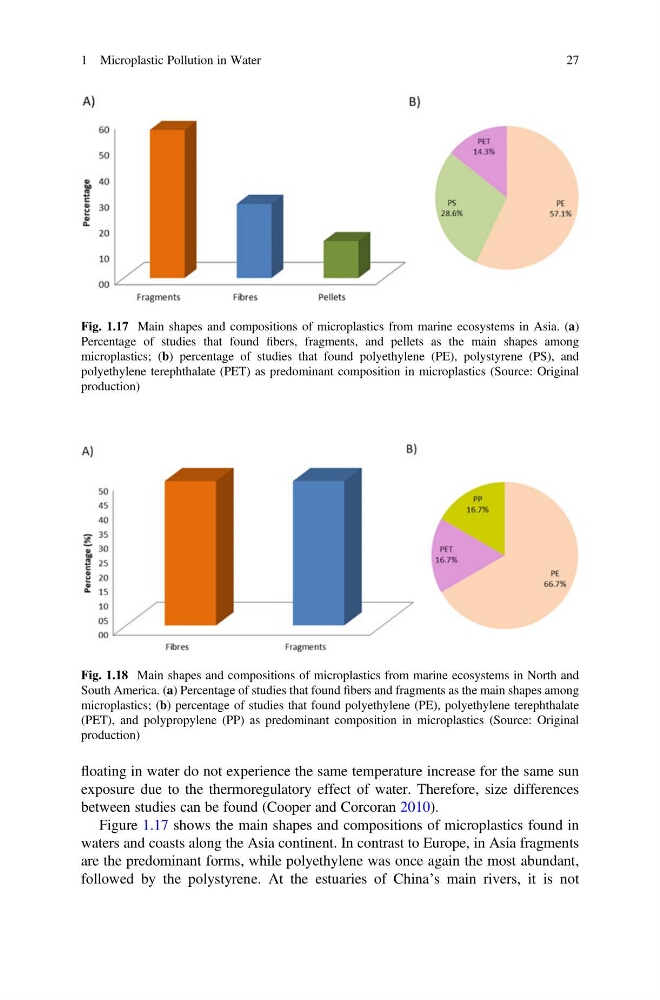
Figure 1.17 shows the main shapes and compositions of microplastics found in
waters and coasts along the Asia continent. In contrast to Europe, in Asia fragments
are the predominant forms, while polyethylene was once again the most abundant,
followed by the polystyrene. At the estuaries of China’s main rivers, it is not
Fig. 1.18 Main shapes and compositions of microplastics from marine ecosystems in North and
South America. (a) Percentage of studies that found fibers and fragments as the main shapes among
microplastics; (b) percentage of studies that found polyethylene (PE), polyethylene terephthalate
(PET), and polypropylene (PP) as predominant composition in microplastics (Source: Original
production)
Fig. 1.17 Main shapes and compositions of microplastics from marine ecosystems in Asia. (a)
Percentage of studies that found fibers, fragments, and pellets as the main shapes among
microplastics; (b) percentage of studies that found polyethylene (PE), polystyrene (PS), and
polyethylene terephthalate (PET) as predominant composition in microplastics (Source: Original
production)
1 Microplastic Pollution in Water
27
exposure due to the thermoregulatory effect of water. Therefore, size differences
between studies can be found (Cooper and Corcoran 2010).
Figure 1.17 shows the main shapes and compositions of microplastics found in
waters and coasts along the Asia continent. In contrast to Europe, in Asia fragments
are the predominant forms, while polyethylene was once again the most abundant,
followed by the polystyrene. At the estuaries of China’s main rivers, it is not
Fig. 1.18 Main shapes and compositions of microplastics from marine ecosystems in North and
South America. (a) Percentage of studies that found fibers and fragments as the main shapes among
microplastics; (b) percentage of studies that found polyethylene (PE), polyethylene terephthalate
(PET), and polypropylene (PP) as predominant composition in microplastics (Source: Original
production)
Fig. 1.17 Main shapes and compositions of microplastics from marine ecosystems in Asia. (a)
Percentage of studies that found fibers, fragments, and pellets as the main shapes among
microplastics; (b) percentage of studies that found polyethylene (PE), polystyrene (PS), and
polyethylene terephthalate (PET) as predominant composition in microplastics (Source: Original
production)
1 Microplastic Pollution in Water
27