

12.5 Sorbents
The sorbents are oleophilic and hydrophobic porous products that they sorb hydrocarbons and oil and repel water. The sorbents physically sorb oil by adsorption and
capillary and sometimes both of these mechanisms. In oilsorption processes with
sorbents, no chemical bonding occurs. The composition and structure of oilsorbents
influence their oilsorption capacity. Generally, the oilsorbents are divided into
natural, synthetic, and inorganic sorbents.
12.5.1 Natural Sorbents
Recently, growing public environmental concerns have led to more attention being
paid to natural sorbents due to their minimal secondary pollution and toxicity.
Significant capacity for oil removal compared to synthetic product, high biodegradability, environmental friendly, minimum secondary pollutions, low cost, low density, and some physical and chemical properties make them attractive as potential
sorbent materials. Some organic natural sorbents were investigated such as vegetable
fibers, cotton fiber, milkweed, kenaf, wool, straw, wood fiber, and so on.
Choi and Cloud (1992) compared the sorption capacity of milkweed floss, cotton
fiber, polypropylene web, and milkweed/polypropylene web in the dry and wet
(soaking in seawater) state. The experiments were performed with three crude oil
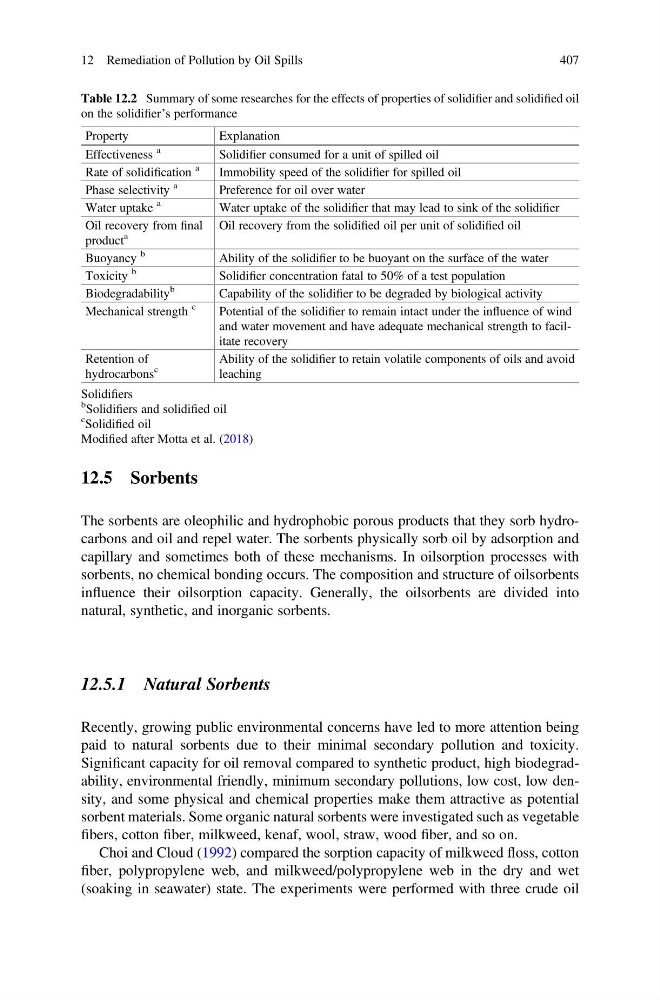
Table 12.2 Summary of some researches for the effects of properties of solidifier and solidified oil
on the solidifier’s performance
Property
Explanation
Effectiveness
a
Solidifier consumed for a unit of spilled oil
Rate of solidification
a
Immobility speed of the solidifier for spilled oil
Phase selectivity
a
Preference for oil over water
Water uptake
a
Water uptake of the solidifier that may lead to sink of the solidifier
Oil recovery from final
product
a
Oil recovery from the solidified oil per unit of solidified oil
Buoyancy
b
Ability of the solidifier to be buoyant on the surface of the water
Toxicity
b
Solidifier concentration fatal to 50% of a test population
Biodegradability
b
Capability of the solidifier to be degraded by biological activity
Mechanical strength
c
Potential of the solidifier to remain intact under the influence of wind
and water movement and have adequate mechanical strength to facilitate recovery
Retention of
hydrocarbons
c
Ability of the solidifier to retain volatile components of oils and avoid
leaching
Solidifiers
b
Solidifiers and solidified oil
c Solidified oil
Modified after Motta et al. (2018)
12 Remediation of Pollution by Oil Spills
407
The sorbents are oleophilic and hydrophobic porous products that they sorb hydrocarbons and oil and repel water. The sorbents physically sorb oil by adsorption and
capillary and sometimes both of these mechanisms. In oilsorption processes with
sorbents, no chemical bonding occurs. The composition and structure of oilsorbents
influence their oilsorption capacity. Generally, the oilsorbents are divided into
natural, synthetic, and inorganic sorbents.
12.5.1 Natural Sorbents
Recently, growing public environmental concerns have led to more attention being
paid to natural sorbents due to their minimal secondary pollution and toxicity.
Significant capacity for oil removal compared to synthetic product, high biodegradability, environmental friendly, minimum secondary pollutions, low cost, low density, and some physical and chemical properties make them attractive as potential
sorbent materials. Some organic natural sorbents were investigated such as vegetable
fibers, cotton fiber, milkweed, kenaf, wool, straw, wood fiber, and so on.
Choi and Cloud (1992) compared the sorption capacity of milkweed floss, cotton
fiber, polypropylene web, and milkweed/polypropylene web in the dry and wet
(soaking in seawater) state. The experiments were performed with three crude oil
Table 12.2 Summary of some researches for the effects of properties of solidifier and solidified oil
on the solidifier’s performance
Property
Explanation
Effectiveness
a
Solidifier consumed for a unit of spilled oil
Rate of solidification
a
Immobility speed of the solidifier for spilled oil
Phase selectivity
a
Preference for oil over water
Water uptake
a
Water uptake of the solidifier that may lead to sink of the solidifier
Oil recovery from final
product
a
Oil recovery from the solidified oil per unit of solidified oil
Buoyancy
b
Ability of the solidifier to be buoyant on the surface of the water
Toxicity
b
Solidifier concentration fatal to 50% of a test population
Biodegradability
b
Capability of the solidifier to be degraded by biological activity
Mechanical strength
c
Potential of the solidifier to remain intact under the influence of wind
and water movement and have adequate mechanical strength to facilitate recovery
Retention of
hydrocarbons
c
Ability of the solidifier to retain volatile components of oils and avoid
leaching
Solidifiers
b
Solidifiers and solidified oil
c Solidified oil
Modified after Motta et al. (2018)
12 Remediation of Pollution by Oil Spills
407