

removal methods. These chemical agents are applied over the oil slicks in the form of
aerosol and help the oil components to naturally break down their structure. Hereupon, the deformed oil compounds are able to connect with water molecule by
chemical bond. Therefore, these agents prevent the spread of oil pollution over the
surface of water and enhance the chance of microorganism degradation. In contrast
to herding agents, dispersants decreased the surface tension between oil and water.
Second generation and third generation are two groups of the current dispersants.
Second-generation dispersants, named conventional type, are produced with
nonaromatic hydrocarbon solvents. The third generations, named concentrate type,
are based on water or hydrocarbons that are facile to use (Putatunda et al. 2019). The
application of dispersant agents has several advantages and disadvantages, which are
discussed below.
One of the main problems with the use of dispersants to treat spilled oil is that
these chemical agents have a disappointing performance on calm water. In these
conditions, there is no mixing energy for prompt performance of agents. In optimistic insight, they will act with increasing sea agitation. But the persistence of
dispersants on calm waters is a notable issue.
Lewis et al. (2010) investigated the persistence of dispersants during six days on
static and flowing water and their performance after six days. They used Intermediate Fuel Oil 30 and Ewing Bank 873 crude oil with different thicknesses. Moreover,
Corexit 9500 was used as dispersant with the dispersant–oil ratio 1:20. The results
showed that thicker slicks (5 mm) dispersed completely after six days by being
exposed to breaking waves (period of 30 min). Dispersants lost their dispersibility
for thinner slicks (2.5 mm) and weathered oil after 2 days because of dispersant loss.
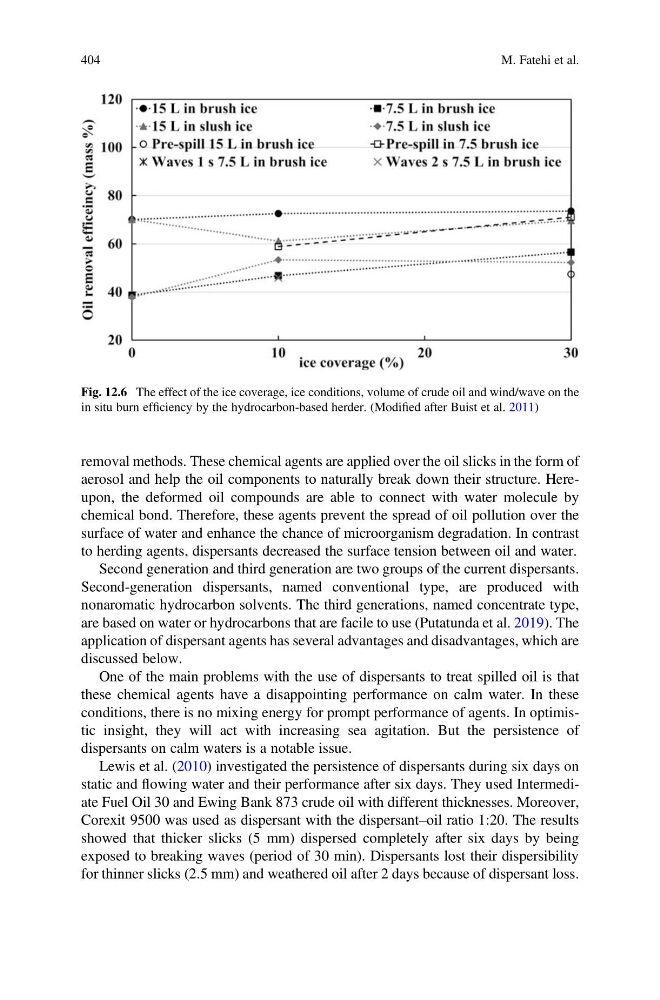
Fig. 12.6 The effect of the ice coverage, ice conditions, volume of crude oil and wind/wave on the
in situ burn efficiency by the hydrocarbon-based herder. (Modified after Buist et al. 2011)
404
M. Fatehi et al.
aerosol and help the oil components to naturally break down their structure. Hereupon, the deformed oil compounds are able to connect with water molecule by
chemical bond. Therefore, these agents prevent the spread of oil pollution over the
surface of water and enhance the chance of microorganism degradation. In contrast
to herding agents, dispersants decreased the surface tension between oil and water.
Second generation and third generation are two groups of the current dispersants.
Second-generation dispersants, named conventional type, are produced with
nonaromatic hydrocarbon solvents. The third generations, named concentrate type,
are based on water or hydrocarbons that are facile to use (Putatunda et al. 2019). The
application of dispersant agents has several advantages and disadvantages, which are
discussed below.
One of the main problems with the use of dispersants to treat spilled oil is that
these chemical agents have a disappointing performance on calm water. In these
conditions, there is no mixing energy for prompt performance of agents. In optimistic insight, they will act with increasing sea agitation. But the persistence of
dispersants on calm waters is a notable issue.
Lewis et al. (2010) investigated the persistence of dispersants during six days on
static and flowing water and their performance after six days. They used Intermediate Fuel Oil 30 and Ewing Bank 873 crude oil with different thicknesses. Moreover,
Corexit 9500 was used as dispersant with the dispersant–oil ratio 1:20. The results
showed that thicker slicks (5 mm) dispersed completely after six days by being
exposed to breaking waves (period of 30 min). Dispersants lost their dispersibility
for thinner slicks (2.5 mm) and weathered oil after 2 days because of dispersant loss.
Fig. 12.6 The effect of the ice coverage, ice conditions, volume of crude oil and wind/wave on the
in situ burn efficiency by the hydrocarbon-based herder. (Modified after Buist et al. 2011)
404
M. Fatehi et al.