

Figure 12.6 shows the ice coverage, ice conditions, volume of crude oil (Alaska
North Slope crude) and wind/wave effects on the in situ burn efficiency in small- and
mid-scale testing by the hydrocarbon-based herder.
According to these results, the hydrocarbon-based herders had excellent performance in oil removal. The removal efficiency increased by increasing the crude
volume but the ice conditions (brush and slush) did not have any notable impact on
the oil removal by situ-burning. If the herders were applied before spreading oil, the
oil slicks were thicker than using them after spreading oil. The gelatinization of
hydrocarbon-based herder at low temperatures (below 0º C) was a fatal problem in
cold weather, which was modified by changing the type or amount of solvent in
herder formulation (Buist et al. 2011).
Despite all the abilities of these agents, the herders cannot be used in windy
conditions because of the effect of breaking waves disrupting the herder layer. In
addition, the frazil ice condition in very cold air temperatures has a detrimental effect
on the performance of herders by decreasing thick slicks.
Dispersant
A mixture of surfactant and solvent is used to produce dispersant agent. Dispersants
are the only option when the spilled oil cannot be collected or contained by other oil
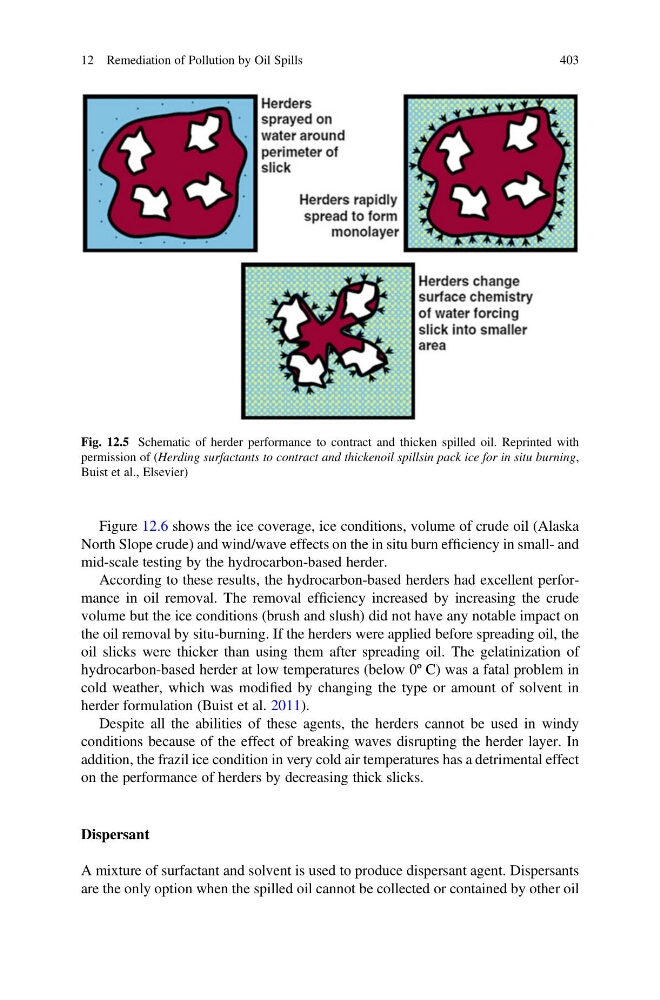
Fig. 12.5 Schematic of herder performance to contract and thicken spilled oil. Reprinted with
permission of (Herding surfactants to contract and thickenoil spillsin pack ice for in situ burning,
Buist et al., Elsevier)
12 Remediation of Pollution by Oil Spills
403
North Slope crude) and wind/wave effects on the in situ burn efficiency in small- and
mid-scale testing by the hydrocarbon-based herder.
According to these results, the hydrocarbon-based herders had excellent performance in oil removal. The removal efficiency increased by increasing the crude
volume but the ice conditions (brush and slush) did not have any notable impact on
the oil removal by situ-burning. If the herders were applied before spreading oil, the
oil slicks were thicker than using them after spreading oil. The gelatinization of
hydrocarbon-based herder at low temperatures (below 0º C) was a fatal problem in
cold weather, which was modified by changing the type or amount of solvent in
herder formulation (Buist et al. 2011).
Despite all the abilities of these agents, the herders cannot be used in windy
conditions because of the effect of breaking waves disrupting the herder layer. In
addition, the frazil ice condition in very cold air temperatures has a detrimental effect
on the performance of herders by decreasing thick slicks.
Dispersant
A mixture of surfactant and solvent is used to produce dispersant agent. Dispersants
are the only option when the spilled oil cannot be collected or contained by other oil
Fig. 12.5 Schematic of herder performance to contract and thicken spilled oil. Reprinted with
permission of (Herding surfactants to contract and thickenoil spillsin pack ice for in situ burning,
Buist et al., Elsevier)
12 Remediation of Pollution by Oil Spills
403