

In regular waves, an increase in the wave height or current velocity had a negative
impact on the effective draft. When the current velocity increased, the effect of wave
height diminished. On the other hand, an increase in buoyancy–weight ratio
decreased the effective draft. The long skirt boom models had higher significant
effective drafts than the short skirt booms models, in the absence of current.
Moreover, the same behavior was obvious for the minimum effective draft. In
irregular waves, the significant effective drafts decreased as the current velocity
increased and the effect of wave height is secondary in the absence and presence of
current. The effects of buoyancy–weight ratio and skirt length were similar to that of
the regular waves’ conditions. Forasmuch as the effective boom draft influences on
the drainage failure, this research emphasizes the right choice of booms based on the
wave and current conditions.
The boom flexibility also affects the floating boom performance to contain spilled
oil. Shi et al. (2018) used an improved multiphase Smoothed Particle Hydrodynamics method to simulate contained oil by flexible boom and compared the obtained
results with experimental data and the results of rigid boom. This model was applied
for simulation of flexible boom movement in the presence of simultaneous waves
and currents. The simulated and experimental results showed water vortices were
generated in the forepart and behind the boom skirt. An increase in the current
velocity decreased the size of the forepart vortex while the rear vortex increased. On
the other hand, the skirt of the flexible boom swayed and rolled easily compared to
the rigid one. The heave responses of the booms did not depend on the boom
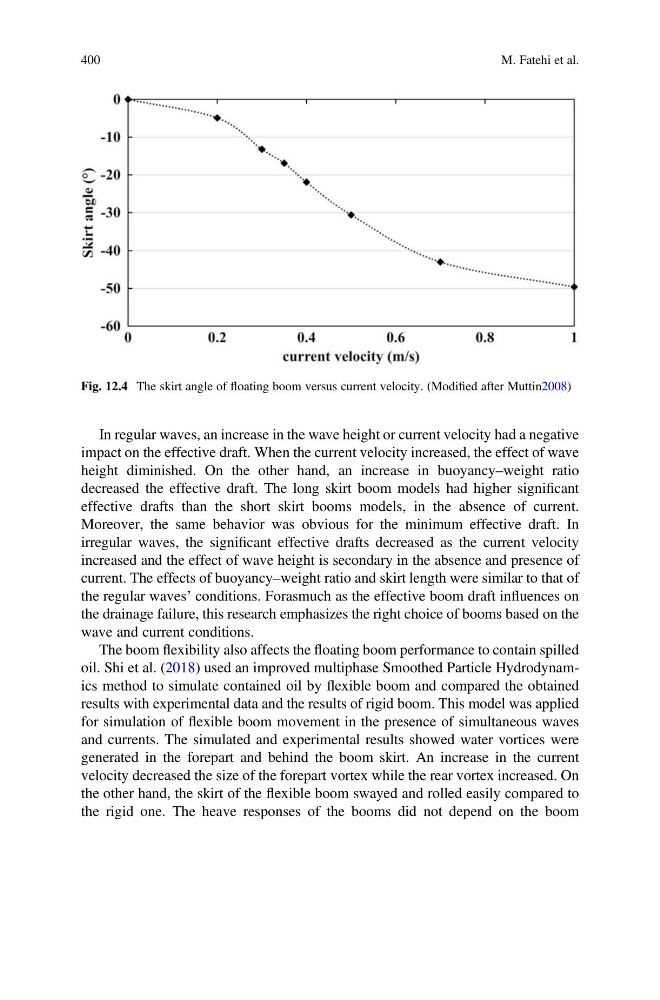
Fig. 12.4 The skirt angle of floating boom versus current velocity. (Modified after Muttin2008)
400
M. Fatehi et al.
impact on the effective draft. When the current velocity increased, the effect of wave
height diminished. On the other hand, an increase in buoyancy–weight ratio
decreased the effective draft. The long skirt boom models had higher significant
effective drafts than the short skirt booms models, in the absence of current.
Moreover, the same behavior was obvious for the minimum effective draft. In
irregular waves, the significant effective drafts decreased as the current velocity
increased and the effect of wave height is secondary in the absence and presence of
current. The effects of buoyancy–weight ratio and skirt length were similar to that of
the regular waves’ conditions. Forasmuch as the effective boom draft influences on
the drainage failure, this research emphasizes the right choice of booms based on the
wave and current conditions.
The boom flexibility also affects the floating boom performance to contain spilled
oil. Shi et al. (2018) used an improved multiphase Smoothed Particle Hydrodynamics method to simulate contained oil by flexible boom and compared the obtained
results with experimental data and the results of rigid boom. This model was applied
for simulation of flexible boom movement in the presence of simultaneous waves
and currents. The simulated and experimental results showed water vortices were
generated in the forepart and behind the boom skirt. An increase in the current
velocity decreased the size of the forepart vortex while the rear vortex increased. On
the other hand, the skirt of the flexible boom swayed and rolled easily compared to
the rigid one. The heave responses of the booms did not depend on the boom
Fig. 12.4 The skirt angle of floating boom versus current velocity. (Modified after Muttin2008)
400
M. Fatehi et al.