

be noted that the rates of indirect oxidation process are affected by the generation of
oxidizing species as well as the mass transport of oxidizing species to the bulk
solution (Botte 2017). In addition, the nature of the oxidizing species is also
influenced by the electrode material (for instance, the oxygen overpotential), and
the electrode surface properties (Radjenovic and Sedlak 2015). However, the use of
this oxidation process has raised the concern on the increase in the toxicity of the
wastewater due to the production of oxidizing species (Xianjun 2015).
11.4.3 Recent Development of Electrochemical Treatment
Yavuz et al. (2010) studied the efficiency of three different electrochemical techniques for the treatment of the petroleum refinery wastewater, which included
(a) direct electrochemical oxidation with ruthenium mixed metal electrode,
(b) direct and indirect electrochemical oxidations with the use of boron-doped
diamond anode, and (c) combined electrocoagulation and electro-Fenton using
iron electrodes. The outcomes demonstrated that the combination of
electrocoagulation and electro-Fenton exhibited the highest efficiency with the
98.7% phenol and 75.7% chemical oxygen demand removals at 6–9 min, respectively. Körbahti and Artut (2010) investigated the influence of different operating
conditions on the treatment of bilge water using electrochemical reactor with the
platinum-iridium electrode. The results showed the high removals of oil and grease
(99.2%), chemical oxygen demand (93.2%), and turbidity (91.1%) when 12.8 mA/
cm
2 current density was applied at the temperature of 32
C.
Sekman et al. (2011) applied the electrocoagulation method in treating oily
wastewater produced from the port-waste gathering systems. 98.8% of total
suspended solids was removed after 5 min of electrolysis at the current density of
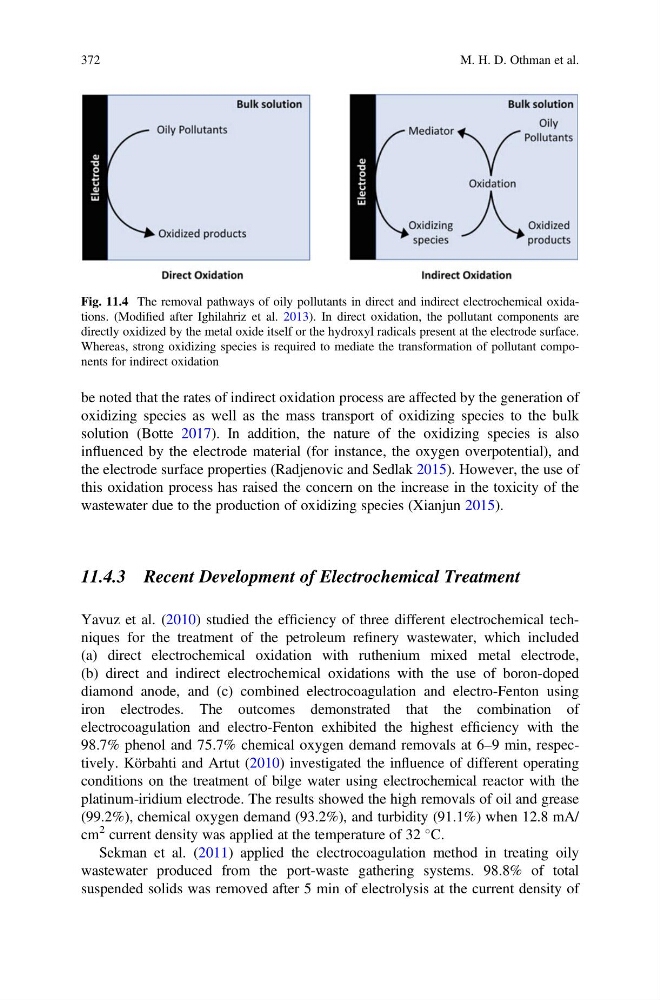
Fig. 11.4 The removal pathways of oily pollutants in direct and indirect electrochemical oxidations. (Modified after Ighilahriz et al. 2013). In direct oxidation, the pollutant components are
directly oxidized by the metal oxide itself or the hydroxyl radicals present at the electrode surface.
Whereas, strong oxidizing species is required to mediate the transformation of pollutant components for indirect oxidation
372
M. H. D. Othman et al.
oxidizing species as well as the mass transport of oxidizing species to the bulk
solution (Botte 2017). In addition, the nature of the oxidizing species is also
influenced by the electrode material (for instance, the oxygen overpotential), and
the electrode surface properties (Radjenovic and Sedlak 2015). However, the use of
this oxidation process has raised the concern on the increase in the toxicity of the
wastewater due to the production of oxidizing species (Xianjun 2015).
11.4.3 Recent Development of Electrochemical Treatment
Yavuz et al. (2010) studied the efficiency of three different electrochemical techniques for the treatment of the petroleum refinery wastewater, which included
(a) direct electrochemical oxidation with ruthenium mixed metal electrode,
(b) direct and indirect electrochemical oxidations with the use of boron-doped
diamond anode, and (c) combined electrocoagulation and electro-Fenton using
iron electrodes. The outcomes demonstrated that the combination of
electrocoagulation and electro-Fenton exhibited the highest efficiency with the
98.7% phenol and 75.7% chemical oxygen demand removals at 6–9 min, respectively. Körbahti and Artut (2010) investigated the influence of different operating
conditions on the treatment of bilge water using electrochemical reactor with the
platinum-iridium electrode. The results showed the high removals of oil and grease
(99.2%), chemical oxygen demand (93.2%), and turbidity (91.1%) when 12.8 mA/
cm
2 current density was applied at the temperature of 32
C.
Sekman et al. (2011) applied the electrocoagulation method in treating oily
wastewater produced from the port-waste gathering systems. 98.8% of total
suspended solids was removed after 5 min of electrolysis at the current density of
Fig. 11.4 The removal pathways of oily pollutants in direct and indirect electrochemical oxidations. (Modified after Ighilahriz et al. 2013). In direct oxidation, the pollutant components are
directly oxidized by the metal oxide itself or the hydroxyl radicals present at the electrode surface.
Whereas, strong oxidizing species is required to mediate the transformation of pollutant components for indirect oxidation
372
M. H. D. Othman et al.