

World water bodies are increasingly polluted by oily water from year to year. The
acute toxic effects of oily water pollution can be irreversible for the aquatic living
organisms. The consequences of these effects can be transmitted to human beings
directly or indirectly as they have direct involvement in the food chain of the
ecosystem (Tansel and Pascual 2011). Although the compositions of the oily
wastewater vary in terms of types and amounts of hazardous components, the
presence of emulsified oil and grease is often recalcitrant and complicated to be
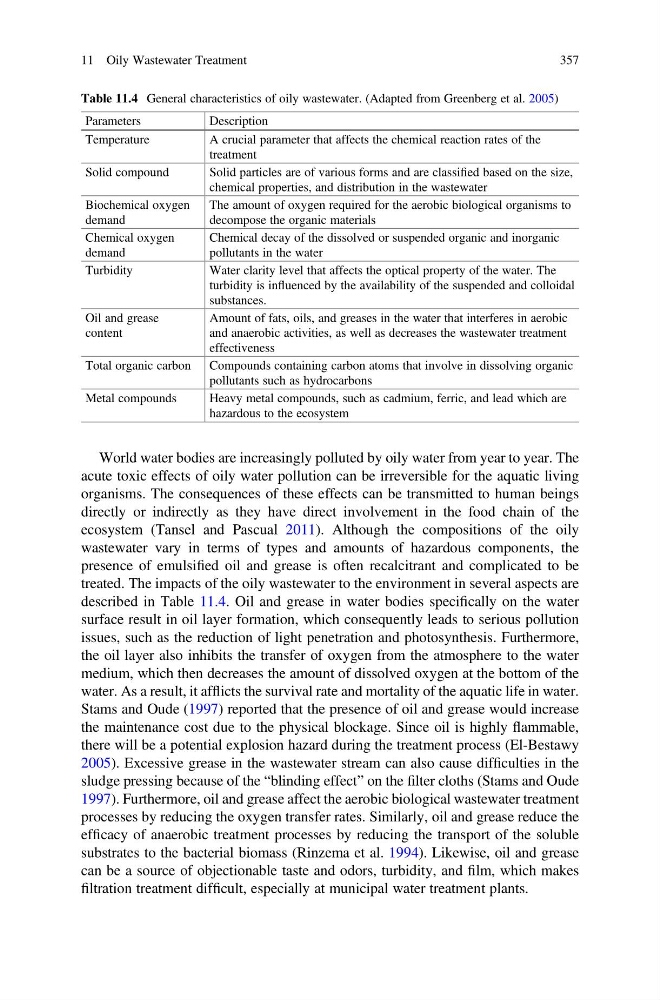
treated. The impacts of the oily wastewater to the environment in several aspects are
described in Table 11.4. Oil and grease in water bodies specifically on the water
surface result in oil layer formation, which consequently leads to serious pollution
issues, such as the reduction of light penetration and photosynthesis. Furthermore,
the oil layer also inhibits the transfer of oxygen from the atmosphere to the water
medium, which then decreases the amount of dissolved oxygen at the bottom of the
water. As a result, it afflicts the survival rate and mortality of the aquatic life in water.
Stams and Oude (1997) reported that the presence of oil and grease would increase
the maintenance cost due to the physical blockage. Since oil is highly flammable,
there will be a potential explosion hazard during the treatment process (El-Bestawy
2005). Excessive grease in the wastewater stream can also cause difficulties in the
sludge pressing because of the “blinding effect” on the filter cloths (Stams and Oude
1997). Furthermore, oil and grease affect the aerobic biological wastewater treatment
processes by reducing the oxygen transfer rates. Similarly, oil and grease reduce the
efficacy of anaerobic treatment processes by reducing the transport of the soluble
substrates to the bacterial biomass (Rinzema et al. 1994). Likewise, oil and grease
can be a source of objectionable taste and odors, turbidity, and film, which makes
filtration treatment difficult, especially at municipal water treatment plants.
Table 11.4 General characteristics of oily wastewater. (Adapted from Greenberg et al. 2005)
Parameters
Description
Temperature
A crucial parameter that affects the chemical reaction rates of the
treatment
Solid compound
Solid particles are of various forms and are classified based on the size,
chemical properties, and distribution in the wastewater
Biochemical oxygen
demand
The amount of oxygen required for the aerobic biological organisms to
decompose the organic materials
Chemical oxygen
demand
Chemical decay of the dissolved or suspended organic and inorganic
pollutants in the water
Turbidity
Water clarity level that affects the optical property of the water. The
turbidity is influenced by the availability of the suspended and colloidal
substances.
Oil and grease
content
Amount of fats, oils, and greases in the water that interferes in aerobic
and anaerobic activities, as well as decreases the wastewater treatment
effectiveness
Total organic carbon Compounds containing carbon atoms that involve in dissolving organic
pollutants such as hydrocarbons
Metal compounds
Heavy metal compounds, such as cadmium, ferric, and lead which are
hazardous to the ecosystem
11 Oily Wastewater Treatment
357
acute toxic effects of oily water pollution can be irreversible for the aquatic living
organisms. The consequences of these effects can be transmitted to human beings
directly or indirectly as they have direct involvement in the food chain of the
ecosystem (Tansel and Pascual 2011). Although the compositions of the oily
wastewater vary in terms of types and amounts of hazardous components, the
presence of emulsified oil and grease is often recalcitrant and complicated to be
treated. The impacts of the oily wastewater to the environment in several aspects are
described in Table 11.4. Oil and grease in water bodies specifically on the water
surface result in oil layer formation, which consequently leads to serious pollution
issues, such as the reduction of light penetration and photosynthesis. Furthermore,
the oil layer also inhibits the transfer of oxygen from the atmosphere to the water
medium, which then decreases the amount of dissolved oxygen at the bottom of the
water. As a result, it afflicts the survival rate and mortality of the aquatic life in water.
Stams and Oude (1997) reported that the presence of oil and grease would increase
the maintenance cost due to the physical blockage. Since oil is highly flammable,
there will be a potential explosion hazard during the treatment process (El-Bestawy
2005). Excessive grease in the wastewater stream can also cause difficulties in the
sludge pressing because of the “blinding effect” on the filter cloths (Stams and Oude
1997). Furthermore, oil and grease affect the aerobic biological wastewater treatment
processes by reducing the oxygen transfer rates. Similarly, oil and grease reduce the
efficacy of anaerobic treatment processes by reducing the transport of the soluble
substrates to the bacterial biomass (Rinzema et al. 1994). Likewise, oil and grease
can be a source of objectionable taste and odors, turbidity, and film, which makes
filtration treatment difficult, especially at municipal water treatment plants.
Table 11.4 General characteristics of oily wastewater. (Adapted from Greenberg et al. 2005)
Parameters
Description
Temperature
A crucial parameter that affects the chemical reaction rates of the
treatment
Solid compound
Solid particles are of various forms and are classified based on the size,
chemical properties, and distribution in the wastewater
Biochemical oxygen
demand
The amount of oxygen required for the aerobic biological organisms to
decompose the organic materials
Chemical oxygen
demand
Chemical decay of the dissolved or suspended organic and inorganic
pollutants in the water
Turbidity
Water clarity level that affects the optical property of the water. The
turbidity is influenced by the availability of the suspended and colloidal
substances.
Oil and grease
content
Amount of fats, oils, and greases in the water that interferes in aerobic
and anaerobic activities, as well as decreases the wastewater treatment
effectiveness
Total organic carbon Compounds containing carbon atoms that involve in dissolving organic
pollutants such as hydrocarbons
Metal compounds
Heavy metal compounds, such as cadmium, ferric, and lead which are
hazardous to the ecosystem
11 Oily Wastewater Treatment
357