

were tenfold higher in the peroxymonosulfate/Fe(II)/ultraviolet process compared to
the TiO 2 /ultraviolet system, since carbamazepine reacted C-C double bond by
electron transfer.
Recently, Yao et al. (2016) developed an advanced oxidation processes system
based on the electro-peroxone process, which electrochemically produces in situ
hydrogen peroxide from O 2 and compared its effectiveness to conventional ozonation. Several pharmaceutical compounds were tested in four different secondary
effluents. Both processes quickly removed the pharmaceuticals compounds, such as
diclofenac, while E-peroxone was more efficient for ozone-refractory pharmaceuticals like ibuprofen, becomes the processes more environment friendly with reduced
reaction time and electrical energy consumption to eliminate all pharmaceuticals
compounds from effluents.
Coupling with Other Treatment Processes
Urbanized countries produce significant amounts of wastewatereffluents containing
a high organic composition and persistent pollutants. Wastewater treatment is
centralized in municipal wastewater treatment plant but have as the main concern
the decrease of C, N, and P loads present in the influents. Several pharmaceutical
compounds, such as ibuprofen or paracetamol, can be degraded during the activated
sludge process (Joss et al. 2006). On the other hand, many polar compounds, such as
antimicrobials and diclofenac, are only partly degraded while the antiepileptic drug
carbamazepine is practically not degraded at all by biological treatment (Ternes et al.
2004). Firstly, advanced oxidation processes can be applied as pretreatment before
discharge of the effluents into public sewers, since the raw effluent contains high
chemical oxygen demand and total suspended solids. In this sense, an extensive
study was performed by Nakada et al. (2007), where the removal rates of
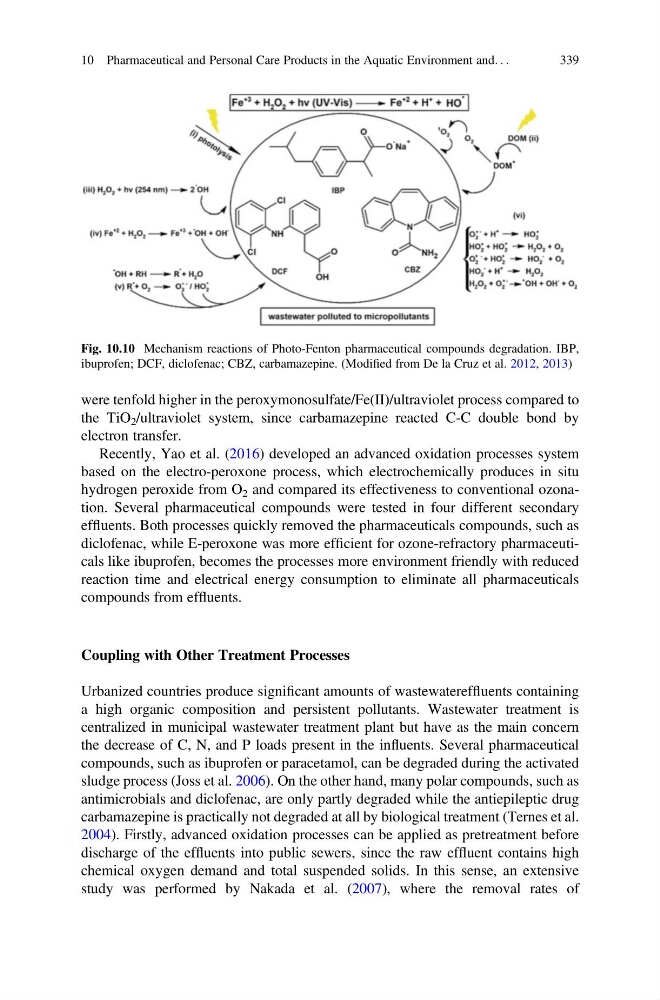
Fig. 10.10 Mechanism reactions of Photo-Fenton pharmaceutical compounds degradation. IBP,
ibuprofen; DCF, diclofenac; CBZ, carbamazepine. (Modified from De la Cruz et al. 2012, 2013)
10 Pharmaceutical and Personal Care Products in the Aquatic Environment and. . .
339
the TiO 2 /ultraviolet system, since carbamazepine reacted C-C double bond by
electron transfer.
Recently, Yao et al. (2016) developed an advanced oxidation processes system
based on the electro-peroxone process, which electrochemically produces in situ
hydrogen peroxide from O 2 and compared its effectiveness to conventional ozonation. Several pharmaceutical compounds were tested in four different secondary
effluents. Both processes quickly removed the pharmaceuticals compounds, such as
diclofenac, while E-peroxone was more efficient for ozone-refractory pharmaceuticals like ibuprofen, becomes the processes more environment friendly with reduced
reaction time and electrical energy consumption to eliminate all pharmaceuticals
compounds from effluents.
Coupling with Other Treatment Processes
Urbanized countries produce significant amounts of wastewatereffluents containing
a high organic composition and persistent pollutants. Wastewater treatment is
centralized in municipal wastewater treatment plant but have as the main concern
the decrease of C, N, and P loads present in the influents. Several pharmaceutical
compounds, such as ibuprofen or paracetamol, can be degraded during the activated
sludge process (Joss et al. 2006). On the other hand, many polar compounds, such as
antimicrobials and diclofenac, are only partly degraded while the antiepileptic drug
carbamazepine is practically not degraded at all by biological treatment (Ternes et al.
2004). Firstly, advanced oxidation processes can be applied as pretreatment before
discharge of the effluents into public sewers, since the raw effluent contains high
chemical oxygen demand and total suspended solids. In this sense, an extensive
study was performed by Nakada et al. (2007), where the removal rates of
Fig. 10.10 Mechanism reactions of Photo-Fenton pharmaceutical compounds degradation. IBP,
ibuprofen; DCF, diclofenac; CBZ, carbamazepine. (Modified from De la Cruz et al. 2012, 2013)
10 Pharmaceutical and Personal Care Products in the Aquatic Environment and. . .
339