

(2006) studied triclosan degradation under fluorescence light-mediated TiO 2 P25,
PC50, and PC500. The results revealed that TiO 2 P25 promote the total triclosan
degradation after 60 min, with 90% mineralization after 10 h, while experiments
with TiO 2 PC500 and PC50 indicated a decrease of degradation efficiency since the
mixture of crystalline phase anatase and rutile present in TiO 2 P25 favors the
photocatalysis. Furthermore, two majority intermediate products were determined
as chlorocatechol and 2,4-dichlorophenol, representing 10% and 25% of triclosan
conversion, respectively. Yu et al. (2006) used TiO 2 suspensions with ultraviolet
artificial irradiation to degrade triclosan and 2,4-dichlorophenol, its main intermediary, as one of the dioxin precursors, to evaluate whether the other transformation
products resulted directly from triclosan or dichlorophenol. The findings indicate
that direct photolysis removed 8.1% of triclosan after 1 h ultraviolet irradiation,
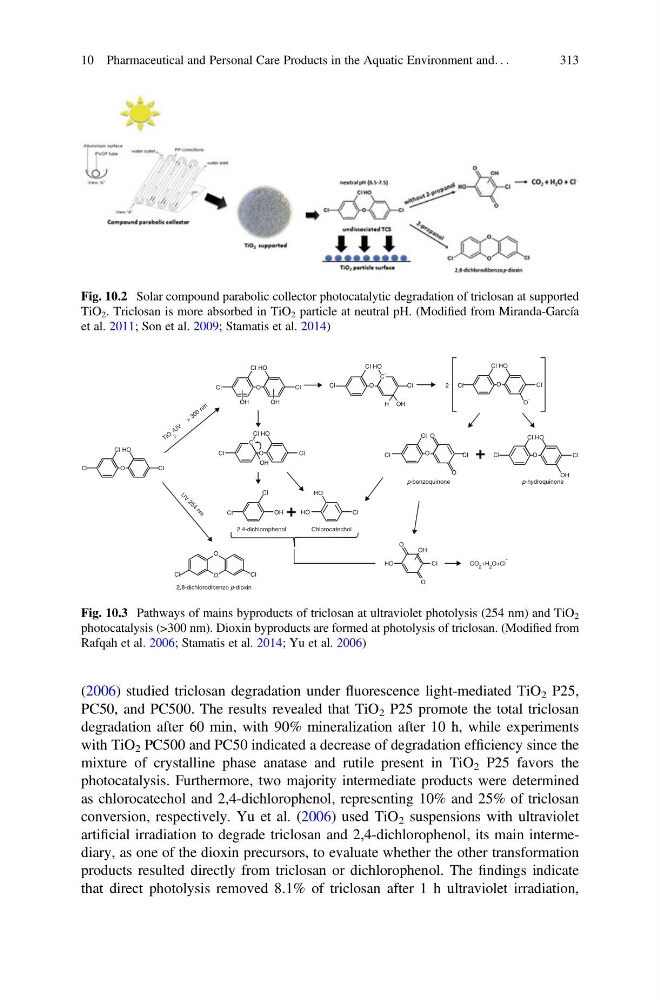
Fig. 10.2 Solar compound parabolic collector photocatalytic degradation of triclosan at supported
TiO 2 . Triclosan is more absorbed in TiO 2 particle at neutral pH. (Modified from Miranda-García
et al. 2011; Son et al. 2009; Stamatis et al. 2014)
CI
CI
CI
T iO 2
/U
V
>
3 0 0 n m
U
V
2
5
4
n
m
CI
CI
CI
CI
CI
CI
CI
CI
CI
CI
CI
CI
2,4-dichlorophenol
Chlorocatechol
CI
CI
CI
CI
O
O
2,8-dichlorodibenzo p-dioxin
CI
CI
CI HO
CI HO
CI HO
CI HO
CI HO
CI HO
O
OH
OH
OH
OH
OH
OH
OH
HO
HO
CO
2
+H 2 O+Cl
-
HO
O
O
O
O
O
O
O
O
O
O
p-hydroquinone
p-benzoquinone
H
2
C ·
C ·
O ·
Fig. 10.3 Pathways of mains byproducts of triclosan at ultraviolet photolysis (254 nm) and TiO 2
photocatalysis (>300 nm). Dioxin byproducts are formed at photolysis of triclosan. (Modified from
Rafqah et al. 2006; Stamatis et al. 2014; Yu et al. 2006)
10 Pharmaceutical and Personal Care Products in the Aquatic Environment and. . .
313
PC50, and PC500. The results revealed that TiO 2 P25 promote the total triclosan
degradation after 60 min, with 90% mineralization after 10 h, while experiments
with TiO 2 PC500 and PC50 indicated a decrease of degradation efficiency since the
mixture of crystalline phase anatase and rutile present in TiO 2 P25 favors the
photocatalysis. Furthermore, two majority intermediate products were determined
as chlorocatechol and 2,4-dichlorophenol, representing 10% and 25% of triclosan
conversion, respectively. Yu et al. (2006) used TiO 2 suspensions with ultraviolet
artificial irradiation to degrade triclosan and 2,4-dichlorophenol, its main intermediary, as one of the dioxin precursors, to evaluate whether the other transformation
products resulted directly from triclosan or dichlorophenol. The findings indicate
that direct photolysis removed 8.1% of triclosan after 1 h ultraviolet irradiation,
Fig. 10.2 Solar compound parabolic collector photocatalytic degradation of triclosan at supported
TiO 2 . Triclosan is more absorbed in TiO 2 particle at neutral pH. (Modified from Miranda-García
et al. 2011; Son et al. 2009; Stamatis et al. 2014)
CI
CI
CI
T iO 2
/U
V
>
3 0 0 n m
U
V
2
5
4
n
m
CI
CI
CI
CI
CI
CI
CI
CI
CI
CI
CI
CI
2,4-dichlorophenol
Chlorocatechol
CI
CI
CI
CI
O
O
2,8-dichlorodibenzo p-dioxin
CI
CI
CI HO
CI HO
CI HO
CI HO
CI HO
CI HO
O
OH
OH
OH
OH
OH
OH
OH
HO
HO
CO
2
+H 2 O+Cl
-
HO
O
O
O
O
O
O
O
O
O
O
p-hydroquinone
p-benzoquinone
H
2
C ·
C ·
O ·
Fig. 10.3 Pathways of mains byproducts of triclosan at ultraviolet photolysis (254 nm) and TiO 2
photocatalysis (>300 nm). Dioxin byproducts are formed at photolysis of triclosan. (Modified from
Rafqah et al. 2006; Stamatis et al. 2014; Yu et al. 2006)
10 Pharmaceutical and Personal Care Products in the Aquatic Environment and. . .
313