

wastewater consists mainly of such as preliminary, primary, secondary and tertiary,
sometimes followed by advanced treatment methods. In preliminary and primary
treatment, the oil-grease, suspended solids are skimmed off by physical methods.
The organic compounds are removed in secondary step by biological treatment. The
emulsified oils are separated by chemical oxidation in tertiary treatment. The fine
particles or organic matters are eliminated in advanced treatment process by membrane technology. After treatment, the treated water may be directly released to
surface waters under a national pollution discharge elimination system permit.
Sometimes, many technologies are not suitable for removal of stubborn and
persistent compounds. Day by day, advanced technologies are being introduced
like improved bioreactors, advanced oxidation that offer high efficiency of performance. Hence, effective combined technology should be chosen with proper knowledge like design, process control, systematic integration, process simulation,
operation optimization for removal of strong concentrated pollutants from wastewater in petroleum industry. However, this progressive technology depends on capital
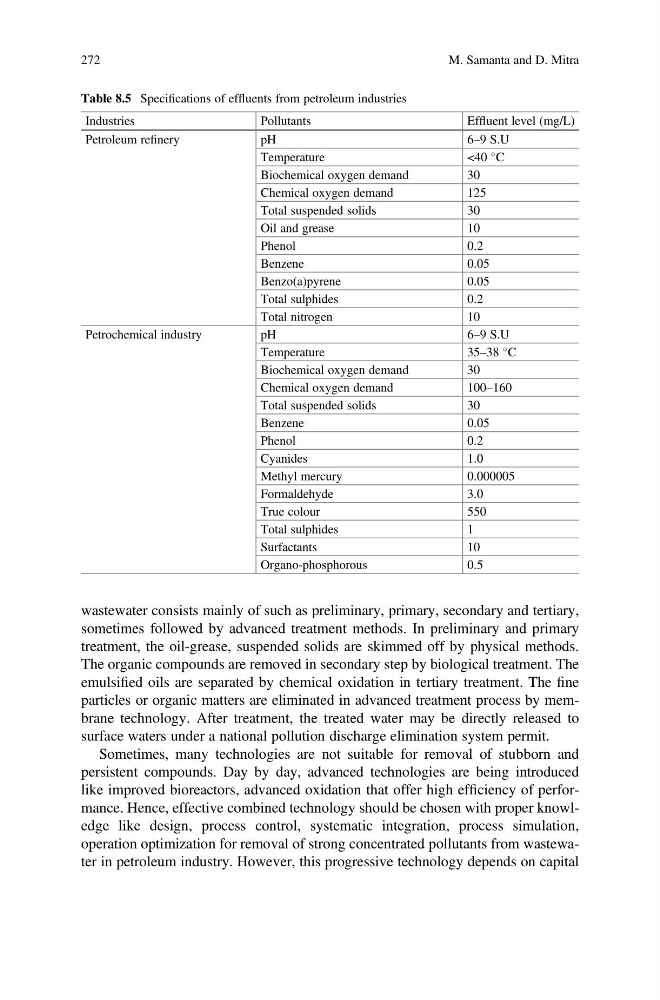
Table 8.5 Specifications of effluents from petroleum industries
Industries
Pollutants
Effluent level (mg/L)
Petroleum refinery
pH
6–9 S.U
Temperature
<40
C
Biochemical oxygen demand
30
Chemical oxygen demand
125
Total suspended solids
30
Oil and grease
10
Phenol
0.2
Benzene
0.05
Benzo(a)pyrene
0.05
Total sulphides
0.2
Total nitrogen
10
Petrochemical industry
pH
6–9 S.U
Temperature
35–38
C
Biochemical oxygen demand
30
Chemical oxygen demand
100–160
Total suspended solids
30
Benzene
0.05
Phenol
0.2
Cyanides
1.0
Methyl mercury
0.000005
Formaldehyde
3.0
True colour
550
Total sulphides
1
Surfactants
10
Organo-phosphorous
0.5
272
M. Samanta and D. Mitra
sometimes followed by advanced treatment methods. In preliminary and primary
treatment, the oil-grease, suspended solids are skimmed off by physical methods.
The organic compounds are removed in secondary step by biological treatment. The
emulsified oils are separated by chemical oxidation in tertiary treatment. The fine
particles or organic matters are eliminated in advanced treatment process by membrane technology. After treatment, the treated water may be directly released to
surface waters under a national pollution discharge elimination system permit.
Sometimes, many technologies are not suitable for removal of stubborn and
persistent compounds. Day by day, advanced technologies are being introduced
like improved bioreactors, advanced oxidation that offer high efficiency of performance. Hence, effective combined technology should be chosen with proper knowledge like design, process control, systematic integration, process simulation,
operation optimization for removal of strong concentrated pollutants from wastewater in petroleum industry. However, this progressive technology depends on capital
Table 8.5 Specifications of effluents from petroleum industries
Industries
Pollutants
Effluent level (mg/L)
Petroleum refinery
pH
6–9 S.U
Temperature
<40
C
Biochemical oxygen demand
30
Chemical oxygen demand
125
Total suspended solids
30
Oil and grease
10
Phenol
0.2
Benzene
0.05
Benzo(a)pyrene
0.05
Total sulphides
0.2
Total nitrogen
10
Petrochemical industry
pH
6–9 S.U
Temperature
35–38
C
Biochemical oxygen demand
30
Chemical oxygen demand
100–160
Total suspended solids
30
Benzene
0.05
Phenol
0.2
Cyanides
1.0
Methyl mercury
0.000005
Formaldehyde
3.0
True colour
550
Total sulphides
1
Surfactants
10
Organo-phosphorous
0.5
272
M. Samanta and D. Mitra