

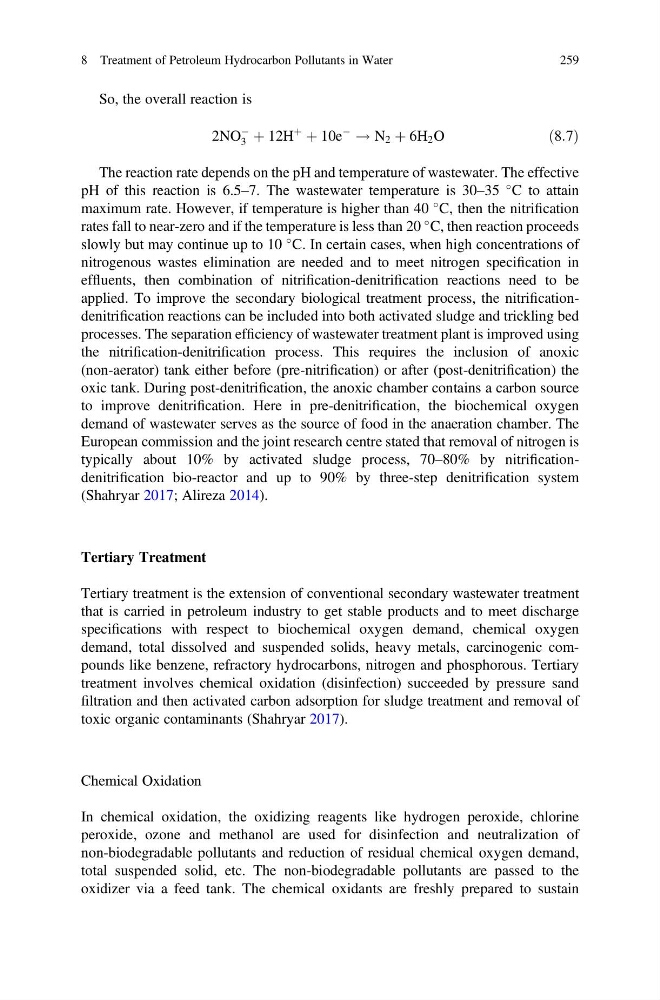
So, the overall reaction is
2NO
À
3 þ 12H
þ
þ 10e
À
! N 2 þ 6H 2 O
ð8:7Þ
The reaction rate depends on the pH and temperature of wastewater. The effective
pH of this reaction is 6.5–7. The wastewater temperature is 30–35
C to attain
maximum rate. However, if temperature is higher than 40
C, then the nitrification
rates fall to near-zero and if the temperature is less than 20
C, then reaction proceeds
slowly but may continue up to 10
C. In certain cases, when high concentrations of
nitrogenous wastes elimination are needed and to meet nitrogen specification in
effluents, then combination of nitrification-denitrification reactions need to be
applied. To improve the secondary biological treatment process, the nitrificationdenitrification reactions can be included into both activated sludge and trickling bed
processes. The separation efficiency of wastewater treatment plant is improved using
the nitrification-denitrification process. This requires the inclusion of anoxic
(non-aerator) tank either before (pre-nitrification) or after (post-denitrification) the
oxic tank. During post-denitrification, the anoxic chamber contains a carbon source
to improve denitrification. Here in pre-denitrification, the biochemical oxygen
demand of wastewater serves as the source of food in the anaeration chamber. The
European commission and the joint research centre stated that removal of nitrogen is
typically about 10% by activated sludge process, 70–80% by nitrificationdenitrification bio-reactor and up to 90% by three-step denitrification system
(Shahryar 2017; Alireza 2014).
Tertiary Treatment
Tertiary treatment is the extension of conventional secondary wastewater treatment
that is carried in petroleum industry to get stable products and to meet discharge
specifications with respect to biochemical oxygen demand, chemical oxygen
demand, total dissolved and suspended solids, heavy metals, carcinogenic compounds like benzene, refractory hydrocarbons, nitrogen and phosphorous. Tertiary
treatment involves chemical oxidation (disinfection) succeeded by pressure sand
filtration and then activated carbon adsorption for sludge treatment and removal of
toxic organic contaminants (Shahryar 2017).
Chemical Oxidation
In chemical oxidation, the oxidizing reagents like hydrogen peroxide, chlorine
peroxide, ozone and methanol are used for disinfection and neutralization of
non-biodegradable pollutants and reduction of residual chemical oxygen demand,
total suspended solid, etc. The non-biodegradable pollutants are passed to the
oxidizer via a feed tank. The chemical oxidants are freshly prepared to sustain
8 Treatment of Petroleum Hydrocarbon Pollutants in Water
259
2NO
À
3 þ 12H
þ
þ 10e
À
! N 2 þ 6H 2 O
ð8:7Þ
The reaction rate depends on the pH and temperature of wastewater. The effective
pH of this reaction is 6.5–7. The wastewater temperature is 30–35
C to attain
maximum rate. However, if temperature is higher than 40
C, then the nitrification
rates fall to near-zero and if the temperature is less than 20
C, then reaction proceeds
slowly but may continue up to 10
C. In certain cases, when high concentrations of
nitrogenous wastes elimination are needed and to meet nitrogen specification in
effluents, then combination of nitrification-denitrification reactions need to be
applied. To improve the secondary biological treatment process, the nitrificationdenitrification reactions can be included into both activated sludge and trickling bed
processes. The separation efficiency of wastewater treatment plant is improved using
the nitrification-denitrification process. This requires the inclusion of anoxic
(non-aerator) tank either before (pre-nitrification) or after (post-denitrification) the
oxic tank. During post-denitrification, the anoxic chamber contains a carbon source
to improve denitrification. Here in pre-denitrification, the biochemical oxygen
demand of wastewater serves as the source of food in the anaeration chamber. The
European commission and the joint research centre stated that removal of nitrogen is
typically about 10% by activated sludge process, 70–80% by nitrificationdenitrification bio-reactor and up to 90% by three-step denitrification system
(Shahryar 2017; Alireza 2014).
Tertiary Treatment
Tertiary treatment is the extension of conventional secondary wastewater treatment
that is carried in petroleum industry to get stable products and to meet discharge
specifications with respect to biochemical oxygen demand, chemical oxygen
demand, total dissolved and suspended solids, heavy metals, carcinogenic compounds like benzene, refractory hydrocarbons, nitrogen and phosphorous. Tertiary
treatment involves chemical oxidation (disinfection) succeeded by pressure sand
filtration and then activated carbon adsorption for sludge treatment and removal of
toxic organic contaminants (Shahryar 2017).
Chemical Oxidation
In chemical oxidation, the oxidizing reagents like hydrogen peroxide, chlorine
peroxide, ozone and methanol are used for disinfection and neutralization of
non-biodegradable pollutants and reduction of residual chemical oxygen demand,
total suspended solid, etc. The non-biodegradable pollutants are passed to the
oxidizer via a feed tank. The chemical oxidants are freshly prepared to sustain
8 Treatment of Petroleum Hydrocarbon Pollutants in Water
259