

4.4 Plastics in Water System
A. Plasticsin marine
Just like on land, ocean area has also negative impact of plastic on marine life. Every
year, nearly 12.7 million tonnes of plastic wastes flows into the ocean. Marine litter
poses a big problem for our ocean (Rochman 2013). Approximately 51 trillion microplastics are already present in the ocean as estimated by the United
Nations Environment Programme and oceans find more microplastics even reaching
Arctic water than ever thought (Costa and Barletta 2015). Source of ocean contamination by plastics come from land and sometimes, due to mismanagement of waste
disposal, as well as the ships and offshore oil and gas platforms leakage (Chin and
Fung 2019). This tiny plastic in the ocean distort the complete bio-geo cycle, which
creates harmful problems to the marine ecosystem (Ding et al. 2019). The water life
from small fish to bigger mammals is greatly affected by these tiny plastics through
different ways. Plastic ingestion kills millions of seabirds and 100,000 marine
mammals every year. Unfortunately, consumption of these plastics by marine
species forces them to the verge of extinction. It creates intense digestive issues,
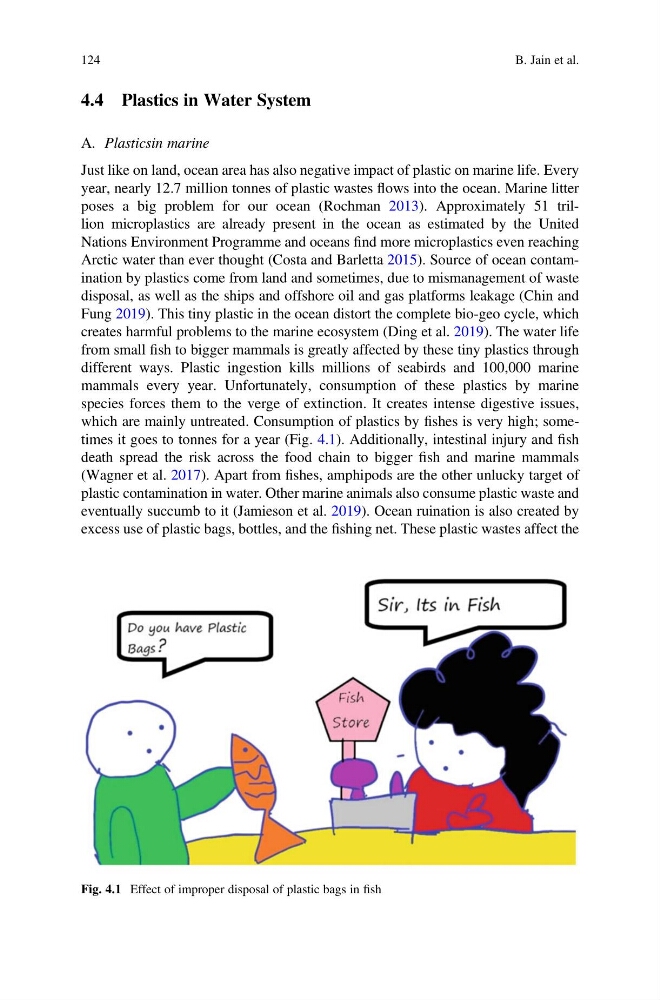
which are mainly untreated. Consumption of plastics by fishes is very high; sometimes it goes to tonnes for a year (Fig. 4.1). Additionally, intestinal injury and fish
death spread the risk across the food chain to bigger fish and marine mammals
(Wagner et al. 2017). Apart from fishes, amphipods are the other unlucky target of
plastic contamination in water. Other marine animals also consume plastic waste and
eventually succumb to it (Jamieson et al. 2019). Ocean ruination is also created by
excess use of plastic bags, bottles, and the fishing net. These plastic wastes affect the
Fig. 4.1 Effect of improper disposal of plastic bags in fish
124
B. Jain et al.
A. Plasticsin marine
Just like on land, ocean area has also negative impact of plastic on marine life. Every
year, nearly 12.7 million tonnes of plastic wastes flows into the ocean. Marine litter
poses a big problem for our ocean (Rochman 2013). Approximately 51 trillion microplastics are already present in the ocean as estimated by the United
Nations Environment Programme and oceans find more microplastics even reaching
Arctic water than ever thought (Costa and Barletta 2015). Source of ocean contamination by plastics come from land and sometimes, due to mismanagement of waste
disposal, as well as the ships and offshore oil and gas platforms leakage (Chin and
Fung 2019). This tiny plastic in the ocean distort the complete bio-geo cycle, which
creates harmful problems to the marine ecosystem (Ding et al. 2019). The water life
from small fish to bigger mammals is greatly affected by these tiny plastics through
different ways. Plastic ingestion kills millions of seabirds and 100,000 marine
mammals every year. Unfortunately, consumption of these plastics by marine
species forces them to the verge of extinction. It creates intense digestive issues,
which are mainly untreated. Consumption of plastics by fishes is very high; sometimes it goes to tonnes for a year (Fig. 4.1). Additionally, intestinal injury and fish
death spread the risk across the food chain to bigger fish and marine mammals
(Wagner et al. 2017). Apart from fishes, amphipods are the other unlucky target of
plastic contamination in water. Other marine animals also consume plastic waste and
eventually succumb to it (Jamieson et al. 2019). Ocean ruination is also created by
excess use of plastic bags, bottles, and the fishing net. These plastic wastes affect the
Fig. 4.1 Effect of improper disposal of plastic bags in fish
124
B. Jain et al.