

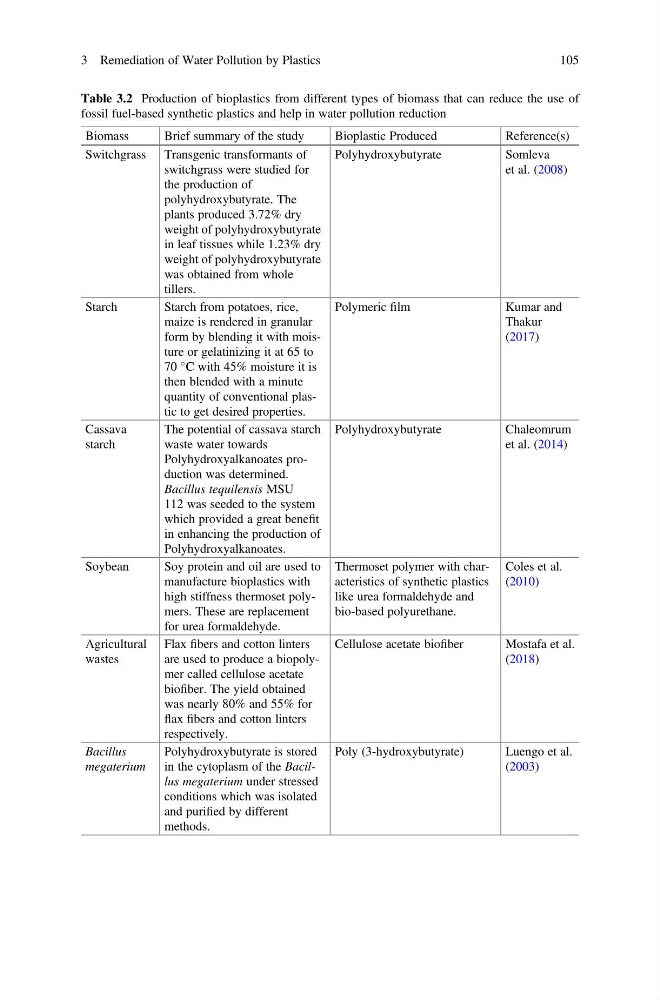
Table 3.2 Production of bioplastics from different types of biomass that can reduce the use of
fossil fuel-based synthetic plastics and help in water pollution reduction
Biomass
Brief summary of the study
Bioplastic Produced
Reference(s)
Switchgrass Transgenic transformants of
switchgrass were studied for
the production of
polyhydroxybutyrate. The
plants produced 3.72% dry
weight of polyhydroxybutyrate
in leaf tissues while 1.23% dry
weight of polyhydroxybutyrate
was obtained from whole
tillers.
Polyhydroxybutyrate
Somleva
et al. (2008)
Starch
Starch from potatoes, rice,
maize is rendered in granular
form by blending it with moisture or gelatinizing it at 65 to
70
C with 45% moisture it is
then blended with a minute
quantity of conventional plastic to get desired properties.
Polymeric film
Kumar and
Thakur
(2017)
Cassava
starch
The potential of cassava starch
waste water towards
Polyhydroxyalkanoates production was determined.
Bacillus tequilensis MSU
112 was seeded to the system
which provided a great benefit
in enhancing the production of
Polyhydroxyalkanoates.
Polyhydroxybutyrate
Chaleomrum
et al. (2014)
Soybean
Soy protein and oil are used to
manufacture bioplastics with
high stiffness thermoset polymers. These are replacement
for urea formaldehyde.
Thermoset polymer with characteristics of synthetic plastics
like urea formaldehyde and
bio-based polyurethane.
Coles et al.
(2010)
Agricultural
wastes
Flax fibers and cotton linters
are used to produce a biopolymer called cellulose acetate
biofiber. The yield obtained
was nearly 80% and 55% for
flax fibers and cotton linters
respectively.
Cellulose acetate biofiber
Mostafa et al.
(2018)
Bacillus
megaterium
Polyhydroxybutyrate is stored
in the cytoplasm of the Bacillus megaterium under stressed
conditions which was isolated
and purified by different
methods.
Poly (3-hydroxybutyrate)
Luengo et al.
(2003)
3 Remediation of Water Pollution by Plastics
105
fossil fuel-based synthetic plastics and help in water pollution reduction
Biomass
Brief summary of the study
Bioplastic Produced
Reference(s)
Switchgrass Transgenic transformants of
switchgrass were studied for
the production of
polyhydroxybutyrate. The
plants produced 3.72% dry
weight of polyhydroxybutyrate
in leaf tissues while 1.23% dry
weight of polyhydroxybutyrate
was obtained from whole
tillers.
Polyhydroxybutyrate
Somleva
et al. (2008)
Starch
Starch from potatoes, rice,
maize is rendered in granular
form by blending it with moisture or gelatinizing it at 65 to
70
C with 45% moisture it is
then blended with a minute
quantity of conventional plastic to get desired properties.
Polymeric film
Kumar and
Thakur
(2017)
Cassava
starch
The potential of cassava starch
waste water towards
Polyhydroxyalkanoates production was determined.
Bacillus tequilensis MSU
112 was seeded to the system
which provided a great benefit
in enhancing the production of
Polyhydroxyalkanoates.
Polyhydroxybutyrate
Chaleomrum
et al. (2014)
Soybean
Soy protein and oil are used to
manufacture bioplastics with
high stiffness thermoset polymers. These are replacement
for urea formaldehyde.
Thermoset polymer with characteristics of synthetic plastics
like urea formaldehyde and
bio-based polyurethane.
Coles et al.
(2010)
Agricultural
wastes
Flax fibers and cotton linters
are used to produce a biopolymer called cellulose acetate
biofiber. The yield obtained
was nearly 80% and 55% for
flax fibers and cotton linters
respectively.
Cellulose acetate biofiber
Mostafa et al.
(2018)
Bacillus
megaterium
Polyhydroxybutyrate is stored
in the cytoplasm of the Bacillus megaterium under stressed
conditions which was isolated
and purified by different
methods.
Poly (3-hydroxybutyrate)
Luengo et al.
(2003)
3 Remediation of Water Pollution by Plastics
105