

Domestic Laundry and Microfiber Shedding of Synthetic Textiles
139
788
1032
13960
32736
35144
35241
23799
32999
33936
0
5000
10000
15000
20000
25000
30000
35000
40000
30
40
60
Microfiber count
Temperature in Degree Centigrade
Polyester
Polyamide
Acetate
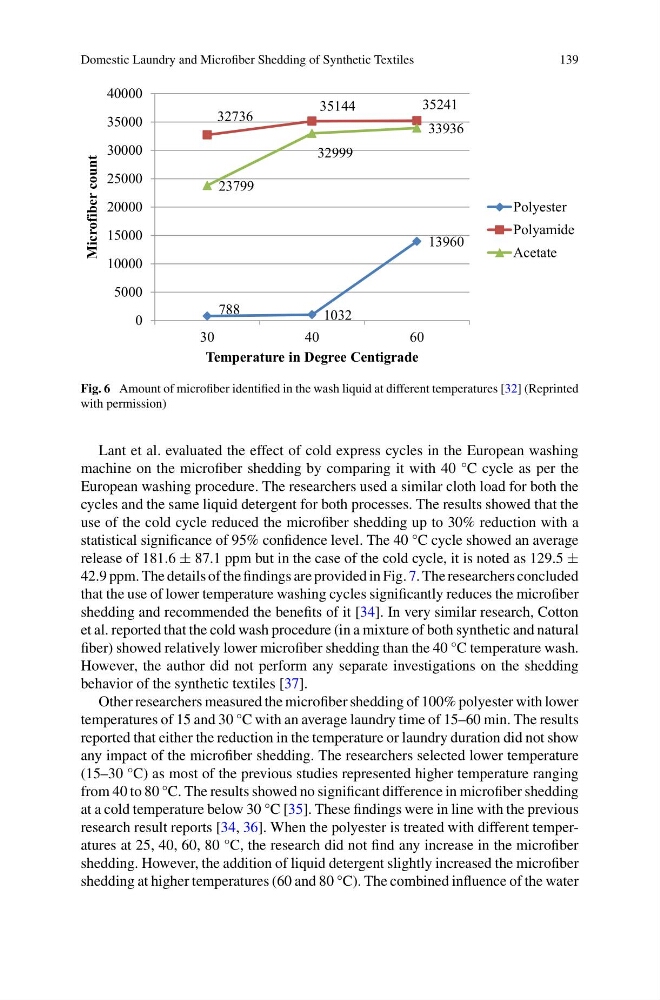
Fig. 6 Amount of microfiber identified in the wash liquid at different temperatures [32] (Reprinted
with permission)
Lant et al. evaluated the effect of cold express cycles in the European washing
machine on the microfiber shedding by comparing it with 40 °C cycle as per the
European washing procedure. The researchers used a similar cloth load for both the
cycles and the same liquid detergent for both processes. The results showed that the
use of the cold cycle reduced the microfiber shedding up to 30% reduction with a
statistical significance of 95% confidence level. The 40 °C cycle showed an average
release of 181.6 ± 87.1 ppm but in the case of the cold cycle, it is noted as 129.5 ±
42.9 ppm. The details of the findings are provided in Fig. 7. The researchers concluded
that the use of lower temperature washing cycles significantly reduces the microfiber
shedding and recommended the benefits of it [34]. In very similar research, Cotton
et al. reported that the cold wash procedure (in a mixture of both synthetic and natural
fiber) showed relatively lower microfiber shedding than the 40 °C temperature wash.
However, the author did not perform any separate investigations on the shedding
behavior of the synthetic textiles [37].
Other researchers measured the microfiber shedding of 100% polyester with lower
temperatures of 15 and 30 °C with an average laundry time of 15–60 min. The results
reported that either the reduction in the temperature or laundry duration did not show
any impact of the microfiber shedding. The researchers selected lower temperature
(15–30 °C) as most of the previous studies represented higher temperature ranging
from 40 to 80 °C. The results showed no significant difference in microfiber shedding
at a cold temperature below 30 °C [35]. These findings were in line with the previous
research result reports [34, 36]. When the polyester is treated with different temperatures at 25, 40, 60, 80 °C, the research did not find any increase in the microfiber
shedding. However, the addition of liquid detergent slightly increased the microfiber
shedding at higher temperatures (60 and 80 °C). The combined influence of the water
139
788
1032
13960
32736
35144
35241
23799
32999
33936
0
5000
10000
15000
20000
25000
30000
35000
40000
30
40
60
Microfiber count
Temperature in Degree Centigrade
Polyester
Polyamide
Acetate
Fig. 6 Amount of microfiber identified in the wash liquid at different temperatures [32] (Reprinted
with permission)
Lant et al. evaluated the effect of cold express cycles in the European washing
machine on the microfiber shedding by comparing it with 40 °C cycle as per the
European washing procedure. The researchers used a similar cloth load for both the
cycles and the same liquid detergent for both processes. The results showed that the
use of the cold cycle reduced the microfiber shedding up to 30% reduction with a
statistical significance of 95% confidence level. The 40 °C cycle showed an average
release of 181.6 ± 87.1 ppm but in the case of the cold cycle, it is noted as 129.5 ±
42.9 ppm. The details of the findings are provided in Fig. 7. The researchers concluded
that the use of lower temperature washing cycles significantly reduces the microfiber
shedding and recommended the benefits of it [34]. In very similar research, Cotton
et al. reported that the cold wash procedure (in a mixture of both synthetic and natural
fiber) showed relatively lower microfiber shedding than the 40 °C temperature wash.
However, the author did not perform any separate investigations on the shedding
behavior of the synthetic textiles [37].
Other researchers measured the microfiber shedding of 100% polyester with lower
temperatures of 15 and 30 °C with an average laundry time of 15–60 min. The results
reported that either the reduction in the temperature or laundry duration did not show
any impact of the microfiber shedding. The researchers selected lower temperature
(15–30 °C) as most of the previous studies represented higher temperature ranging
from 40 to 80 °C. The results showed no significant difference in microfiber shedding
at a cold temperature below 30 °C [35]. These findings were in line with the previous
research result reports [34, 36]. When the polyester is treated with different temperatures at 25, 40, 60, 80 °C, the research did not find any increase in the microfiber
shedding. However, the addition of liquid detergent slightly increased the microfiber
shedding at higher temperatures (60 and 80 °C). The combined influence of the water