

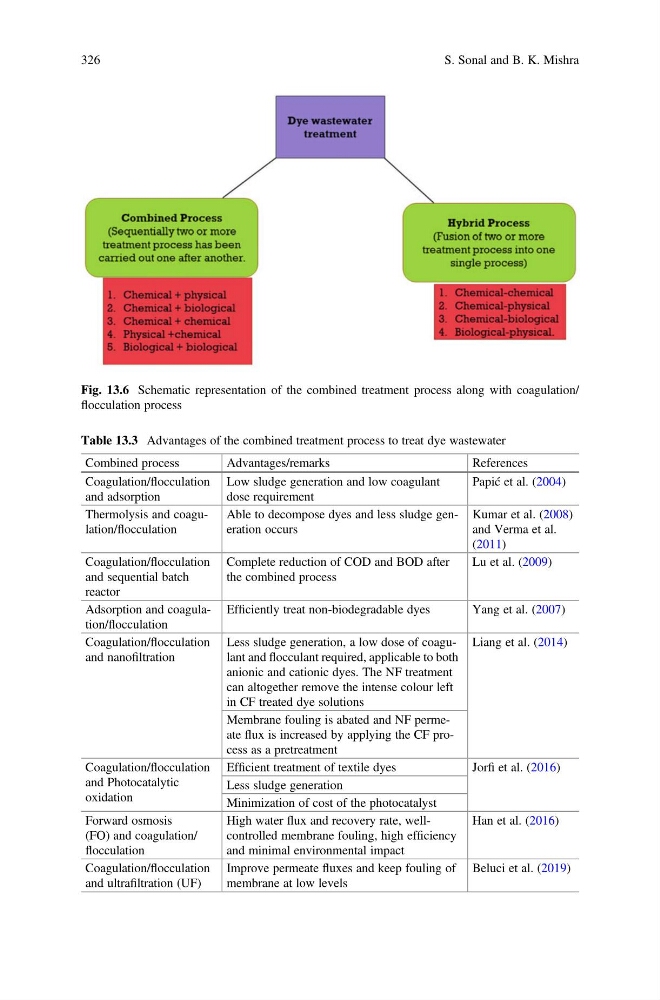
Fig. 13.6 Schematic representation of the combined treatment process along with coagulation/
flocculation process
Table 13.3 Advantages of the combined treatment process to treat dye wastewater
Combined process
Advantages/remarks
References
Coagulation/flocculation
and adsorption
Low sludge generation and low coagulant
dose requirement
Papić et al. (2004)
Thermolysis and coagulation/flocculation
Able to decompose dyes and less sludge generation occurs
Kumar et al. (2008)
and Verma et al.
(2011)
Coagulation/flocculation
and sequential batch
reactor
Complete reduction of COD and BOD after
the combined process
Lu et al. (2009)
Adsorption and coagulation/flocculation
Efficiently treat non-biodegradable dyes
Yang et al. (2007)
Coagulation/flocculation
and nanofiltration
Less sludge generation, a low dose of coagulant and flocculant required, applicable to both
anionic and cationic dyes. The NF treatment
can altogether remove the intense colour left
in CF treated dye solutions
Liang et al. (2014)
Membrane fouling is abated and NF permeate flux is increased by applying the CF process as a pretreatment
Coagulation/flocculation
and Photocatalytic
oxidation
Efficient treatment of textile dyes
Jorfi et al. (2016)
Less sludge generation
Minimization of cost of the photocatalyst
Forward osmosis
(FO) and coagulation/
flocculation
High water flux and recovery rate, wellcontrolled membrane fouling, high efficiency
and minimal environmental impact
Han et al. (2016)
Coagulation/flocculation
and ultrafiltration (UF)
Improve permeate fluxes and keep fouling of
membrane at low levels
Beluci et al. (2019)
326
S. Sonal and B. K. Mishra
flocculation process
Table 13.3 Advantages of the combined treatment process to treat dye wastewater
Combined process
Advantages/remarks
References
Coagulation/flocculation
and adsorption
Low sludge generation and low coagulant
dose requirement
Papić et al. (2004)
Thermolysis and coagulation/flocculation
Able to decompose dyes and less sludge generation occurs
Kumar et al. (2008)
and Verma et al.
(2011)
Coagulation/flocculation
and sequential batch
reactor
Complete reduction of COD and BOD after
the combined process
Lu et al. (2009)
Adsorption and coagulation/flocculation
Efficiently treat non-biodegradable dyes
Yang et al. (2007)
Coagulation/flocculation
and nanofiltration
Less sludge generation, a low dose of coagulant and flocculant required, applicable to both
anionic and cationic dyes. The NF treatment
can altogether remove the intense colour left
in CF treated dye solutions
Liang et al. (2014)
Membrane fouling is abated and NF permeate flux is increased by applying the CF process as a pretreatment
Coagulation/flocculation
and Photocatalytic
oxidation
Efficient treatment of textile dyes
Jorfi et al. (2016)
Less sludge generation
Minimization of cost of the photocatalyst
Forward osmosis
(FO) and coagulation/
flocculation
High water flux and recovery rate, wellcontrolled membrane fouling, high efficiency
and minimal environmental impact
Han et al. (2016)
Coagulation/flocculation
and ultrafiltration (UF)
Improve permeate fluxes and keep fouling of
membrane at low levels
Beluci et al. (2019)
326
S. Sonal and B. K. Mishra