

been used along with different inorganic and organic coagulants, to treat the dye
wastewater (Xue et al. 2018; Sanghi et al. 2006). Table 13.2 summarizes the
effectiveness of different coagulants/coagulant aid for the treatment of dye wastewater. The chemistry of coagulants, when hydrolysed in solution, is quite
multifaced. When aluminium or iron-based coagulants are added to the water, the
pH is depressed due to the release of hydrogen ions, and they form aqua-metal
complexes (Jarvis et al. 2012). The coagulation reactions comprise of an interaction
between the hydrolysis product of metal salt and colloidal particles. Initially, metal
salts come in contact with the solution; hydrolysis occurs followed by a series of
hydrolytic reactions, where hydroxide ions from water molecules replace water
molecules bound to the metals (Jarvis et al. 2012). This leads to a reduction in net
charge that finally leads to the formation of monomeric then polymeric species that
are responsible for the destabilization of colloidal particles. Likewise, other metals
such as titanium tetrachloride and zirconium oxychloride also hydrolysed and
formed polymeric species causing settling of colloidal particles and dye (Priya
et al. 2017; Sonal et al. 2018). Thus, metallic coagulants are extensively used in
the treatment plants based on their availability and performance.
Although the iron- and aluminium-based coagulants have been used commonly,
some disadvantages urge the demand of new coagulant. Recent epidemiological,
neuropathological and biochemical studies suggest that there is a possible link
between the pathogenesis of Alzheimer’s disease and neurotoxicity of aluminium
(Banks et al. 2006; Polizzi et al. 2002). Also, iron-based coagulants are costly, and
the residual iron may cause unpleasant taste, odour, colour, corrosion, staining or
foaming (Li et al. 2008).
As an alternative, synthetic/natural organic polymers (such as starch, chitosan,
polyethyleneimine, polyacrylamide, etc.) or pre-hydrolysed salts [such as
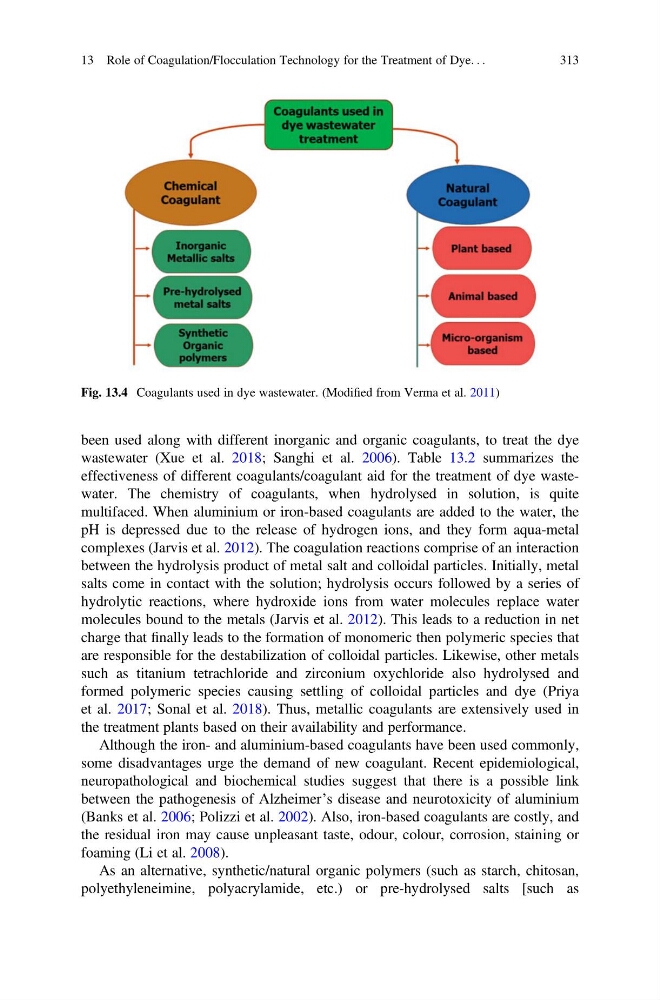
Fig. 13.4 Coagulants used in dye wastewater. (Modified from Verma et al. 2011)
13 Role of Coagulation/Flocculation Technology for the Treatment of Dye. . .
313
wastewater (Xue et al. 2018; Sanghi et al. 2006). Table 13.2 summarizes the
effectiveness of different coagulants/coagulant aid for the treatment of dye wastewater. The chemistry of coagulants, when hydrolysed in solution, is quite
multifaced. When aluminium or iron-based coagulants are added to the water, the
pH is depressed due to the release of hydrogen ions, and they form aqua-metal
complexes (Jarvis et al. 2012). The coagulation reactions comprise of an interaction
between the hydrolysis product of metal salt and colloidal particles. Initially, metal
salts come in contact with the solution; hydrolysis occurs followed by a series of
hydrolytic reactions, where hydroxide ions from water molecules replace water
molecules bound to the metals (Jarvis et al. 2012). This leads to a reduction in net
charge that finally leads to the formation of monomeric then polymeric species that
are responsible for the destabilization of colloidal particles. Likewise, other metals
such as titanium tetrachloride and zirconium oxychloride also hydrolysed and
formed polymeric species causing settling of colloidal particles and dye (Priya
et al. 2017; Sonal et al. 2018). Thus, metallic coagulants are extensively used in
the treatment plants based on their availability and performance.
Although the iron- and aluminium-based coagulants have been used commonly,
some disadvantages urge the demand of new coagulant. Recent epidemiological,
neuropathological and biochemical studies suggest that there is a possible link
between the pathogenesis of Alzheimer’s disease and neurotoxicity of aluminium
(Banks et al. 2006; Polizzi et al. 2002). Also, iron-based coagulants are costly, and
the residual iron may cause unpleasant taste, odour, colour, corrosion, staining or
foaming (Li et al. 2008).
As an alternative, synthetic/natural organic polymers (such as starch, chitosan,
polyethyleneimine, polyacrylamide, etc.) or pre-hydrolysed salts [such as
Fig. 13.4 Coagulants used in dye wastewater. (Modified from Verma et al. 2011)
13 Role of Coagulation/Flocculation Technology for the Treatment of Dye. . .
313