

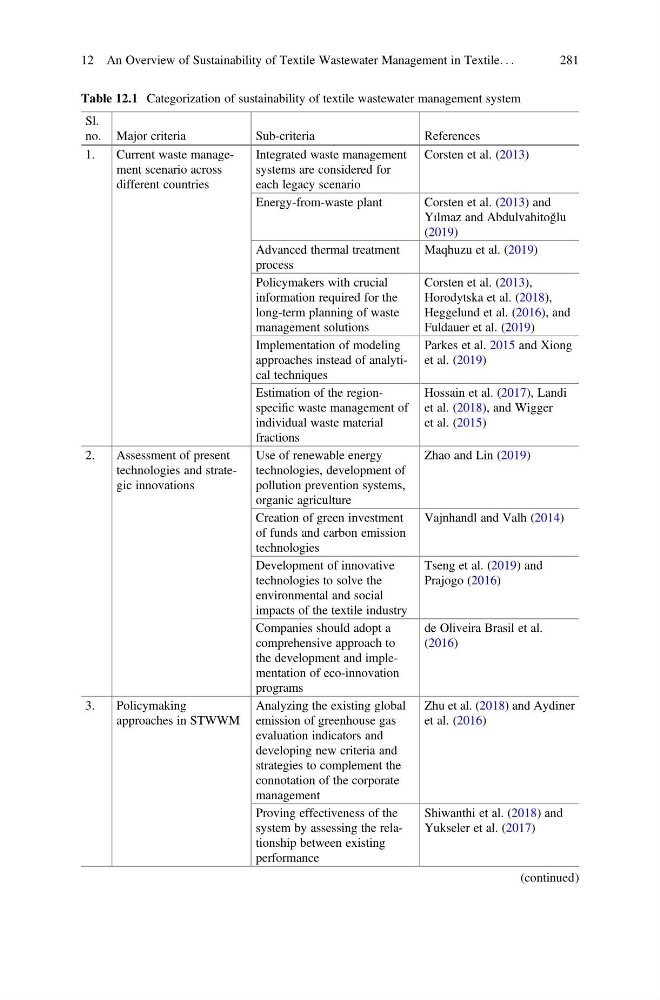
Table 12.1 Categorization of sustainability of textile wastewater management system
Sl.
no. Major criteria
Sub-criteria
References
1.
Current waste management scenario across
different countries
Integrated waste management
systems are considered for
each legacy scenario
Corsten et al. (2013)
Energy-from-waste plant
Corsten et al. (2013) and
Yılmaz and Abdulvahitoğlu
(2019)
Advanced thermal treatment
process
Maqhuzu et al. (2019)
Policymakers with crucial
information required for the
long-term planning of waste
management solutions
Corsten et al. (2013),
Horodytska et al. (2018),
Heggelund et al. (2016), and
Fuldauer et al. (2019)
Implementation of modeling
approaches instead of analytical techniques
Parkes et al. 2015 and Xiong
et al. (2019)
Estimation of the regionspecific waste management of
individual waste material
fractions
Hossain et al. (2017), Landi
et al. (2018), and Wigger
et al. (2015)
2.
Assessment of present
technologies and strategic innovations
Use of renewable energy
technologies, development of
pollution prevention systems,
organic agriculture
Zhao and Lin (2019)
Creation of green investment
of funds and carbon emission
technologies
Vajnhandl and Valh (2014)
Development of innovative
technologies to solve the
environmental and social
impacts of the textile industry
Tseng et al. (2019) and
Prajogo (2016)
Companies should adopt a
comprehensive approach to
the development and implementation of eco-innovation
programs
de Oliveira Brasil et al.
(2016)
3.
Policymaking
approaches in STWWM
Analyzing the existing global
emission of greenhouse gas
evaluation indicators and
developing new criteria and
strategies to complement the
connotation of the corporate
management
Zhu et al. (2018) and Aydiner
et al. (2016)
Proving effectiveness of the
system by assessing the relationship between existing
performance
Shiwanthi et al. (2018) and
Yukseler et al. (2017)
(continued)
12 An Overview of Sustainability of Textile Wastewater Management in Textile. . .
281
Sl.
no. Major criteria
Sub-criteria
References
1.
Current waste management scenario across
different countries
Integrated waste management
systems are considered for
each legacy scenario
Corsten et al. (2013)
Energy-from-waste plant
Corsten et al. (2013) and
Yılmaz and Abdulvahitoğlu
(2019)
Advanced thermal treatment
process
Maqhuzu et al. (2019)
Policymakers with crucial
information required for the
long-term planning of waste
management solutions
Corsten et al. (2013),
Horodytska et al. (2018),
Heggelund et al. (2016), and
Fuldauer et al. (2019)
Implementation of modeling
approaches instead of analytical techniques
Parkes et al. 2015 and Xiong
et al. (2019)
Estimation of the regionspecific waste management of
individual waste material
fractions
Hossain et al. (2017), Landi
et al. (2018), and Wigger
et al. (2015)
2.
Assessment of present
technologies and strategic innovations
Use of renewable energy
technologies, development of
pollution prevention systems,
organic agriculture
Zhao and Lin (2019)
Creation of green investment
of funds and carbon emission
technologies
Vajnhandl and Valh (2014)
Development of innovative
technologies to solve the
environmental and social
impacts of the textile industry
Tseng et al. (2019) and
Prajogo (2016)
Companies should adopt a
comprehensive approach to
the development and implementation of eco-innovation
programs
de Oliveira Brasil et al.
(2016)
3.
Policymaking
approaches in STWWM
Analyzing the existing global
emission of greenhouse gas
evaluation indicators and
developing new criteria and
strategies to complement the
connotation of the corporate
management
Zhu et al. (2018) and Aydiner
et al. (2016)
Proving effectiveness of the
system by assessing the relationship between existing
performance
Shiwanthi et al. (2018) and
Yukseler et al. (2017)
(continued)
12 An Overview of Sustainability of Textile Wastewater Management in Textile. . .
281