

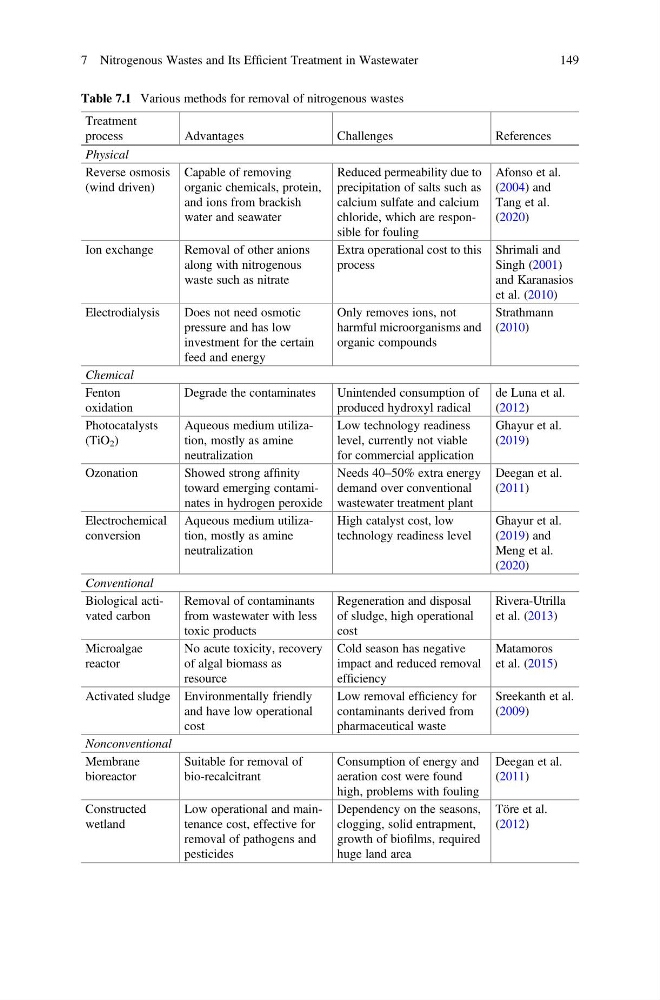
Table 7.1 Various methods for removal of nitrogenous wastes
Treatment
process
Advantages
Challenges
References
Physical
Reverse osmosis
(wind driven)
Capable of removing
organic chemicals, protein,
and ions from brackish
water and seawater
Reduced permeability due to
precipitation of salts such as
calcium sulfate and calcium
chloride, which are responsible for fouling
Afonso et al.
(2004) and
Tang et al.
(2020)
Ion exchange
Removal of other anions
along with nitrogenous
waste such as nitrate
Extra operational cost to this
process
Shrimali and
Singh (2001)
and Karanasios
et al. (2010)
Electrodialysis
Does not need osmotic
pressure and has low
investment for the certain
feed and energy
Only removes ions, not
harmful microorganisms and
organic compounds
Strathmann
(2010)
Chemical
Fenton
oxidation
Degrade the contaminates
Unintended consumption of
produced hydroxyl radical
de Luna et al.
(2012)
Photocatalysts
(TiO 2 )
Aqueous medium utilization, mostly as amine
neutralization
Low technology readiness
level, currently not viable
for commercial application
Ghayur et al.
(2019)
Ozonation
Showed strong affinity
toward emerging contaminates in hydrogen peroxide
Needs 40–50% extra energy
demand over conventional
wastewater treatment plant
Deegan et al.
(2011)
Electrochemical
conversion
Aqueous medium utilization, mostly as amine
neutralization
High catalyst cost, low
technology readiness level
Ghayur et al.
(2019) and
Meng et al.
(2020)
Conventional
Biological activated carbon
Removal of contaminants
from wastewater with less
toxic products
Regeneration and disposal
of sludge, high operational
cost
Rivera-Utrilla
et al. (2013)
Microalgae
reactor
No acute toxicity, recovery
of algal biomass as
resource
Cold season has negative
impact and reduced removal
efficiency
Matamoros
et al. (2015)
Activated sludge Environmentally friendly
and have low operational
cost
Low removal efficiency for
contaminants derived from
pharmaceutical waste
Sreekanth et al.
(2009)
Nonconventional
Membrane
bioreactor
Suitable for removal of
bio-recalcitrant
Consumption of energy and
aeration cost were found
high, problems with fouling
Deegan et al.
(2011)
Constructed
wetland
Low operational and maintenance cost, effective for
removal of pathogens and
pesticides
Dependency on the seasons,
clogging, solid entrapment,
growth of biofilms, required
huge land area
Töre et al.
(2012)
7 Nitrogenous Wastes and Its Efficient Treatment in Wastewater
149
Treatment
process
Advantages
Challenges
References
Physical
Reverse osmosis
(wind driven)
Capable of removing
organic chemicals, protein,
and ions from brackish
water and seawater
Reduced permeability due to
precipitation of salts such as
calcium sulfate and calcium
chloride, which are responsible for fouling
Afonso et al.
(2004) and
Tang et al.
(2020)
Ion exchange
Removal of other anions
along with nitrogenous
waste such as nitrate
Extra operational cost to this
process
Shrimali and
Singh (2001)
and Karanasios
et al. (2010)
Electrodialysis
Does not need osmotic
pressure and has low
investment for the certain
feed and energy
Only removes ions, not
harmful microorganisms and
organic compounds
Strathmann
(2010)
Chemical
Fenton
oxidation
Degrade the contaminates
Unintended consumption of
produced hydroxyl radical
de Luna et al.
(2012)
Photocatalysts
(TiO 2 )
Aqueous medium utilization, mostly as amine
neutralization
Low technology readiness
level, currently not viable
for commercial application
Ghayur et al.
(2019)
Ozonation
Showed strong affinity
toward emerging contaminates in hydrogen peroxide
Needs 40–50% extra energy
demand over conventional
wastewater treatment plant
Deegan et al.
(2011)
Electrochemical
conversion
Aqueous medium utilization, mostly as amine
neutralization
High catalyst cost, low
technology readiness level
Ghayur et al.
(2019) and
Meng et al.
(2020)
Conventional
Biological activated carbon
Removal of contaminants
from wastewater with less
toxic products
Regeneration and disposal
of sludge, high operational
cost
Rivera-Utrilla
et al. (2013)
Microalgae
reactor
No acute toxicity, recovery
of algal biomass as
resource
Cold season has negative
impact and reduced removal
efficiency
Matamoros
et al. (2015)
Activated sludge Environmentally friendly
and have low operational
cost
Low removal efficiency for
contaminants derived from
pharmaceutical waste
Sreekanth et al.
(2009)
Nonconventional
Membrane
bioreactor
Suitable for removal of
bio-recalcitrant
Consumption of energy and
aeration cost were found
high, problems with fouling
Deegan et al.
(2011)
Constructed
wetland
Low operational and maintenance cost, effective for
removal of pathogens and
pesticides
Dependency on the seasons,
clogging, solid entrapment,
growth of biofilms, required
huge land area
Töre et al.
(2012)
7 Nitrogenous Wastes and Its Efficient Treatment in Wastewater
149