

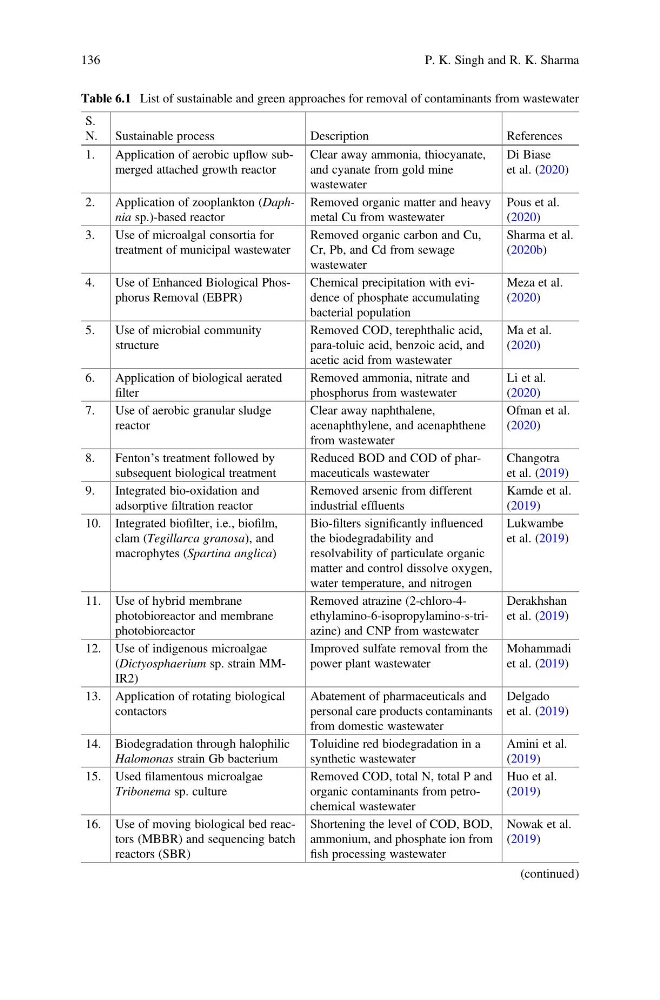
Table 6.1 List of sustainable and green approaches for removal of contaminants from wastewater
S.
N. Sustainable process
Description
References
1.
Application of aerobic upflow submerged attached growth reactor
Clear away ammonia, thiocyanate,
and cyanate from gold mine
wastewater
Di Biase
et al. (2020)
2.
Application of zooplankton (Daphnia sp.)-based reactor
Removed organic matter and heavy
metal Cu from wastewater
Pous et al.
(2020)
3.
Use of microalgal consortia for
treatment of municipal wastewater
Removed organic carbon and Cu,
Cr, Pb, and Cd from sewage
wastewater
Sharma et al.
(2020b)
4.
Use of Enhanced Biological Phosphorus Removal (EBPR)
Chemical precipitation with evidence of phosphate accumulating
bacterial population
Meza et al.
(2020)
5.
Use of microbial community
structure
Removed COD, terephthalic acid,
para-toluic acid, benzoic acid, and
acetic acid from wastewater
Ma et al.
(2020)
6.
Application of biological aerated
filter
Removed ammonia, nitrate and
phosphorus from wastewater
Li et al.
(2020)
7.
Use of aerobic granular sludge
reactor
Clear away naphthalene,
acenaphthylene, and acenaphthene
from wastewater
Ofman et al.
(2020)
8.
Fenton’s treatment followed by
subsequent biological treatment
Reduced BOD and COD of pharmaceuticals wastewater
Changotra
et al. (2019)
9.
Integrated bio-oxidation and
adsorptive filtration reactor
Removed arsenic from different
industrial effluents
Kamde et al.
(2019)
10. Integrated biofilter, i.e., biofilm,
clam (Tegillarca granosa), and
macrophytes (Spartina anglica)
Bio-filters significantly influenced
the biodegradability and
resolvability of particulate organic
matter and control dissolve oxygen,
water temperature, and nitrogen
Lukwambe
et al. (2019)
11. Use of hybrid membrane
photobioreactor and membrane
photobioreactor
ethylamino-6-isopropylamino-s-triazine) and CNP from wastewater
Derakhshan
et al. (2019)
12. Use of indigenous microalgae
(Dictyosphaerium sp. strain MMIR2)
Improved sulfate removal from the
power plant wastewater
Mohammadi
et al. (2019)
13. Application of rotating biological
contactors
Abatement of pharmaceuticals and
personal care products contaminants
from domestic wastewater
Delgado
et al. (2019)
14. Biodegradation through halophilic
Halomonas strain Gb bacterium
Toluidine red biodegradation in a
synthetic wastewater
Amini et al.
(2019)
15. Used filamentous microalgae
Tribonema sp. culture
Removed COD, total N, total P and
organic contaminants from petrochemical wastewater
Huo et al.
(2019)
16. Use of moving biological bed reactors (MBBR) and sequencing batch
reactors (SBR)
Shortening the level of COD, BOD,
ammonium, and phosphate ion from
fish processing wastewater
Nowak et al.
(2019)
(continued)
136
P. K. Singh and R. K. Sharma
S.
N. Sustainable process
Description
References
1.
Application of aerobic upflow submerged attached growth reactor
Clear away ammonia, thiocyanate,
and cyanate from gold mine
wastewater
Di Biase
et al. (2020)
2.
Application of zooplankton (Daphnia sp.)-based reactor
Removed organic matter and heavy
metal Cu from wastewater
Pous et al.
(2020)
3.
Use of microalgal consortia for
treatment of municipal wastewater
Removed organic carbon and Cu,
Cr, Pb, and Cd from sewage
wastewater
Sharma et al.
(2020b)
4.
Use of Enhanced Biological Phosphorus Removal (EBPR)
Chemical precipitation with evidence of phosphate accumulating
bacterial population
Meza et al.
(2020)
5.
Use of microbial community
structure
Removed COD, terephthalic acid,
para-toluic acid, benzoic acid, and
acetic acid from wastewater
Ma et al.
(2020)
6.
Application of biological aerated
filter
Removed ammonia, nitrate and
phosphorus from wastewater
Li et al.
(2020)
7.
Use of aerobic granular sludge
reactor
Clear away naphthalene,
acenaphthylene, and acenaphthene
from wastewater
Ofman et al.
(2020)
8.
Fenton’s treatment followed by
subsequent biological treatment
Reduced BOD and COD of pharmaceuticals wastewater
Changotra
et al. (2019)
9.
Integrated bio-oxidation and
adsorptive filtration reactor
Removed arsenic from different
industrial effluents
Kamde et al.
(2019)
10. Integrated biofilter, i.e., biofilm,
clam (Tegillarca granosa), and
macrophytes (Spartina anglica)
Bio-filters significantly influenced
the biodegradability and
resolvability of particulate organic
matter and control dissolve oxygen,
water temperature, and nitrogen
Lukwambe
et al. (2019)
11. Use of hybrid membrane
photobioreactor and membrane
photobioreactor
ethylamino-6-isopropylamino-s-triazine) and CNP from wastewater
Derakhshan
et al. (2019)
12. Use of indigenous microalgae
(Dictyosphaerium sp. strain MMIR2)
Improved sulfate removal from the
power plant wastewater
Mohammadi
et al. (2019)
13. Application of rotating biological
contactors
Abatement of pharmaceuticals and
personal care products contaminants
from domestic wastewater
Delgado
et al. (2019)
14. Biodegradation through halophilic
Halomonas strain Gb bacterium
Toluidine red biodegradation in a
synthetic wastewater
Amini et al.
(2019)
15. Used filamentous microalgae
Tribonema sp. culture
Removed COD, total N, total P and
organic contaminants from petrochemical wastewater
Huo et al.
(2019)
16. Use of moving biological bed reactors (MBBR) and sequencing batch
reactors (SBR)
Shortening the level of COD, BOD,
ammonium, and phosphate ion from
fish processing wastewater
Nowak et al.
(2019)
(continued)
136
P. K. Singh and R. K. Sharma