

197
exometabolites which other members can use as a nutrient source (Orvain et al.
2003; Hmel and Metlitskaya, 2006). Different microorganisms within the biofilm
communicate by means of chemical signals. These signals control the expression of
genes in the microbial cells. Therefore, the chemical signaling constitutes an important mechanism of control of the community structure, stress acclimation, and morphogenesis (Branda et al. 2005). The biopolymer matrix is normally a polyanionic
hydrogel (Wingender et al. 1999) composed from proteins and polysaccharides (<
85%) with inclusion of minor amounts of lipids and nucleic acids (Branda et al.
2005). The noteworthy example of microalgae immobilization in nature is the
inhabitance of transparent gel-like structures on the surface of animals like hydroids,
mollusks, nematodes, and clutches of axolotl. Animals provide the microalgae with
a shelter against adverse environmental conditions but at the same time transmit a
sufficient amount of light for their photosynthesis. In return, the microalgae supply
organic nutrients to the animal host, facilitate the mineralization of covers and its
pigmentation, and augment the synthesis of the protective mucus (Trench 1993).
In view of the outline given above, the immobilization in artificial systems is
expected to increase tolerance of the microalgal cells to abiotic stresses and hence
to help their biotechnological application. This is a key advantage of the immobilized microalgae in comparison with suspended cultures.
7.3 The Immobilization Techniques for Microalgae
The idea of microorganism immobilization was originally developed from enzyme’s
attachment on different carriers, and they both have the similar approaches.
However, the techniques and carriers for living cell immobilization should not be
damaging (Willaert 2017).
The currently used techniques of cell immobilization are divided into two types:
immobilization on a carrier surface and self-immobilization. It is essential to determine which technique is most appropriate for the specific biotechnological process.
For example, cell entrapment in gels is not suitable for production of primary
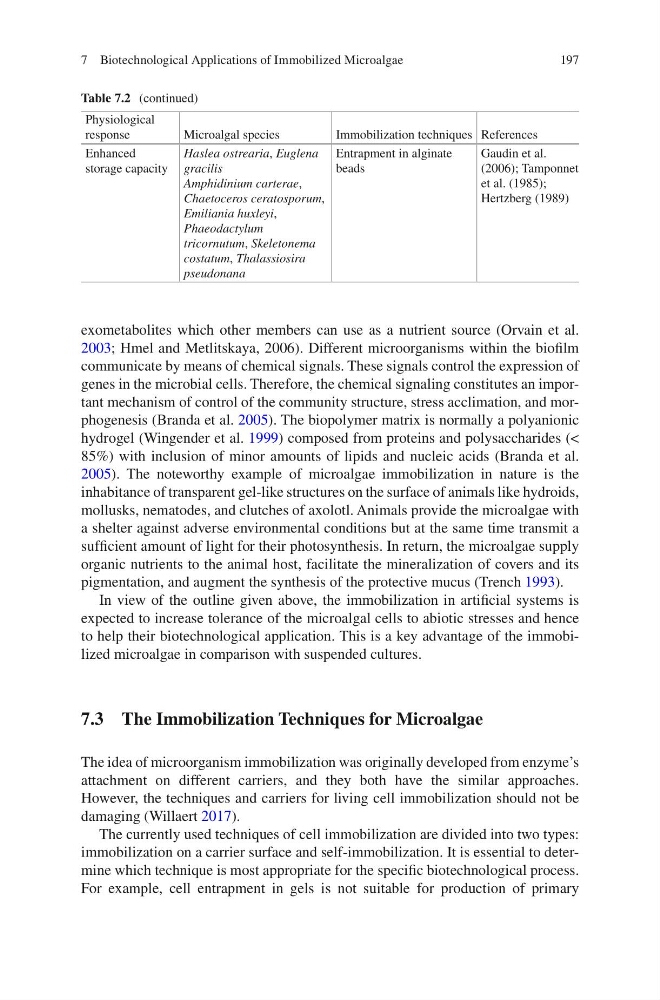
Table 7.2 (continued)
Physiological
response
Microalgal species
Immobilization techniques References
Enhanced
storage capacity
Haslea ostrearia, Euglena
gracilis
Amphidinium carterae,
Chaetoceros ceratosporum,
Emiliania huxleyi,
Phaeodactylum
tricornutum, Skeletonema
costatum, Thalassiosira
pseudonana
Entrapment in alginate
beads
Gaudin et al.
(2006); Tamponnet
et al. (1985);
Hertzberg (1989)
7 Biotechnological Applications of Immobilized Microalgae
exometabolites which other members can use as a nutrient source (Orvain et al.
2003; Hmel and Metlitskaya, 2006). Different microorganisms within the biofilm
communicate by means of chemical signals. These signals control the expression of
genes in the microbial cells. Therefore, the chemical signaling constitutes an important mechanism of control of the community structure, stress acclimation, and morphogenesis (Branda et al. 2005). The biopolymer matrix is normally a polyanionic
hydrogel (Wingender et al. 1999) composed from proteins and polysaccharides (<
85%) with inclusion of minor amounts of lipids and nucleic acids (Branda et al.
2005). The noteworthy example of microalgae immobilization in nature is the
inhabitance of transparent gel-like structures on the surface of animals like hydroids,
mollusks, nematodes, and clutches of axolotl. Animals provide the microalgae with
a shelter against adverse environmental conditions but at the same time transmit a
sufficient amount of light for their photosynthesis. In return, the microalgae supply
organic nutrients to the animal host, facilitate the mineralization of covers and its
pigmentation, and augment the synthesis of the protective mucus (Trench 1993).
In view of the outline given above, the immobilization in artificial systems is
expected to increase tolerance of the microalgal cells to abiotic stresses and hence
to help their biotechnological application. This is a key advantage of the immobilized microalgae in comparison with suspended cultures.
7.3 The Immobilization Techniques for Microalgae
The idea of microorganism immobilization was originally developed from enzyme’s
attachment on different carriers, and they both have the similar approaches.
However, the techniques and carriers for living cell immobilization should not be
damaging (Willaert 2017).
The currently used techniques of cell immobilization are divided into two types:
immobilization on a carrier surface and self-immobilization. It is essential to determine which technique is most appropriate for the specific biotechnological process.
For example, cell entrapment in gels is not suitable for production of primary
Table 7.2 (continued)
Physiological
response
Microalgal species
Immobilization techniques References
Enhanced
storage capacity
Haslea ostrearia, Euglena
gracilis
Amphidinium carterae,
Chaetoceros ceratosporum,
Emiliania huxleyi,
Phaeodactylum
tricornutum, Skeletonema
costatum, Thalassiosira
pseudonana
Entrapment in alginate
beads
Gaudin et al.
(2006); Tamponnet
et al. (1985);
Hertzberg (1989)
7 Biotechnological Applications of Immobilized Microalgae