

195
members of the associations. The microbial cells incorporated in the extracellular
matrix of the biofilm are less mobile similarly to artificially immobilized cells.
Microalgae are functionally linked with other members of associations.
Intercellular communication of the association partners is crucial for regulation and
stability of these consortia. These communities are exemplified by stromatolites and
cyanobacterial mats—the oldest (3.5 billion years old) and the most evolutionarily
successful form of life (Gerasimenko and Zavarzin 1993; Coserton et al., 1995).
7.2.1 Biofilm Formation Is an Efficient Strategy
of Microorganism Survival
The overwhelming majority of prokaryotes normally form biofilms. Their formation is a complex, highly regulated process. Inside the biofilm, organisms are able to
withstand adverse chemical, physical, and biological conditions—including dehydration, extreme temperatures, nutritional deficiency, ultraviolet irradiation, and
effects of toxic substances (Romanova and Gintsburg 2011; Flemming et al. 2016).
The net result is the stabilization of the microenvironment of the cells (Lewis 2005).
In view of this, the formation of biofilm communities is indeed a widespread strategy for the survival of microorganisms in nature conditions.
The biofilm is based on the principle of cooperation, a basic principle of evolution (Zavarzin 2003). The members of the microbial biofilm community produce the
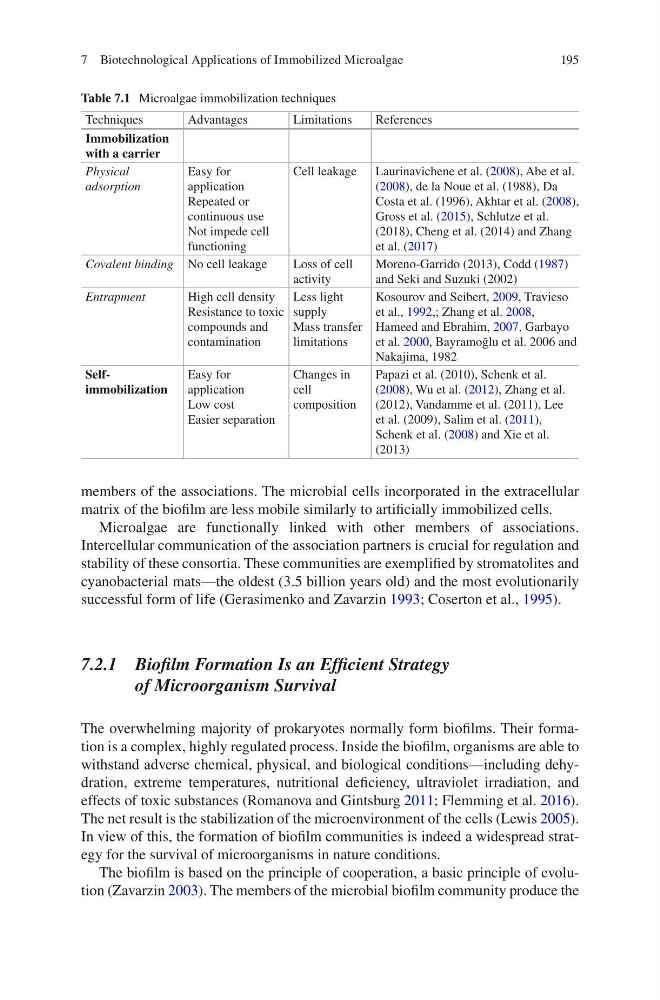
Table 7.1 Microalgae immobilization techniques
Techniques
Advantages
Limitations
References
Immobilization
with a carrier
Physical
adsorption
Easy for
application
Repeated or
continuous use
Not impede cell
functioning
Cell leakage Laurinavichene et al. (2008), Abe et al.
(2008), de la Noue et al. (1988), Da
Costa et al. (1996), Akhtar et al. (2008),
Gross et al. (2015), Schlutze et al.
(2018), Cheng et al. (2014) and Zhang
et al. (2017)
Covalent binding No cell leakage
Loss of cell
activity
Moreno-Garrido (2013), Codd (1987)
and Seki and Suzuki (2002)
Entrapment
High cell density
Resistance to toxic
compounds and
contamination
Less light
supply
Mass transfer
limitations
Kosourov and Seibert, 2009, Travieso
et al., 1992,; Zhang et al. 2008,
Hameed and Ebrahim, 2007, Garbayo
et al. 2000, Bayramoğlu et al. 2006 and
Nakajima, 1982
Selfimmobilization
Easy for
application
Low cost
Easier separation
Changes in
cell
composition
Papazi et al. (2010), Schenk et al.
(2008), Wu et al. (2012), Zhang et al.
(2012), Vandamme et al. (2011), Lee
et al. (2009), Salim et al. (2011),
Schenk et al. (2008) and Xie et al.
(2013)
7 Biotechnological Applications of Immobilized Microalgae
members of the associations. The microbial cells incorporated in the extracellular
matrix of the biofilm are less mobile similarly to artificially immobilized cells.
Microalgae are functionally linked with other members of associations.
Intercellular communication of the association partners is crucial for regulation and
stability of these consortia. These communities are exemplified by stromatolites and
cyanobacterial mats—the oldest (3.5 billion years old) and the most evolutionarily
successful form of life (Gerasimenko and Zavarzin 1993; Coserton et al., 1995).
7.2.1 Biofilm Formation Is an Efficient Strategy
of Microorganism Survival
The overwhelming majority of prokaryotes normally form biofilms. Their formation is a complex, highly regulated process. Inside the biofilm, organisms are able to
withstand adverse chemical, physical, and biological conditions—including dehydration, extreme temperatures, nutritional deficiency, ultraviolet irradiation, and
effects of toxic substances (Romanova and Gintsburg 2011; Flemming et al. 2016).
The net result is the stabilization of the microenvironment of the cells (Lewis 2005).
In view of this, the formation of biofilm communities is indeed a widespread strategy for the survival of microorganisms in nature conditions.
The biofilm is based on the principle of cooperation, a basic principle of evolution (Zavarzin 2003). The members of the microbial biofilm community produce the
Table 7.1 Microalgae immobilization techniques
Techniques
Advantages
Limitations
References
Immobilization
with a carrier
Physical
adsorption
Easy for
application
Repeated or
continuous use
Not impede cell
functioning
Cell leakage Laurinavichene et al. (2008), Abe et al.
(2008), de la Noue et al. (1988), Da
Costa et al. (1996), Akhtar et al. (2008),
Gross et al. (2015), Schlutze et al.
(2018), Cheng et al. (2014) and Zhang
et al. (2017)
Covalent binding No cell leakage
Loss of cell
activity
Moreno-Garrido (2013), Codd (1987)
and Seki and Suzuki (2002)
Entrapment
High cell density
Resistance to toxic
compounds and
contamination
Less light
supply
Mass transfer
limitations
Kosourov and Seibert, 2009, Travieso
et al., 1992,; Zhang et al. 2008,
Hameed and Ebrahim, 2007, Garbayo
et al. 2000, Bayramoğlu et al. 2006 and
Nakajima, 1982
Selfimmobilization
Easy for
application
Low cost
Easier separation
Changes in
cell
composition
Papazi et al. (2010), Schenk et al.
(2008), Wu et al. (2012), Zhang et al.
(2012), Vandamme et al. (2011), Lee
et al. (2009), Salim et al. (2011),
Schenk et al. (2008) and Xie et al.
(2013)
7 Biotechnological Applications of Immobilized Microalgae