

145
5.9 Polyhydroxyalkanoates Applications
Polyhydroxyalkanoates are biodegradable plastics that are water-resistant and stable in air, which make them a promising substitute for petroleum-based plastics,
especially for single-use items. It is estimated that polyhydroxyalkanoates can substitute up to 33% of the current commercial polymers (Castilho et al. 2009).
Packaging is the considered the biggest industry for use of the polymer, especially
for food packaging (Bugnicourt et al. 2014). The most frequently used polyhydroxyalkanoates are polyhydroxybutyrate and polyhydroxybutyrate-co-valerate as
they are the most readily formed and present a convenient and flexible option for
packaging, especially thermal flexibility (Visakh 2014). Properties of polyhydroxyalkanoates include being water insoluble, resistant to water degradation and UV, as
well as sinking in water (Bugnicourt et al. 2014).
In the medical field, polyhydroxyalkanoates have a few advantages over silicone
(Chee et al. 2010). First, polyhydroxyalkanoates are inert and degrade very slowly
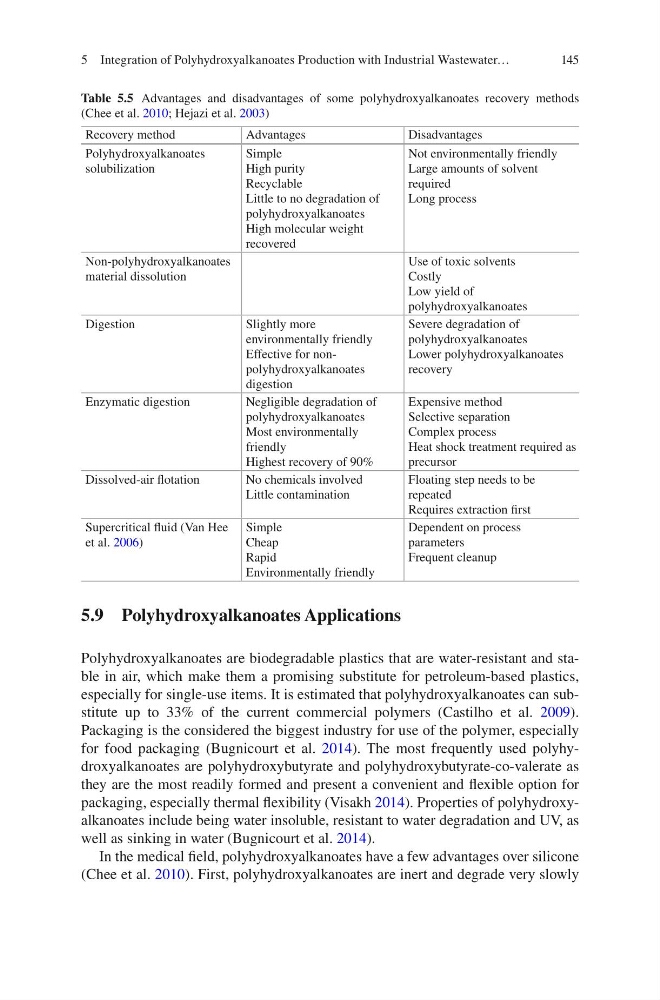
Table 5.5 Advantages and disadvantages of some polyhydroxyalkanoates recovery methods
(Chee et al. 2010; Hejazi et al. 2003)
Recovery method
Advantages
Disadvantages
Polyhydroxyalkanoates
solubilization
Simple
High purity
Recyclable
Little to no degradation of
polyhydroxyalkanoates
High molecular weight
recovered
Not environmentally friendly
Large amounts of solvent
required
Long process
Non-polyhydroxyalkanoates
material dissolution
Use of toxic solvents
Costly
Low yield of
polyhydroxyalkanoates
Digestion
Slightly more
environmentally friendly
Effective for nonpolyhydroxyalkanoates
digestion
Severe degradation of
polyhydroxyalkanoates
Lower polyhydroxyalkanoates
recovery
Enzymatic digestion
Negligible degradation of
polyhydroxyalkanoates
Most environmentally
friendly
Highest recovery of 90%
Expensive method
Selective separation
Complex process
Heat shock treatment required as
precursor
Dissolved-air flotation
No chemicals involved
Little contamination
Floating step needs to be
repeated
Requires extraction first
Supercritical fluid (Van Hee
et al. 2006)
Simple
Cheap
Rapid
Environmentally friendly
Dependent on process
parameters
Frequent cleanup
5 Integration of Polyhydroxyalkanoates Production with Industrial Wastewater…
5.9 Polyhydroxyalkanoates Applications
Polyhydroxyalkanoates are biodegradable plastics that are water-resistant and stable in air, which make them a promising substitute for petroleum-based plastics,
especially for single-use items. It is estimated that polyhydroxyalkanoates can substitute up to 33% of the current commercial polymers (Castilho et al. 2009).
Packaging is the considered the biggest industry for use of the polymer, especially
for food packaging (Bugnicourt et al. 2014). The most frequently used polyhydroxyalkanoates are polyhydroxybutyrate and polyhydroxybutyrate-co-valerate as
they are the most readily formed and present a convenient and flexible option for
packaging, especially thermal flexibility (Visakh 2014). Properties of polyhydroxyalkanoates include being water insoluble, resistant to water degradation and UV, as
well as sinking in water (Bugnicourt et al. 2014).
In the medical field, polyhydroxyalkanoates have a few advantages over silicone
(Chee et al. 2010). First, polyhydroxyalkanoates are inert and degrade very slowly
Table 5.5 Advantages and disadvantages of some polyhydroxyalkanoates recovery methods
(Chee et al. 2010; Hejazi et al. 2003)
Recovery method
Advantages
Disadvantages
Polyhydroxyalkanoates
solubilization
Simple
High purity
Recyclable
Little to no degradation of
polyhydroxyalkanoates
High molecular weight
recovered
Not environmentally friendly
Large amounts of solvent
required
Long process
Non-polyhydroxyalkanoates
material dissolution
Use of toxic solvents
Costly
Low yield of
polyhydroxyalkanoates
Digestion
Slightly more
environmentally friendly
Effective for nonpolyhydroxyalkanoates
digestion
Severe degradation of
polyhydroxyalkanoates
Lower polyhydroxyalkanoates
recovery
Enzymatic digestion
Negligible degradation of
polyhydroxyalkanoates
Most environmentally
friendly
Highest recovery of 90%
Expensive method
Selective separation
Complex process
Heat shock treatment required as
precursor
Dissolved-air flotation
No chemicals involved
Little contamination
Floating step needs to be
repeated
Requires extraction first
Supercritical fluid (Van Hee
et al. 2006)
Simple
Cheap
Rapid
Environmentally friendly
Dependent on process
parameters
Frequent cleanup
5 Integration of Polyhydroxyalkanoates Production with Industrial Wastewater…