

88
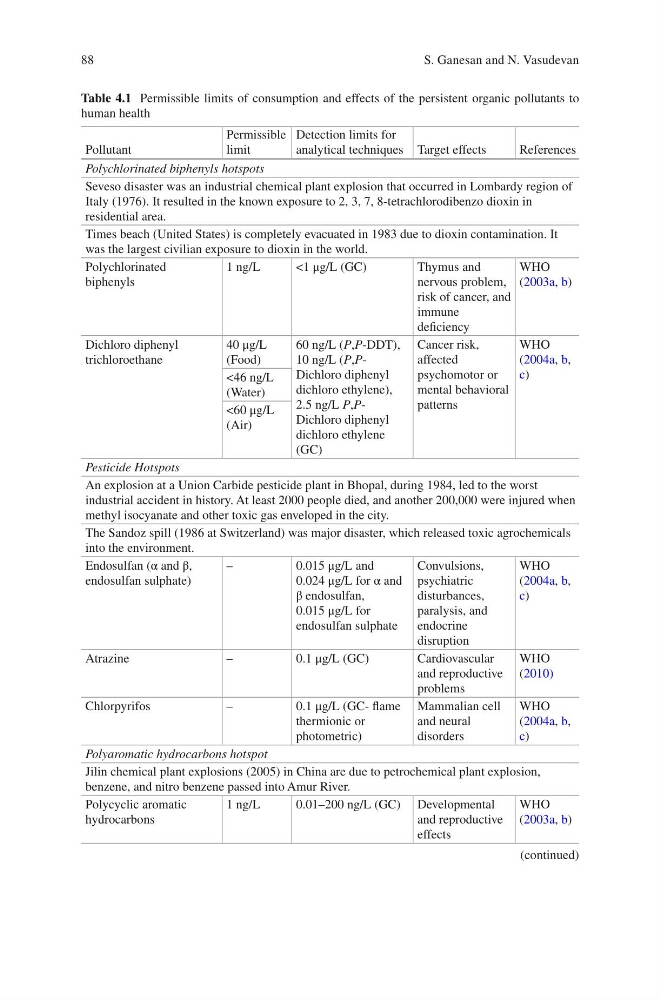
Table 4.1 Permissible limits of consumption and effects of the persistent organic pollutants to
human health
Pollutant
Permissible
limit
Detection limits for
analytical techniques Target effects
References
Polychlorinated biphenyls hotspots
Seveso disaster was an industrial chemical plant explosion that occurred in Lombardy region of
Italy (1976). It resulted in the known exposure to 2, 3, 7, 8-tetrachlorodibenzo dioxin in
residential area.
Times beach (United States) is completely evacuated in 1983 due to dioxin contamination. It
was the largest civilian exposure to dioxin in the world.
Polychlorinated
biphenyls
1 ng/L
<1 μg/L (GC)
Thymus and
nervous problem,
risk of cancer, and
immune
deficiency
WHO
(2003a, b)
Dichloro diphenyl
trichloroethane
40 μg/L
(Food)
60 ng/L (P,P-DDT),
10 ng/L (P,PDichloro diphenyl
dichloro ethylene),
2.5 ng/L P,PDichloro diphenyl
dichloro ethylene
(GC)
Cancer risk,
affected
psychomotor or
mental behavioral
patterns
WHO
(2004a, b,
c)
<46 ng/L
(Water)
<60 μg/L
(Air)
Pesticide Hotspots
An explosion at a Union Carbide pesticide plant in Bhopal, during 1984, led to the worst
industrial accident in history. At least 2000 people died, and another 200,000 were injured when
methyl isocyanate and other toxic gas enveloped in the city.
The Sandoz spill (1986 at Switzerland) was major disaster, which released toxic agrochemicals
into the environment.
Endosulfan (α and β,
endosulfan sulphate)
–
0.015 μg/L and
0.024 μg/L for α and
β endosulfan,
0.015 μg/L for
endosulfan sulphate
Convulsions,
psychiatric
disturbances,
paralysis, and
endocrine
disruption
WHO
(2004a, b,
c)
Atrazine
–
0.1 μg/L (GC)
Cardiovascular
and reproductive
problems
WHO
(2010)
Chlorpyrifos
–
0.1 μg/L (GC- flame
thermionic or
photometric)
Mammalian cell
and neural
disorders
WHO
(2004a, b,
c)
Polyaromatic hydrocarbons hotspot
Jilin chemical plant explosions (2005) in China are due to petrochemical plant explosion,
benzene, and nitro benzene passed into Amur River.
Polycyclic aromatic
hydrocarbons
1 ng/L
0.01–200 ng/L (GC) Developmental
and reproductive
effects
WHO
(2003a, b)
(continued)
S. Ganesan and N. Vasudevan
Table 4.1 Permissible limits of consumption and effects of the persistent organic pollutants to
human health
Pollutant
Permissible
limit
Detection limits for
analytical techniques Target effects
References
Polychlorinated biphenyls hotspots
Seveso disaster was an industrial chemical plant explosion that occurred in Lombardy region of
Italy (1976). It resulted in the known exposure to 2, 3, 7, 8-tetrachlorodibenzo dioxin in
residential area.
Times beach (United States) is completely evacuated in 1983 due to dioxin contamination. It
was the largest civilian exposure to dioxin in the world.
Polychlorinated
biphenyls
1 ng/L
<1 μg/L (GC)
Thymus and
nervous problem,
risk of cancer, and
immune
deficiency
WHO
(2003a, b)
Dichloro diphenyl
trichloroethane
40 μg/L
(Food)
60 ng/L (P,P-DDT),
10 ng/L (P,PDichloro diphenyl
dichloro ethylene),
2.5 ng/L P,PDichloro diphenyl
dichloro ethylene
(GC)
Cancer risk,
affected
psychomotor or
mental behavioral
patterns
WHO
(2004a, b,
c)
<46 ng/L
(Water)
<60 μg/L
(Air)
Pesticide Hotspots
An explosion at a Union Carbide pesticide plant in Bhopal, during 1984, led to the worst
industrial accident in history. At least 2000 people died, and another 200,000 were injured when
methyl isocyanate and other toxic gas enveloped in the city.
The Sandoz spill (1986 at Switzerland) was major disaster, which released toxic agrochemicals
into the environment.
Endosulfan (α and β,
endosulfan sulphate)
–
0.015 μg/L and
0.024 μg/L for α and
β endosulfan,
0.015 μg/L for
endosulfan sulphate
Convulsions,
psychiatric
disturbances,
paralysis, and
endocrine
disruption
WHO
(2004a, b,
c)
Atrazine
–
0.1 μg/L (GC)
Cardiovascular
and reproductive
problems
WHO
(2010)
Chlorpyrifos
–
0.1 μg/L (GC- flame
thermionic or
photometric)
Mammalian cell
and neural
disorders
WHO
(2004a, b,
c)
Polyaromatic hydrocarbons hotspot
Jilin chemical plant explosions (2005) in China are due to petrochemical plant explosion,
benzene, and nitro benzene passed into Amur River.
Polycyclic aromatic
hydrocarbons
1 ng/L
0.01–200 ng/L (GC) Developmental
and reproductive
effects
WHO
(2003a, b)
(continued)
S. Ganesan and N. Vasudevan