

biogas and methane, according to (Wang et al. 2015; Reilly et al. 2016). With
dilution, we can have two main disadvantages:
– An impairment of the buffer capacity exerted by alkali components contained in
the inoculum and in the substrate, which will be more diluted in water
– A decrease in the concentration of microbia, where methanogens have a lower
growth rate (Pagliano et al. 2018) with respect to other bacteria which perform the
first reaction of the anaerobic digestion process (this will bring again to an
acidification of the substrate being acids and alcohols formed without the existence of a sufficient quantity of bacteria which is necessary to transform them in
methane). This can be also verified with kinetic modeling of the bacterial
consortium (Eastman and Ferguson 1981).
Dealing with the inoculum to substrate ratio (ISR), this has not to be too low; in
fact in that case the quantity of inoculum will be reduced, with respect to the quantity
of the substrate, and so there would not be a balance between the microbia and the
substrate (Hashimoto 1989; Raposo et al. 2006; Kafle et al. 2014; Polizzi et al.
2017). The optimal ISR usually is about 2, as reported in (Holliger et al. 2016).
10.4 Gas Yield Quantification
Methane production is the final result of the BMP tests; this can be measured with
different methods, among them are as follows:
Normal
Time
Specific methane production
Inoculum storage
Inoculum dilution
Improper ISR
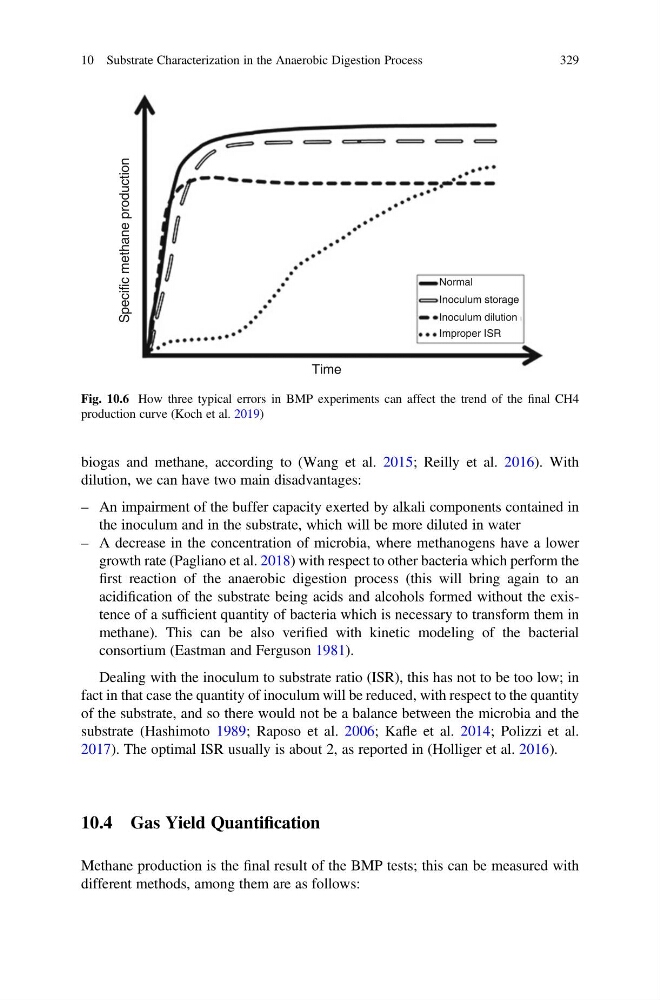
Fig. 10.6 How three typical errors in BMP experiments can affect the trend of the final CH4
production curve (Koch et al. 2019)
10 Substrate Characterization in the Anaerobic Digestion Process
329
dilution, we can have two main disadvantages:
– An impairment of the buffer capacity exerted by alkali components contained in
the inoculum and in the substrate, which will be more diluted in water
– A decrease in the concentration of microbia, where methanogens have a lower
growth rate (Pagliano et al. 2018) with respect to other bacteria which perform the
first reaction of the anaerobic digestion process (this will bring again to an
acidification of the substrate being acids and alcohols formed without the existence of a sufficient quantity of bacteria which is necessary to transform them in
methane). This can be also verified with kinetic modeling of the bacterial
consortium (Eastman and Ferguson 1981).
Dealing with the inoculum to substrate ratio (ISR), this has not to be too low; in
fact in that case the quantity of inoculum will be reduced, with respect to the quantity
of the substrate, and so there would not be a balance between the microbia and the
substrate (Hashimoto 1989; Raposo et al. 2006; Kafle et al. 2014; Polizzi et al.
2017). The optimal ISR usually is about 2, as reported in (Holliger et al. 2016).
10.4 Gas Yield Quantification
Methane production is the final result of the BMP tests; this can be measured with
different methods, among them are as follows:
Normal
Time
Specific methane production
Inoculum storage
Inoculum dilution
Improper ISR
Fig. 10.6 How three typical errors in BMP experiments can affect the trend of the final CH4
production curve (Koch et al. 2019)
10 Substrate Characterization in the Anaerobic Digestion Process
329