

Mohagheghi et al. (2004) established another constituent of ZM4 (pZB5) and
named it Z. mobilis 8b and obtained 82–87% ethanol output. Previously, the
distinctive fermentation of many recombinant strains had also been explored. Basically, the performance of fermentation of better recombinant strains from different
sources are being used for the production of alcohol. Z. mobilis AX101, S. cerevisiae
424A(LNH-ST), and E. coli KO11 were analyzed for the first time with cellulosic
material. Besides this the most important is Z. mobilis AX101 that showed the
greatest rate of glucose consumption and lowest byproducts yield (Lau et al. 2010).
Such results also show that the metabolic pathways of Z. mobilis AX101 and
E. coli KO11 are more efficient in ethanol fermentation from the comprehend
pathway of yeast (Lau et al. 2010). Different kinds of raw lignocellulosic materials,
e.g. sugarcane and its dry pulpy fibrous residues, oat hull, agro-industrial waste
(Ruanglek et al. 2006), corn stover (Mohagheghi et al. 2004; Su et al. 2013), bamboo
residues (He et al. 2013), and many other kind of hydrolysate have been produced by
Arkenol Technology for further manufacturing of ethanol by Z. mobilis.
These studies also explained basis for alcohol production in future. Different
types of engineered Z. mobilis strain have also been fortunately build up by
establishing desirable genes as mentioned above, which covert cellulosic biomass
into alcohol. Further studies established the method of ALE, which can also be used
as a wonderful metabolic engineering appliance for metabolic engineering in
Z. mobilis.
Moreover, two best strains that can also be used as innovative hosts for next
metabolic engineering in upcoming bioreactors and cellulosic ethanol. Most eminently, two strains can also be used as inventive-resistant model organisms for the
sake of genetic mechanism on the “omics”(such as study of genomics, proteomics,
and metabolome) level that have been proven to be beneficial for providing some
innovative information for inverse metabolic engineering (Agrawal and Chen 2011).
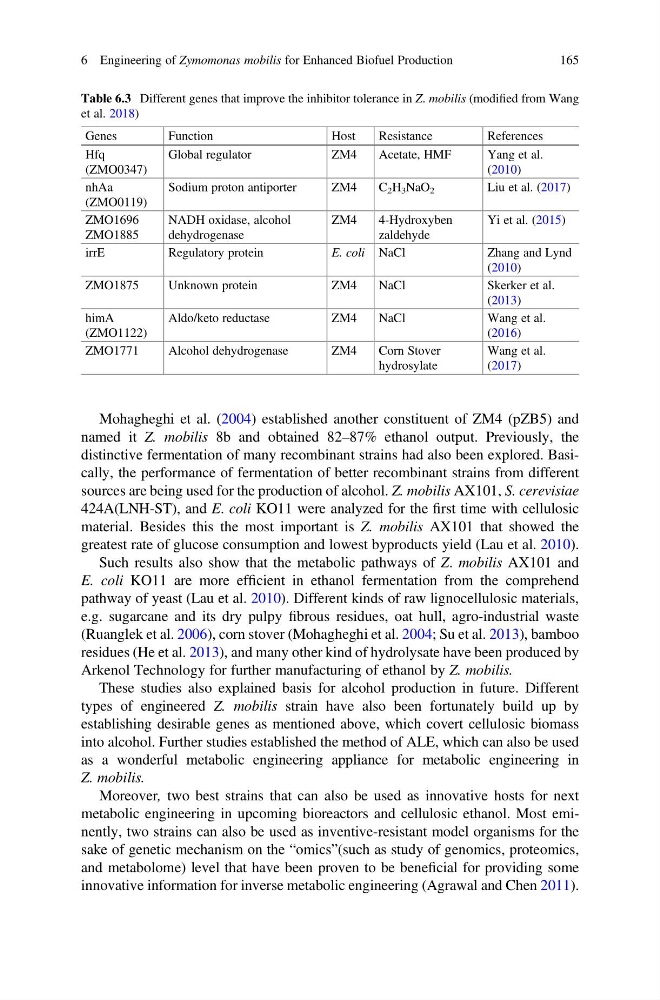
Table 6.3 Different genes that improve the inhibitor tolerance in Z. mobilis (modified from Wang
et al. 2018)
Genes
Function
Host
Resistance
References
Hfq
(ZMO0347)
Global regulator
ZM4
Acetate, HMF
Yang et al.
(2010)
nhAa
(ZMO0119)
Sodium proton antiporter
ZM4
C 2 H 3 NaO 2
Liu et al. (2017)
ZMO1696
ZMO1885
NADH oxidase, alcohol
dehydrogenase
ZM4
4-Hydroxyben
zaldehyde
Yi et al. (2015)
irrE
Regulatory protein
E. coli NaCl
Zhang and Lynd
(2010)
ZMO1875
Unknown protein
ZM4
NaCl
Skerker et al.
(2013)
himA
(ZMO1122)
Aldo/keto reductase
ZM4
NaCl
Wang et al.
(2016)
ZMO1771
Alcohol dehydrogenase
ZM4
Corn Stover
hydrosylate
Wang et al.
(2017)
6 Engineering of Zymomonas mobilis for Enhanced Biofuel Production
165
named it Z. mobilis 8b and obtained 82–87% ethanol output. Previously, the
distinctive fermentation of many recombinant strains had also been explored. Basically, the performance of fermentation of better recombinant strains from different
sources are being used for the production of alcohol. Z. mobilis AX101, S. cerevisiae
424A(LNH-ST), and E. coli KO11 were analyzed for the first time with cellulosic
material. Besides this the most important is Z. mobilis AX101 that showed the
greatest rate of glucose consumption and lowest byproducts yield (Lau et al. 2010).
Such results also show that the metabolic pathways of Z. mobilis AX101 and
E. coli KO11 are more efficient in ethanol fermentation from the comprehend
pathway of yeast (Lau et al. 2010). Different kinds of raw lignocellulosic materials,
e.g. sugarcane and its dry pulpy fibrous residues, oat hull, agro-industrial waste
(Ruanglek et al. 2006), corn stover (Mohagheghi et al. 2004; Su et al. 2013), bamboo
residues (He et al. 2013), and many other kind of hydrolysate have been produced by
Arkenol Technology for further manufacturing of ethanol by Z. mobilis.
These studies also explained basis for alcohol production in future. Different
types of engineered Z. mobilis strain have also been fortunately build up by
establishing desirable genes as mentioned above, which covert cellulosic biomass
into alcohol. Further studies established the method of ALE, which can also be used
as a wonderful metabolic engineering appliance for metabolic engineering in
Z. mobilis.
Moreover, two best strains that can also be used as innovative hosts for next
metabolic engineering in upcoming bioreactors and cellulosic ethanol. Most eminently, two strains can also be used as inventive-resistant model organisms for the
sake of genetic mechanism on the “omics”(such as study of genomics, proteomics,
and metabolome) level that have been proven to be beneficial for providing some
innovative information for inverse metabolic engineering (Agrawal and Chen 2011).
Table 6.3 Different genes that improve the inhibitor tolerance in Z. mobilis (modified from Wang
et al. 2018)
Genes
Function
Host
Resistance
References
Hfq
(ZMO0347)
Global regulator
ZM4
Acetate, HMF
Yang et al.
(2010)
nhAa
(ZMO0119)
Sodium proton antiporter
ZM4
C 2 H 3 NaO 2
Liu et al. (2017)
ZMO1696
ZMO1885
NADH oxidase, alcohol
dehydrogenase
ZM4
4-Hydroxyben
zaldehyde
Yi et al. (2015)
irrE
Regulatory protein
E. coli NaCl
Zhang and Lynd
(2010)
ZMO1875
Unknown protein
ZM4
NaCl
Skerker et al.
(2013)
himA
(ZMO1122)
Aldo/keto reductase
ZM4
NaCl
Wang et al.
(2016)
ZMO1771
Alcohol dehydrogenase
ZM4
Corn Stover
hydrosylate
Wang et al.
(2017)
6 Engineering of Zymomonas mobilis for Enhanced Biofuel Production
165