

which is according to an earlier phylogenetic study on the sequencing of RS rRNA
(Leksawasdi et al. 2001). With the exception of genome sequence of ATCC 31822
and ATCC 31823 bases have 26 and 30 connections, respectively. The strains were
fully sequenced and the genome sequences of the first 9 phases were compared with
the Zymomonas mobilis transmission (Yang et al. 2016a, b). The NRRL B-1960 may
be a strain which was recently known having 2,045,798 bp of chromosome and two
plasmids with 11 different genes (Chacon-Vargas et al. 2017).
Additionally, the entire chromosome sequence of the Zymomonas mobilis plasmid (CP023715) is the xylose-derivatives using its derivatives 2032 and 8b are
identified and characterized recently. Chromosome sequencing of Zymomonas
mobilis recognized 65 single nucleotide proteins and 2400 bp insertion concerning
to the Zymomonas mobilis chromosomal sequence (AE008692.2). Four essential
plasmids are also identified which vary in size from 32 to 39 kb (CP023716-9 for
pZM32, pZM33, pZM36, and pZM39 respectively), also for total storage of 150 predict open reading frames (Zhang et al. 2015).
The genomic size of all strains varies from 2.01 to 2.22 Mb for two to eight
parasites that is half the genomic size of E. coli. Additionally the central metabolism
of Zymomonas mobilis looks simpler than E. coli that is originated from the essential
genes and metabolism (Widiastuti et al. 2011). Genome sequencing technology
provides opportunities for basic understanding and facilitates the event of growth
complexes (He et al. 2009). Seo et al. (2005) reported the primary Z. mobilis
sequence ZM4 that contains a 2,056,416 bp of round chromosome with five circular
plasmids. Other important information about genome and translation, transcription
found since 2005 and so on. The milestone about all these is given in Fig. 6.2.
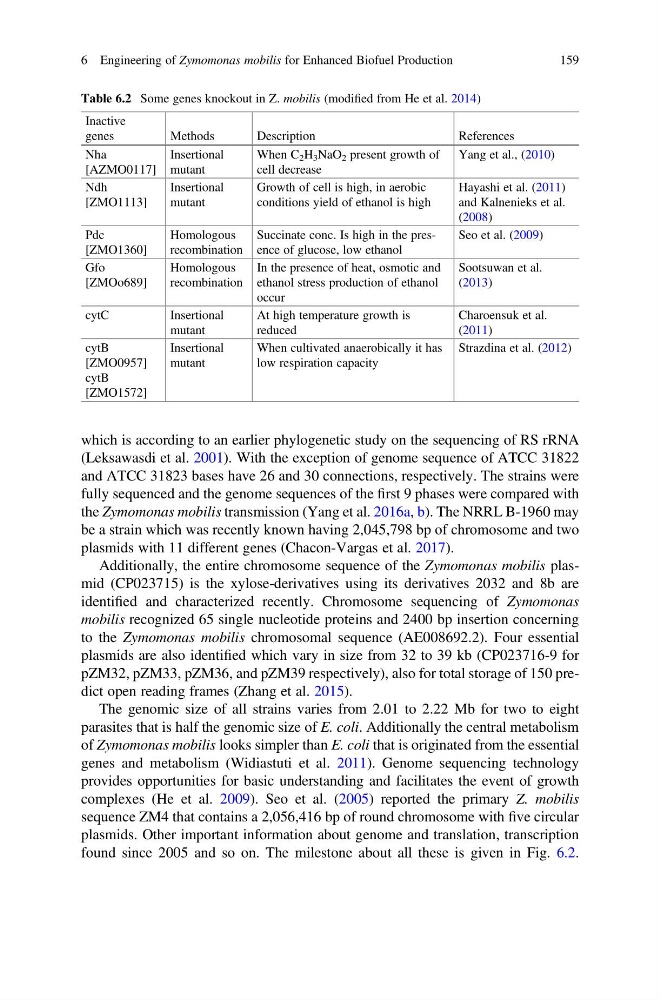
Table 6.2 Some genes knockout in Z. mobilis (modified from He et al. 2014)
Inactive
genes
Methods
Description
References
Nha
[AZMO0117]
Insertional
mutant
When C 2 H 3 NaO 2 present growth of
cell decrease
Yang et al., (2010)
Ndh
[ZMO1113]
Insertional
mutant
Growth of cell is high, in aerobic
conditions yield of ethanol is high
Hayashi et al. (2011)
and Kalnenieks et al.
(2008)
Pdc
[ZMO1360]
Homologous
recombination
Succinate conc. Is high in the presence of glucose, low ethanol
Seo et al. (2009)
Gfo
[ZMOo689]
Homologous
recombination
In the presence of heat, osmotic and
ethanol stress production of ethanol
occur
Sootsuwan et al.
(2013)
cytC
Insertional
mutant
At high temperature growth is
reduced
Charoensuk et al.
(2011)
cytB
[ZMO0957]
cytB
[ZMO1572]
Insertional
mutant
When cultivated anaerobically it has
low respiration capacity
Strazdina et al. (2012)
6 Engineering of Zymomonas mobilis for Enhanced Biofuel Production
159
(Leksawasdi et al. 2001). With the exception of genome sequence of ATCC 31822
and ATCC 31823 bases have 26 and 30 connections, respectively. The strains were
fully sequenced and the genome sequences of the first 9 phases were compared with
the Zymomonas mobilis transmission (Yang et al. 2016a, b). The NRRL B-1960 may
be a strain which was recently known having 2,045,798 bp of chromosome and two
plasmids with 11 different genes (Chacon-Vargas et al. 2017).
Additionally, the entire chromosome sequence of the Zymomonas mobilis plasmid (CP023715) is the xylose-derivatives using its derivatives 2032 and 8b are
identified and characterized recently. Chromosome sequencing of Zymomonas
mobilis recognized 65 single nucleotide proteins and 2400 bp insertion concerning
to the Zymomonas mobilis chromosomal sequence (AE008692.2). Four essential
plasmids are also identified which vary in size from 32 to 39 kb (CP023716-9 for
pZM32, pZM33, pZM36, and pZM39 respectively), also for total storage of 150 predict open reading frames (Zhang et al. 2015).
The genomic size of all strains varies from 2.01 to 2.22 Mb for two to eight
parasites that is half the genomic size of E. coli. Additionally the central metabolism
of Zymomonas mobilis looks simpler than E. coli that is originated from the essential
genes and metabolism (Widiastuti et al. 2011). Genome sequencing technology
provides opportunities for basic understanding and facilitates the event of growth
complexes (He et al. 2009). Seo et al. (2005) reported the primary Z. mobilis
sequence ZM4 that contains a 2,056,416 bp of round chromosome with five circular
plasmids. Other important information about genome and translation, transcription
found since 2005 and so on. The milestone about all these is given in Fig. 6.2.
Table 6.2 Some genes knockout in Z. mobilis (modified from He et al. 2014)
Inactive
genes
Methods
Description
References
Nha
[AZMO0117]
Insertional
mutant
When C 2 H 3 NaO 2 present growth of
cell decrease
Yang et al., (2010)
Ndh
[ZMO1113]
Insertional
mutant
Growth of cell is high, in aerobic
conditions yield of ethanol is high
Hayashi et al. (2011)
and Kalnenieks et al.
(2008)
Pdc
[ZMO1360]
Homologous
recombination
Succinate conc. Is high in the presence of glucose, low ethanol
Seo et al. (2009)
Gfo
[ZMOo689]
Homologous
recombination
In the presence of heat, osmotic and
ethanol stress production of ethanol
occur
Sootsuwan et al.
(2013)
cytC
Insertional
mutant
At high temperature growth is
reduced
Charoensuk et al.
(2011)
cytB
[ZMO0957]
cytB
[ZMO1572]
Insertional
mutant
When cultivated anaerobically it has
low respiration capacity
Strazdina et al. (2012)
6 Engineering of Zymomonas mobilis for Enhanced Biofuel Production
159