

reports that have been reported in the degradation of pollutants by laccase enzymes.
Soil and water contaminating with a variety of pollutants such as OP pesticides, and
azo dyes, aromatic compounds (phenylenediamine derivatives, benzenethiols, phenols, aminophenols (anilines), and trichlorophenols), and PAHs can be efficiently
oxidized by a broad substrate range of laccases (Xu 1996; Amitai et al. 1998; Kues
2015; Sharma et al. 2018). Kadri et al. (2017) reported that both lignin and
non-lignin type compounds as well as PAHs were completely mineralized by the
involvement of LiPs. Pozdnyakova (2012) demonstrated that PAHs such as phenanthrene, anthracene fluoranthene, pyrene as well as a variety of derivatives of these
PAHs can be effectively oxidized by the secretion of MnP by WRF A. discolor. An
MnP from the WRF, Trametes sp. displayed a strong capability of mineralizing
PAHs as well as azo and indigo dyes (Zhang et al. 2016). Some recent reports of
WRF-secreted LMEs involved in the remediation of a variety of pollutant are
presented in Table 4.5.
Koroleva et al. (2015) described the molecular level degradation of herbicide
atrazine by laccase-HBT redox-mediated system.
4.5 Conclusions
Lignocellulosic material is the only natural resource on the earth which has a broad
prospective as biofuel material. Excess of lignocellulosic material discharged from
agro-waste industries causes environmental pollution. The major toxicant in lignocellulosic materials is lignin. The complex structure of this lignin is not easily
bioremediation by microbial communities. But WRF and their highly effective
ligninolytic enzymatic system have efficiently degraded/detoxified/oxidized the
complex lignin in lignocellulosic material. Due to this reason, WRF and their
LMEs are highly used as clean technological agents as well as act as an initiator
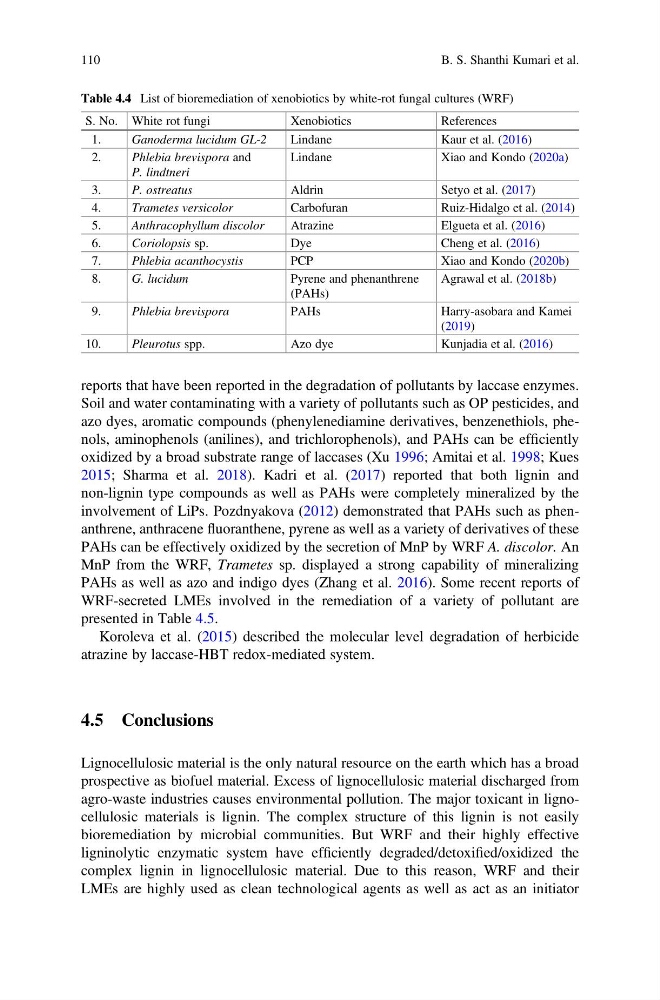
Table 4.4 List of bioremediation of xenobiotics by white-rot fungal cultures (WRF)
S. No. White rot fungi
Xenobiotics
References
1.
Ganoderma lucidum GL-2
Lindane
Kaur et al. (2016)
2.
Phlebia brevispora and
P. lindtneri
Lindane
Xiao and Kondo (2020a)
3.
P. ostreatus
Aldrin
Setyo et al. (2017)
4.
Trametes versicolor
Carbofuran
Ruiz-Hidalgo et al. (2014)
5.
Anthracophyllum discolor
Atrazine
Elgueta et al. (2016)
6.
Coriolopsis sp.
Dye
Cheng et al. (2016)
7.
Phlebia acanthocystis
PCP
Xiao and Kondo (2020b)
8.
G. lucidum
Pyrene and phenanthrene
(PAHs)
Agrawal et al. (2018b)
9.
Phlebia brevispora
PAHs
Harry-asobara and Kamei
(2019)
10.
Pleurotus spp.
Azo dye
Kunjadia et al. (2016)
110
B. S. Shanthi Kumari et al.
Soil and water contaminating with a variety of pollutants such as OP pesticides, and
azo dyes, aromatic compounds (phenylenediamine derivatives, benzenethiols, phenols, aminophenols (anilines), and trichlorophenols), and PAHs can be efficiently
oxidized by a broad substrate range of laccases (Xu 1996; Amitai et al. 1998; Kues
2015; Sharma et al. 2018). Kadri et al. (2017) reported that both lignin and
non-lignin type compounds as well as PAHs were completely mineralized by the
involvement of LiPs. Pozdnyakova (2012) demonstrated that PAHs such as phenanthrene, anthracene fluoranthene, pyrene as well as a variety of derivatives of these
PAHs can be effectively oxidized by the secretion of MnP by WRF A. discolor. An
MnP from the WRF, Trametes sp. displayed a strong capability of mineralizing
PAHs as well as azo and indigo dyes (Zhang et al. 2016). Some recent reports of
WRF-secreted LMEs involved in the remediation of a variety of pollutant are
presented in Table 4.5.
Koroleva et al. (2015) described the molecular level degradation of herbicide
atrazine by laccase-HBT redox-mediated system.
4.5 Conclusions
Lignocellulosic material is the only natural resource on the earth which has a broad
prospective as biofuel material. Excess of lignocellulosic material discharged from
agro-waste industries causes environmental pollution. The major toxicant in lignocellulosic materials is lignin. The complex structure of this lignin is not easily
bioremediation by microbial communities. But WRF and their highly effective
ligninolytic enzymatic system have efficiently degraded/detoxified/oxidized the
complex lignin in lignocellulosic material. Due to this reason, WRF and their
LMEs are highly used as clean technological agents as well as act as an initiator
Table 4.4 List of bioremediation of xenobiotics by white-rot fungal cultures (WRF)
S. No. White rot fungi
Xenobiotics
References
1.
Ganoderma lucidum GL-2
Lindane
Kaur et al. (2016)
2.
Phlebia brevispora and
P. lindtneri
Lindane
Xiao and Kondo (2020a)
3.
P. ostreatus
Aldrin
Setyo et al. (2017)
4.
Trametes versicolor
Carbofuran
Ruiz-Hidalgo et al. (2014)
5.
Anthracophyllum discolor
Atrazine
Elgueta et al. (2016)
6.
Coriolopsis sp.
Dye
Cheng et al. (2016)
7.
Phlebia acanthocystis
PCP
Xiao and Kondo (2020b)
8.
G. lucidum
Pyrene and phenanthrene
(PAHs)
Agrawal et al. (2018b)
9.
Phlebia brevispora
PAHs
Harry-asobara and Kamei
(2019)
10.
Pleurotus spp.
Azo dye
Kunjadia et al. (2016)
110
B. S. Shanthi Kumari et al.