

provide valuable results that can be applied to a variety of (thermo)chemical problems. Frequent citations, up to several hundred times in a few cases (as at July 2018),
are a clear evidence of the usefulness of the US approach. However, works by
Radom and co-workers [15, 19] appear to be the fundamental ones in the field of
routine applications of US. The first one (1996, [19]) has been cited nearly 6000
times, the second, more recent (2007, [15])—more than 1400 times (as at July 2018).
This is the reason for selecting the period of 1996–2007 in the present paragraph.
The above-mentioned work [15] includes extended ab initio and DFT (with a
variety of density functionals) calculations with commonly used Pople (and
Dunning) basis sets. Apart from the recommendations as to the SFs used for frequencies, low frequencies, ZPVE corrections, DH vib (T), and S vib (T), a careful study
of the basis set, geometry convergence criteria, percentage of the exact exchange in
the modified B3LYP functional, etc., effects is also presented. The selected
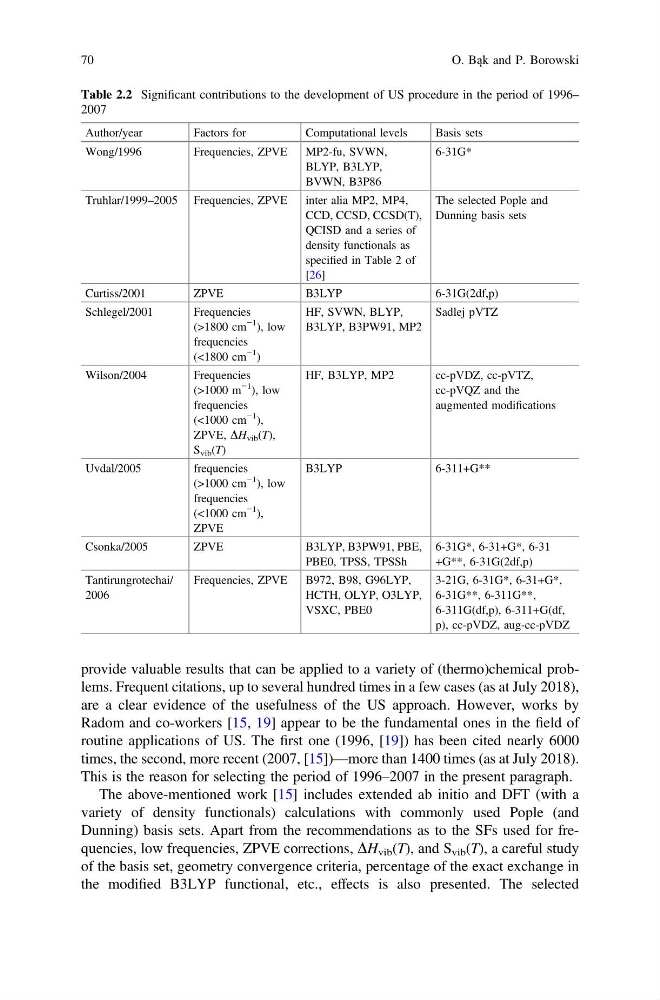
Table 2.2 Significant contributions to the development of US procedure in the period of 1996–
2007
Author/year
Factors for
Computational levels
Basis sets
Wong/1996
Frequencies, ZPVE
MP2-fu, SVWN,
BLYP, B3LYP,
BVWN, B3P86
6-31G*
Truhlar/1999–2005 Frequencies, ZPVE
inter alia MP2, MP4,
CCD, CCSD, CCSD(T),
QCISD and a series of
density functionals as
specified in Table 2 of
[26]
The selected Pople and
Dunning basis sets
Curtiss/2001
ZPVE
B3LYP
6-31G(2df,p)
Schlegel/2001
Frequencies
(>1800 cm
−1 ), low
frequencies
(<1800 cm
−1 )
HF, SVWN, BLYP,
B3LYP, B3PW91, MP2
Sadlej pVTZ
Wilson/2004
Frequencies
(>1000 m
−1
), low
frequencies
(<1000 cm
−1 ),
ZPVE, DH vib (T),
S vib (T)
HF, B3LYP, MP2
cc-pVDZ, cc-pVTZ,
cc-pVQZ and the
augmented modifications
Uvdal/2005
frequencies
(>1000 cm
−1 ), low
frequencies
(<1000 cm
−1 ),
ZPVE
B3LYP
6-311+G**
Csonka/2005
ZPVE
B3LYP, B3PW91, PBE,
PBE0, TPSS, TPSSh
6-31G*, 6-31+G*, 6-31
+G**, 6-31G(2df,p)
Tantirungrotechai/
2006
Frequencies, ZPVE
B972, B98, G96LYP,
HCTH, OLYP, O3LYP,
VSXC, PBE0
3-21G, 6-31G*, 6-31+G*,
6-31G**, 6-311G**,
6-311G(df,p), 6-311+G(df,
p), cc-pVDZ, aug-cc-pVDZ
70
O. Bąk and P. Borowski
are a clear evidence of the usefulness of the US approach. However, works by
Radom and co-workers [15, 19] appear to be the fundamental ones in the field of
routine applications of US. The first one (1996, [19]) has been cited nearly 6000
times, the second, more recent (2007, [15])—more than 1400 times (as at July 2018).
This is the reason for selecting the period of 1996–2007 in the present paragraph.
The above-mentioned work [15] includes extended ab initio and DFT (with a
variety of density functionals) calculations with commonly used Pople (and
Dunning) basis sets. Apart from the recommendations as to the SFs used for frequencies, low frequencies, ZPVE corrections, DH vib (T), and S vib (T), a careful study
of the basis set, geometry convergence criteria, percentage of the exact exchange in
the modified B3LYP functional, etc., effects is also presented. The selected
Table 2.2 Significant contributions to the development of US procedure in the period of 1996–
2007
Author/year
Factors for
Computational levels
Basis sets
Wong/1996
Frequencies, ZPVE
MP2-fu, SVWN,
BLYP, B3LYP,
BVWN, B3P86
6-31G*
Truhlar/1999–2005 Frequencies, ZPVE
inter alia MP2, MP4,
CCD, CCSD, CCSD(T),
QCISD and a series of
density functionals as
specified in Table 2 of
[26]
The selected Pople and
Dunning basis sets
Curtiss/2001
ZPVE
B3LYP
6-31G(2df,p)
Schlegel/2001
Frequencies
(>1800 cm
−1 ), low
frequencies
(<1800 cm
−1 )
HF, SVWN, BLYP,
B3LYP, B3PW91, MP2
Sadlej pVTZ
Wilson/2004
Frequencies
(>1000 m
−1
), low
frequencies
(<1000 cm
−1 ),
ZPVE, DH vib (T),
S vib (T)
HF, B3LYP, MP2
cc-pVDZ, cc-pVTZ,
cc-pVQZ and the
augmented modifications
Uvdal/2005
frequencies
(>1000 cm
−1 ), low
frequencies
(<1000 cm
−1 ),
ZPVE
B3LYP
6-311+G**
Csonka/2005
ZPVE
B3LYP, B3PW91, PBE,
PBE0, TPSS, TPSSh
6-31G*, 6-31+G*, 6-31
+G**, 6-31G(2df,p)
Tantirungrotechai/
2006
Frequencies, ZPVE
B972, B98, G96LYP,
HCTH, OLYP, O3LYP,
VSXC, PBE0
3-21G, 6-31G*, 6-31+G*,
6-31G**, 6-311G**,
6-311G(df,p), 6-311+G(df,
p), cc-pVDZ, aug-cc-pVDZ
70
O. Bąk and P. Borowski