

microporous material. The number and length of silicon–oxygen (Si–O) bridges
between domains are random. Stresses are present between domains, thanks to
which the bridges can be easily broken, which explains the very wide interval of
glass softening. During m-SiO 2 crystallization, topological matching of domains
takes place, which orient themselves relative to each other, correctly creating
a-cristobalite crystals—crystallization proceeds without diffusion. Thus, differences
between a high-temperature cristobalite crystal (ordered domain arrangement) and
silicate glass (statistically distributed domains) in fact come down to differences in
the mutual arrangement of domains and not individual atoms. A picture of silicate
glass structure, according to this theory, is illustrated in Fig. 15.4. A similar view
on glass structure can be found, inter alia, in the works of Verwej and Konijnendijk
[33]. It can be stated that the domain theory of silicate glass build proposed by
Görlich is a certain compromise between Lebedev’s crystallite theory and
Zachariasen–Warren’s continuous random network theory—ordered domains exist
in glass, but there is also a continuous lattice (Fig. 15.4).
General concepts pertaining to silicate glass structures can be adopted for
describing the structures of more complex silicate glasses, in which cation substitutions (in the place of silicon ions—so-called network formers) and/or anion
substitutions (in the place of oxygen ions) are present. Additionally, so-called
network modifiers, i.e., cations that break Si–O bridges, can also be present in glass
structures.
The introduction of other cations (network formers or modifiers) or anions into a
silicate glass structure leads to rapid changes in the physicochemical properties of
the glass, which, of course, is the consequence of glass structure changes.
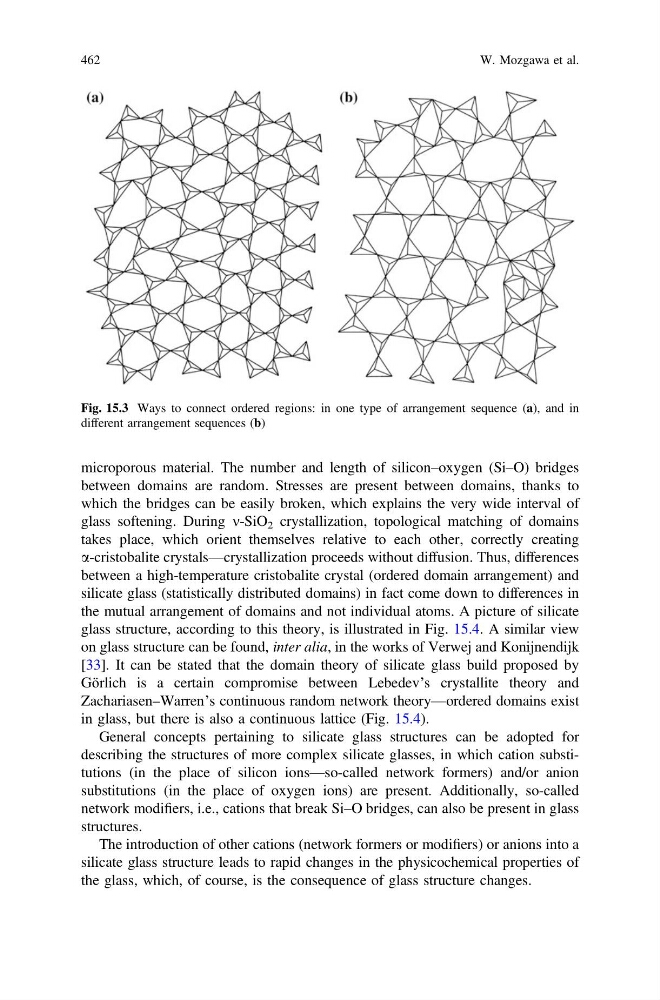
Fig. 15.3 Ways to connect ordered regions: in one type of arrangement sequence (a), and in
different arrangement sequences (b)
462
W. Mozgawa et al.
between domains are random. Stresses are present between domains, thanks to
which the bridges can be easily broken, which explains the very wide interval of
glass softening. During m-SiO 2 crystallization, topological matching of domains
takes place, which orient themselves relative to each other, correctly creating
a-cristobalite crystals—crystallization proceeds without diffusion. Thus, differences
between a high-temperature cristobalite crystal (ordered domain arrangement) and
silicate glass (statistically distributed domains) in fact come down to differences in
the mutual arrangement of domains and not individual atoms. A picture of silicate
glass structure, according to this theory, is illustrated in Fig. 15.4. A similar view
on glass structure can be found, inter alia, in the works of Verwej and Konijnendijk
[33]. It can be stated that the domain theory of silicate glass build proposed by
Görlich is a certain compromise between Lebedev’s crystallite theory and
Zachariasen–Warren’s continuous random network theory—ordered domains exist
in glass, but there is also a continuous lattice (Fig. 15.4).
General concepts pertaining to silicate glass structures can be adopted for
describing the structures of more complex silicate glasses, in which cation substitutions (in the place of silicon ions—so-called network formers) and/or anion
substitutions (in the place of oxygen ions) are present. Additionally, so-called
network modifiers, i.e., cations that break Si–O bridges, can also be present in glass
structures.
The introduction of other cations (network formers or modifiers) or anions into a
silicate glass structure leads to rapid changes in the physicochemical properties of
the glass, which, of course, is the consequence of glass structure changes.
Fig. 15.3 Ways to connect ordered regions: in one type of arrangement sequence (a), and in
different arrangement sequences (b)
462
W. Mozgawa et al.