

14.3 Plasmon Effect in Antimony-Germanate Glasses
Plasmon resonance is a novel area of research in the field of optoelectronics and
nanophotonics, which is based on the luminescence signal formation by controlling
local field enhancement (LFE) and energy transfer between noble metal nanoparticles and lanthanide elements. The main purpose of introducing noble metal
nanoparticles into the glass is the shaping of the visible luminescence resulting from
energy transfer between metal nanoparticles and rare-earth elements, obtained
through electric field amplification in the vicinity of rare-earth ions caused by
surface plasmon resonance. Studies concerning interaction mechanisms of noble
metal nanoparticles on luminescent properties of active glasses are currently the
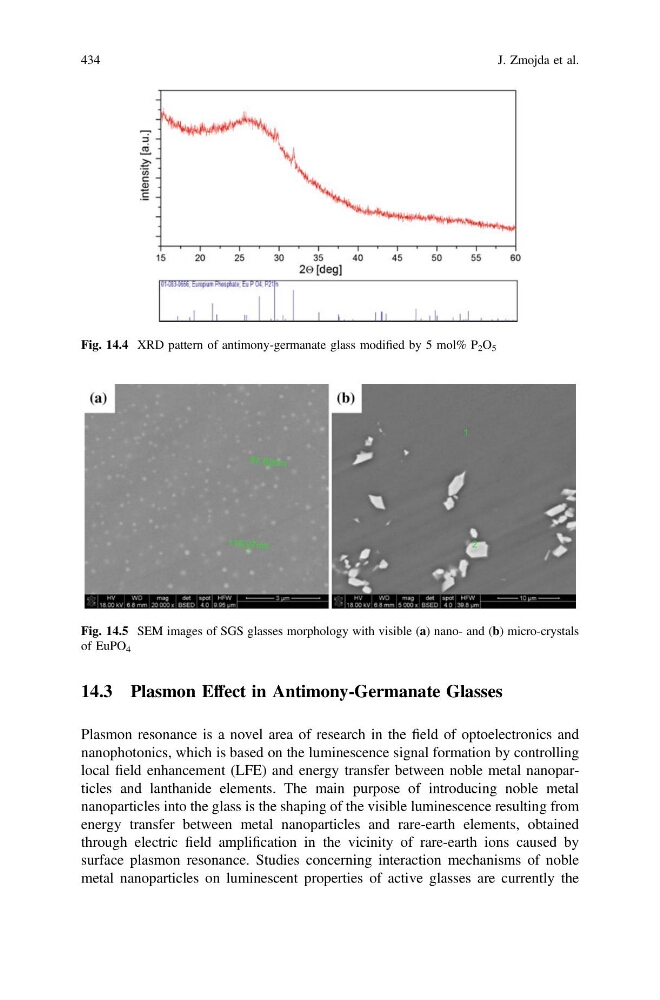
Fig. 14.4 XRD pattern of antimony-germanate glass modified by 5 mol% P 2 O 5
Fig. 14.5 SEM images of SGS glasses morphology with visible (a) nano- and (b) micro-crystals
of EuPO 4
434
J. Zmojda et al.
Plasmon resonance is a novel area of research in the field of optoelectronics and
nanophotonics, which is based on the luminescence signal formation by controlling
local field enhancement (LFE) and energy transfer between noble metal nanoparticles and lanthanide elements. The main purpose of introducing noble metal
nanoparticles into the glass is the shaping of the visible luminescence resulting from
energy transfer between metal nanoparticles and rare-earth elements, obtained
through electric field amplification in the vicinity of rare-earth ions caused by
surface plasmon resonance. Studies concerning interaction mechanisms of noble
metal nanoparticles on luminescent properties of active glasses are currently the
Fig. 14.4 XRD pattern of antimony-germanate glass modified by 5 mol% P 2 O 5
Fig. 14.5 SEM images of SGS glasses morphology with visible (a) nano- and (b) micro-crystals
of EuPO 4
434
J. Zmojda et al.