

of the whole spectrum, and a significant portion of the described vibrations can be
presented as a linear combination of normal vibrations of 4- and 6-membered rings.
The literature on the subject lacks a more systematic description and comparison
of the theoretical vibrational spectra of all structural elements of zeolites in
accordance with their hierarchy. Therefore, the question arises—is the envelope of
the vibrational spectra of the individual elements of the zeolite structure an integral
part of it?
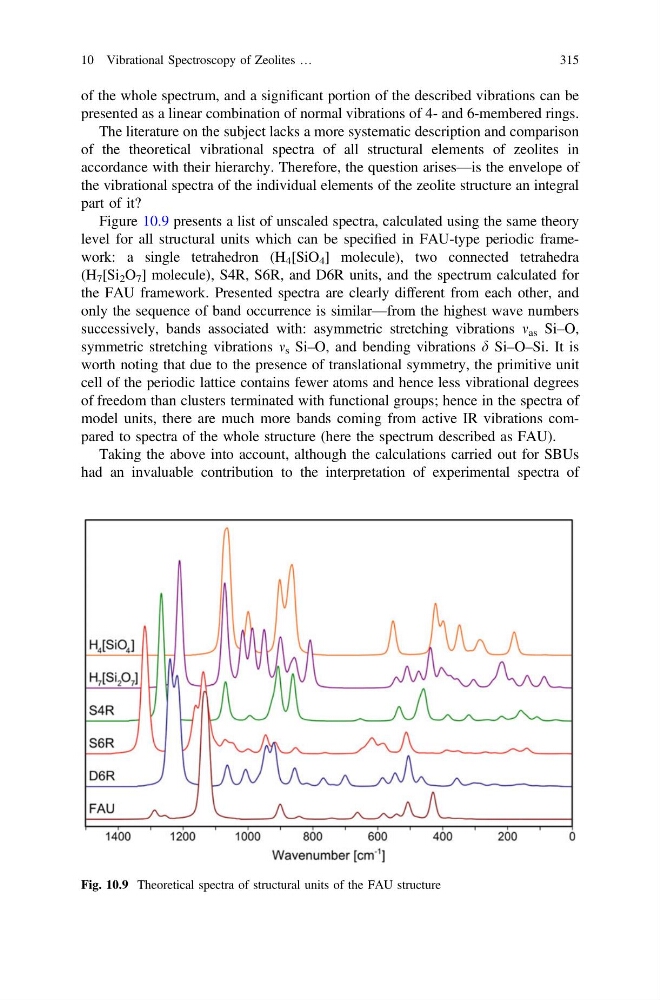
Figure 10.9 presents a list of unscaled spectra, calculated using the same theory
level for all structural units which can be specified in FAU-type periodic framework: a single tetrahedron (H 4 [SiO 4 ] molecule), two connected tetrahedra
(H 7 [Si 2 O 7 ] molecule), S4R, S6R, and D6R units, and the spectrum calculated for
the FAU framework. Presented spectra are clearly different from each other, and
only the sequence of band occurrence is similar—from the highest wave numbers
successively, bands associated with: asymmetric stretching vibrations m as Si–O,
symmetric stretching vibrations m s Si–O, and bending vibrations d Si–O–Si. It is
worth noting that due to the presence of translational symmetry, the primitive unit
cell of the periodic lattice contains fewer atoms and hence less vibrational degrees
of freedom than clusters terminated with functional groups; hence in the spectra of
model units, there are much more bands coming from active IR vibrations compared to spectra of the whole structure (here the spectrum described as FAU).
Taking the above into account, although the calculations carried out for SBUs
had an invaluable contribution to the interpretation of experimental spectra of
Fig. 10.9 Theoretical spectra of structural units of the FAU structure
10 Vibrational Spectroscopy of Zeolites …
315
presented as a linear combination of normal vibrations of 4- and 6-membered rings.
The literature on the subject lacks a more systematic description and comparison
of the theoretical vibrational spectra of all structural elements of zeolites in
accordance with their hierarchy. Therefore, the question arises—is the envelope of
the vibrational spectra of the individual elements of the zeolite structure an integral
part of it?
Figure 10.9 presents a list of unscaled spectra, calculated using the same theory
level for all structural units which can be specified in FAU-type periodic framework: a single tetrahedron (H 4 [SiO 4 ] molecule), two connected tetrahedra
(H 7 [Si 2 O 7 ] molecule), S4R, S6R, and D6R units, and the spectrum calculated for
the FAU framework. Presented spectra are clearly different from each other, and
only the sequence of band occurrence is similar—from the highest wave numbers
successively, bands associated with: asymmetric stretching vibrations m as Si–O,
symmetric stretching vibrations m s Si–O, and bending vibrations d Si–O–Si. It is
worth noting that due to the presence of translational symmetry, the primitive unit
cell of the periodic lattice contains fewer atoms and hence less vibrational degrees
of freedom than clusters terminated with functional groups; hence in the spectra of
model units, there are much more bands coming from active IR vibrations compared to spectra of the whole structure (here the spectrum described as FAU).
Taking the above into account, although the calculations carried out for SBUs
had an invaluable contribution to the interpretation of experimental spectra of
Fig. 10.9 Theoretical spectra of structural units of the FAU structure
10 Vibrational Spectroscopy of Zeolites …
315