

number of atoms—computational complexity is at least an order of magnitude
higher than for a molecular dynamics method described below. Much larger systems are possible to be investigated only using high-performance computing
(HPC) hardware. Moreover, an initial ‘guess’ (initial configuration) must be very
close to ‘real’ molecular structure obtained from diffraction experiments.
Popular QM software packages are e.g. GAUSSIAN, GAMESS, ABINIT.
Molecular dynamics (MD) is a classical method that applies molecular
mechanics (MM), i.e. classical Newton mechanics to molecular systems. This
simulation method enables to study systems containing many thousands up to
millions of atoms. Usually each atom is simulated as one particle; however, in the
united atom approach, also called coarse-graining, some groups, e.g. methylene unit
or even the whole monomer unit, can be represented by one particle according to
original Huggies’ proposal [39]. An exemplary united atom approach to PVME–
water system is presented in Fig. 8.13 [148]. Each particle possesses a radius
(typically the van der Waals radius), polarizability and eventually a charge. Bonds
are usually described by the harmonic potential with an equilibrium distance equal
to the experimental or calculated bond length. Accurate reproduction of vibrational
spectra requires a usage of more computationally expensive Morse potential.
Non-bonded interactions, such as dispersion and repulsion, are described by
Lennard-Jones 12-6 potential. To speed up the calculations, their range is usually
limited by the use of the cut-off radius (typically 1 nm order of magnitude).
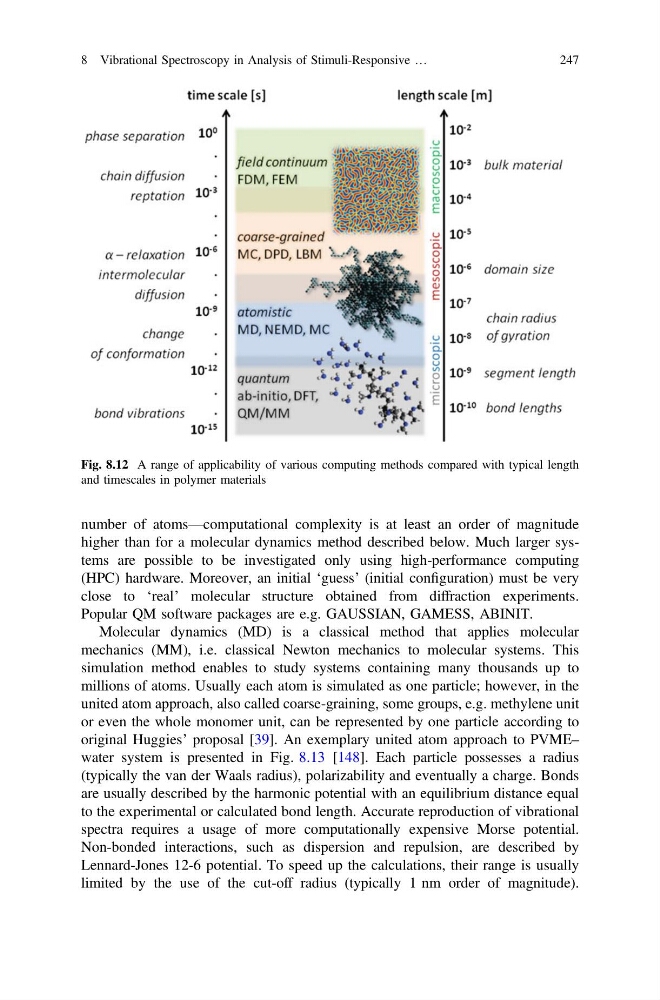
Fig. 8.12 A range of applicability of various computing methods compared with typical length
and timescales in polymer materials
8 Vibrational Spectroscopy in Analysis of Stimuli-Responsive …
247
higher than for a molecular dynamics method described below. Much larger systems are possible to be investigated only using high-performance computing
(HPC) hardware. Moreover, an initial ‘guess’ (initial configuration) must be very
close to ‘real’ molecular structure obtained from diffraction experiments.
Popular QM software packages are e.g. GAUSSIAN, GAMESS, ABINIT.
Molecular dynamics (MD) is a classical method that applies molecular
mechanics (MM), i.e. classical Newton mechanics to molecular systems. This
simulation method enables to study systems containing many thousands up to
millions of atoms. Usually each atom is simulated as one particle; however, in the
united atom approach, also called coarse-graining, some groups, e.g. methylene unit
or even the whole monomer unit, can be represented by one particle according to
original Huggies’ proposal [39]. An exemplary united atom approach to PVME–
water system is presented in Fig. 8.13 [148]. Each particle possesses a radius
(typically the van der Waals radius), polarizability and eventually a charge. Bonds
are usually described by the harmonic potential with an equilibrium distance equal
to the experimental or calculated bond length. Accurate reproduction of vibrational
spectra requires a usage of more computationally expensive Morse potential.
Non-bonded interactions, such as dispersion and repulsion, are described by
Lennard-Jones 12-6 potential. To speed up the calculations, their range is usually
limited by the use of the cut-off radius (typically 1 nm order of magnitude).
Fig. 8.12 A range of applicability of various computing methods compared with typical length
and timescales in polymer materials
8 Vibrational Spectroscopy in Analysis of Stimuli-Responsive …
247