

1.1 Water Security, Governance or Management
5
sweet
spot
Autonomy
Subordination
Low capacity
High capacity
too many rules
excessive discretion
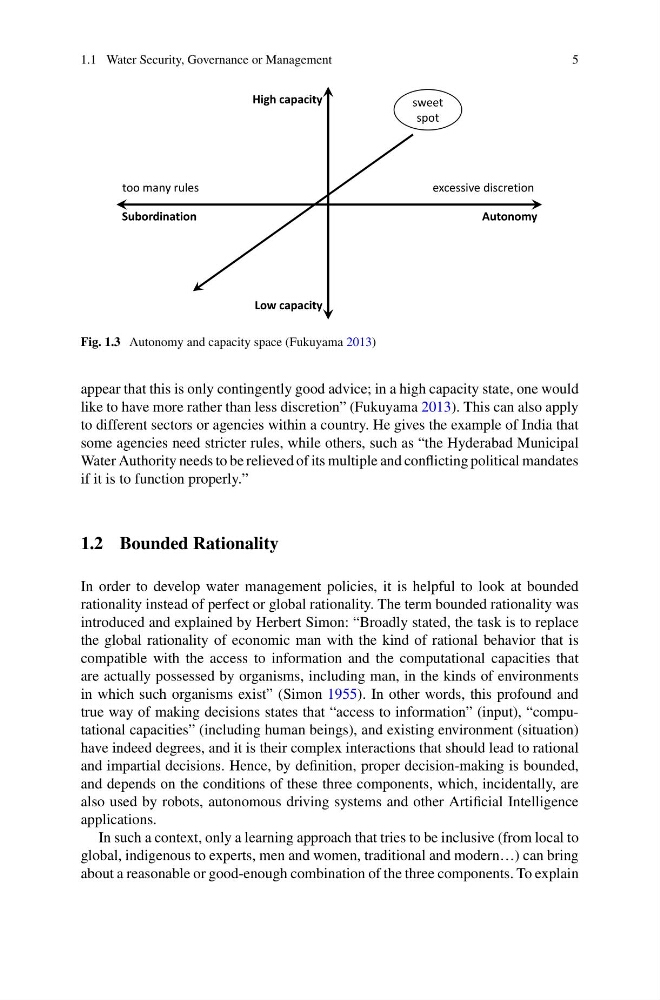
Fig. 1.3 Autonomy and capacity space (Fukuyama 2013)
appear that this is only contingently good advice; in a high capacity state, one would
like to have more rather than less discretion” (Fukuyama 2013). This can also apply
to different sectors or agencies within a country. He gives the example of India that
some agencies need stricter rules, while others, such as “the Hyderabad Municipal
Water Authority needs to be relieved of its multiple and conflicting political mandates
if it is to function properly.”
1.2 Bounded Rationality
In order to develop water management policies, it is helpful to look at bounded
rationality instead of perfect or global rationality. The term bounded rationality was
introduced and explained by Herbert Simon: “Broadly stated, the task is to replace
the global rationality of economic man with the kind of rational behavior that is
compatible with the access to information and the computational capacities that
are actually possessed by organisms, including man, in the kinds of environments
in which such organisms exist” (Simon 1955). In other words, this profound and
true way of making decisions states that “access to information” (input), “computational capacities” (including human beings), and existing environment (situation)
have indeed degrees, and it is their complex interactions that should lead to rational
and impartial decisions. Hence, by definition, proper decision-making is bounded,
and depends on the conditions of these three components, which, incidentally, are
also used by robots, autonomous driving systems and other Artificial Intelligence
applications.
In such a context, only a learning approach that tries to be inclusive (from local to
global, indigenous to experts, men and women, traditional and modern…) can bring
about a reasonable or good-enough combination of the three components. To explain
5
sweet
spot
Autonomy
Subordination
Low capacity
High capacity
too many rules
excessive discretion
Fig. 1.3 Autonomy and capacity space (Fukuyama 2013)
appear that this is only contingently good advice; in a high capacity state, one would
like to have more rather than less discretion” (Fukuyama 2013). This can also apply
to different sectors or agencies within a country. He gives the example of India that
some agencies need stricter rules, while others, such as “the Hyderabad Municipal
Water Authority needs to be relieved of its multiple and conflicting political mandates
if it is to function properly.”
1.2 Bounded Rationality
In order to develop water management policies, it is helpful to look at bounded
rationality instead of perfect or global rationality. The term bounded rationality was
introduced and explained by Herbert Simon: “Broadly stated, the task is to replace
the global rationality of economic man with the kind of rational behavior that is
compatible with the access to information and the computational capacities that
are actually possessed by organisms, including man, in the kinds of environments
in which such organisms exist” (Simon 1955). In other words, this profound and
true way of making decisions states that “access to information” (input), “computational capacities” (including human beings), and existing environment (situation)
have indeed degrees, and it is their complex interactions that should lead to rational
and impartial decisions. Hence, by definition, proper decision-making is bounded,
and depends on the conditions of these three components, which, incidentally, are
also used by robots, autonomous driving systems and other Artificial Intelligence
applications.
In such a context, only a learning approach that tries to be inclusive (from local to
global, indigenous to experts, men and women, traditional and modern…) can bring
about a reasonable or good-enough combination of the three components. To explain