

4
1 Introduction
‘merit’ does not define merit, nor does it explain whether the official’s skills will be
renewed in light of changing conditions or technology.”
Fukuyama excludes output measures as an approach for evaluating governance
by presenting three decisive drawbacks. He goes on to affirm that “In fact, it might
be better to leave output as an independent variable to be explained by state quality,
rather than being a measure of capacity in itself. If output is not a valid measure of
state quality, it implies that we also cannot generate useful measures of government
efficiency as a measure of state quality, since the latter represents a ratio of state
inputs to outcomes.” This book is doing this by defining efficiencies as part of the
management (not governance) of a multi-level water system. In such a context, it is
relevant to mention that activities in water governance based on outputs, such as the
OECD Principles on Water Governance (OECD 2015) to mention one important and
carefully developed example should be reformulated.
“Autonomy properly speaking refers to the manner in which the political principal
issues mandates to the bureaucrats who act as its agent… The fewer and more general
the mandates, the greater autonomy the bureaucracy possesses… Conversely, a nonautonomous or subordinated bureaucracy is micromanaged by the principal, which
establishes detailed rules that the agent must follow” (Fukuyama 2013).
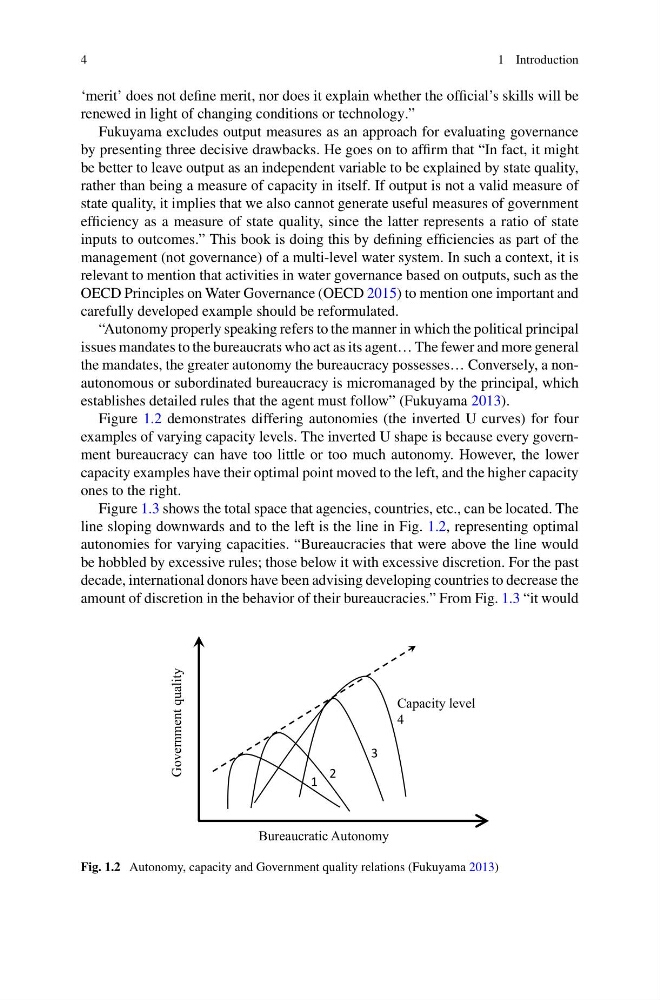
Figure 1.2 demonstrates differing autonomies (the inverted U curves) for four
examples of varying capacity levels. The inverted U shape is because every government bureaucracy can have too little or too much autonomy. However, the lower
capacity examples have their optimal point moved to the left, and the higher capacity
ones to the right.
Figure 1.3 shows the total space that agencies, countries, etc., can be located. The
line sloping downwards and to the left is the line in Fig. 1.2, representing optimal
autonomies for varying capacities. “Bureaucracies that were above the line would
be hobbled by excessive rules; those below it with excessive discretion. For the past
decade, international donors have been advising developing countries to decrease the
amount of discretion in the behavior of their bureaucracies.” From Fig. 1.3 “it would
Capacity level
4
3
2
1
Bureaucratic Autonomy
Government quality
Fig. 1.2 Autonomy, capacity and Government quality relations (Fukuyama 2013)
1 Introduction
‘merit’ does not define merit, nor does it explain whether the official’s skills will be
renewed in light of changing conditions or technology.”
Fukuyama excludes output measures as an approach for evaluating governance
by presenting three decisive drawbacks. He goes on to affirm that “In fact, it might
be better to leave output as an independent variable to be explained by state quality,
rather than being a measure of capacity in itself. If output is not a valid measure of
state quality, it implies that we also cannot generate useful measures of government
efficiency as a measure of state quality, since the latter represents a ratio of state
inputs to outcomes.” This book is doing this by defining efficiencies as part of the
management (not governance) of a multi-level water system. In such a context, it is
relevant to mention that activities in water governance based on outputs, such as the
OECD Principles on Water Governance (OECD 2015) to mention one important and
carefully developed example should be reformulated.
“Autonomy properly speaking refers to the manner in which the political principal
issues mandates to the bureaucrats who act as its agent… The fewer and more general
the mandates, the greater autonomy the bureaucracy possesses… Conversely, a nonautonomous or subordinated bureaucracy is micromanaged by the principal, which
establishes detailed rules that the agent must follow” (Fukuyama 2013).
Figure 1.2 demonstrates differing autonomies (the inverted U curves) for four
examples of varying capacity levels. The inverted U shape is because every government bureaucracy can have too little or too much autonomy. However, the lower
capacity examples have their optimal point moved to the left, and the higher capacity
ones to the right.
Figure 1.3 shows the total space that agencies, countries, etc., can be located. The
line sloping downwards and to the left is the line in Fig. 1.2, representing optimal
autonomies for varying capacities. “Bureaucracies that were above the line would
be hobbled by excessive rules; those below it with excessive discretion. For the past
decade, international donors have been advising developing countries to decrease the
amount of discretion in the behavior of their bureaucracies.” From Fig. 1.3 “it would
Capacity level
4
3
2
1
Bureaucratic Autonomy
Government quality
Fig. 1.2 Autonomy, capacity and Government quality relations (Fukuyama 2013)