

18 Christianity, Creation, and the Climate Crisis …
357
Experience
The cumulative “wisdom acquired
through living” (p. 46) should
“confirm what Scripture
proclaim[s]”
(p. 45)
Tradition
Antiquity may be emulated for
its effective “restorationist
vision [and]
programmatic
agenda”
(p. 43)
Reason
An important way to process
inputs from other sources of
knowledge, including “from the
input of experience” (p. 40)
Scripture
The bible is “the most basic
authority” (p. 36); “Scripture is the
primary, rather than exclusive,
Christian authority” (p. 37)
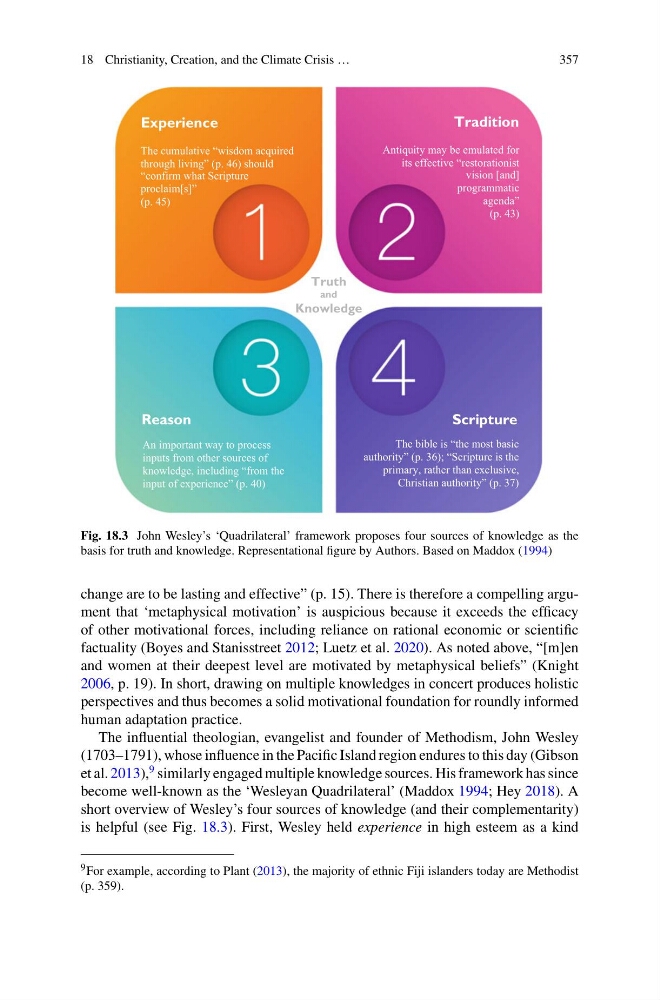
Fig. 18.3 John Wesley’s ‘Quadrilateral’ framework proposes four sources of knowledge as the
basis for truth and knowledge. Representational figure by Authors. Based on Maddox (1994)
change are to be lasting and effective” (p. 15). There is therefore a compelling argument that ‘metaphysical motivation’ is auspicious because it exceeds the efficacy
of other motivational forces, including reliance on rational economic or scientific
factuality (Boyes and Stanisstreet 2012; Luetz et al. 2020). As noted above, “[m]en
and women at their deepest level are motivated by metaphysical beliefs” (Knight
2006, p. 19). In short, drawing on multiple knowledges in concert produces holistic
perspectives and thus becomes a solid motivational foundation for roundly informed
human adaptation practice.
The influential theologian, evangelist and founder of Methodism, John Wesley
(1703–1791), whose influence in the Pacific Island region endures to this day (Gibson
et al. 2013),
9 similarly engaged multiple knowledge sources. His framework has since
become well-known as the ‘Wesleyan Quadrilateral’ (Maddox 1994; Hey 2018). A
short overview of Wesley’s four sources of knowledge (and their complementarity)
is helpful (see Fig. 18.3). First, Wesley held experience in high esteem as a kind
9 For example, according to Plant (2013), the majority of ethnic Fiji islanders today are Methodist
(p. 359).
357
Experience
The cumulative “wisdom acquired
through living” (p. 46) should
“confirm what Scripture
proclaim[s]”
(p. 45)
Tradition
Antiquity may be emulated for
its effective “restorationist
vision [and]
programmatic
agenda”
(p. 43)
Reason
An important way to process
inputs from other sources of
knowledge, including “from the
input of experience” (p. 40)
Scripture
The bible is “the most basic
authority” (p. 36); “Scripture is the
primary, rather than exclusive,
Christian authority” (p. 37)
Fig. 18.3 John Wesley’s ‘Quadrilateral’ framework proposes four sources of knowledge as the
basis for truth and knowledge. Representational figure by Authors. Based on Maddox (1994)
change are to be lasting and effective” (p. 15). There is therefore a compelling argument that ‘metaphysical motivation’ is auspicious because it exceeds the efficacy
of other motivational forces, including reliance on rational economic or scientific
factuality (Boyes and Stanisstreet 2012; Luetz et al. 2020). As noted above, “[m]en
and women at their deepest level are motivated by metaphysical beliefs” (Knight
2006, p. 19). In short, drawing on multiple knowledges in concert produces holistic
perspectives and thus becomes a solid motivational foundation for roundly informed
human adaptation practice.
The influential theologian, evangelist and founder of Methodism, John Wesley
(1703–1791), whose influence in the Pacific Island region endures to this day (Gibson
et al. 2013),
9 similarly engaged multiple knowledge sources. His framework has since
become well-known as the ‘Wesleyan Quadrilateral’ (Maddox 1994; Hey 2018). A
short overview of Wesley’s four sources of knowledge (and their complementarity)
is helpful (see Fig. 18.3). First, Wesley held experience in high esteem as a kind
9 For example, according to Plant (2013), the majority of ethnic Fiji islanders today are Methodist
(p. 359).